
When you purchase through links on our site, we may earn an affiliate commission. Here’s how it works .
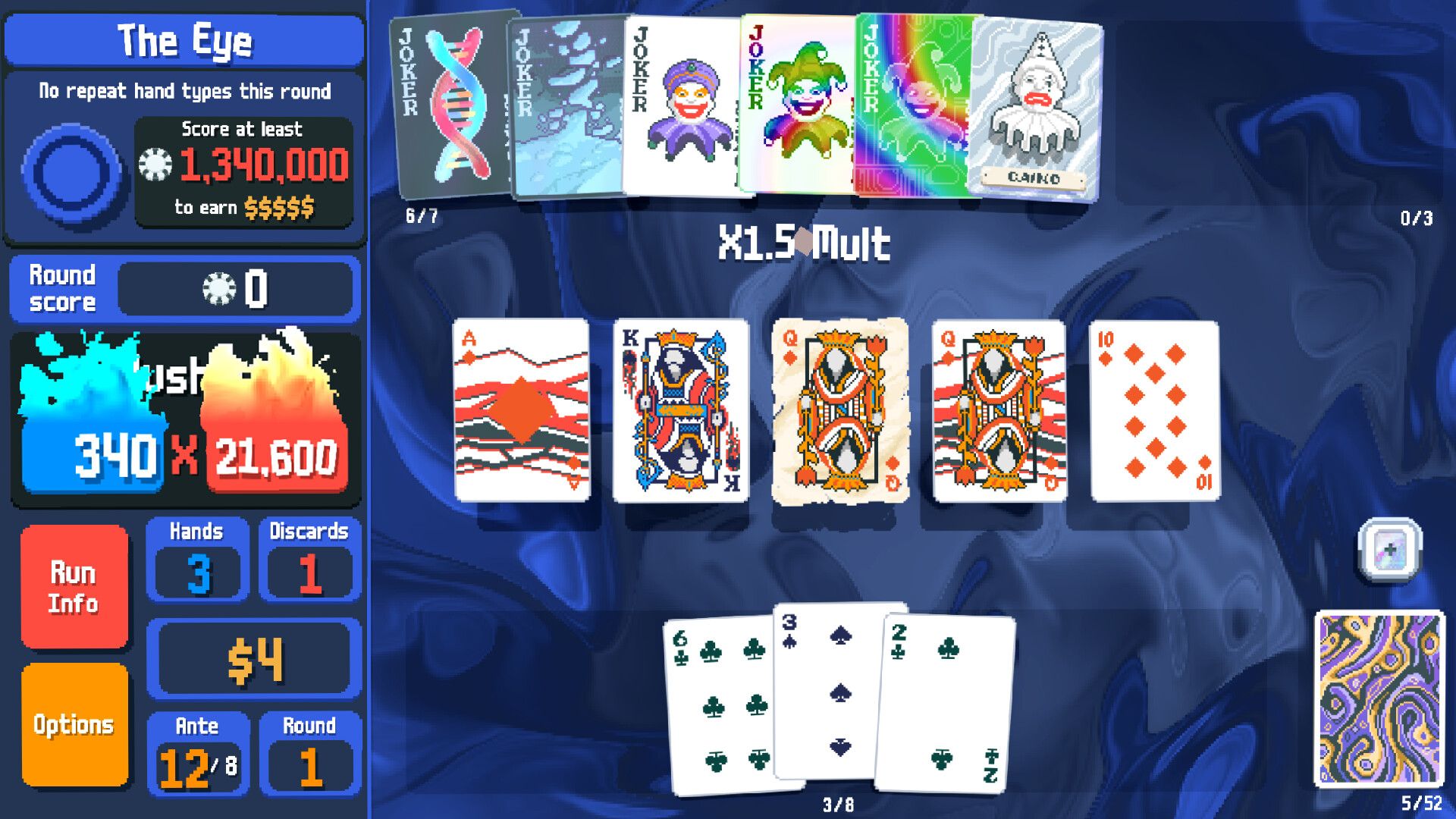
The player shared a sped-up video of the model apparently playing the game. Based on the video, the player chose the lowest difficulty (White Stake) and the default Red Deck. We've already seen OpenAI's GPT-6 'Astra' model beating the game with the Black Deck on Gold Stack difficulty, which is generally considered the hardest combination in the game.
ActualAerie1011, the Reddit user who shared the video, says they trained the model using a trainer algorithm they developed to discover useful Balatro seeds. Like other roguelike games, Balatro is randomized, so algorithms like this can discover seeds that are unique and can potentially lead to very high scores (including the game's scoring limit). In order to train the brain, both the brain apparatus (a connectome alongside the actual model) and the algorithm play a seed. Then, the results are compared, and the model on the brain is rewarded or punished based on its choices.
Currently, the user says that the brain has a 20% success rate on a random seed, presumably at that same White Stack/Red Deck difficulty. The user says the model doesn't know anything about the seed outside of what's immediately visible on-screen, and that training is ongoing. "The fruit fly will return, strong and smarter," they wrote in a comment on their original post.
It's an impressive feat, though some commenters have cast doubt on the project. The player didn't share many details about how they trained the model outside of what's above, nor any repo for the project or references to other open-source projects they used. This isn't uncharted territory for Balatro ; projects like BalatroBot and BalatroLLM have been available for about a year.
Google maps entire brain and central nervous system of adult male fruit fly, software engineers immediately make it run Doom
Engineer turns simulated fly brain into a crypto day trader, posts downloadable sim to GitHub
AI enthusiast builds GPT-6 Astra-powered bot to take on Balatro's Gold Stake Black Deck
We've reached out to ActualAerie1011 to see if they're able to provide more details on how they trained the model, and we'll update this story when we hear back.
Although Balatro seems straightforward enough, it's surprisingly difficult to train a model to play the game, especially at higher difficulties. The core rules of playing and scoring poker hands aren't difficult. However, the complex interactions between jokers (the perks that help you achieve higher scores), how they're ordered and scored, and specific stipulations like boss abilities and temporary/permanent jokers make consistency a high bar to clear, even for human players, much less an AI model.
Get Tom's Hardware's best news and in-depth reviews, straight to your inbox.
Key considerations
- Investor positioning can change fast
- Volatility remains possible near catalysts
- Macro rates and liquidity can dominate flows
Reference reading
- https://www.tomshardware.com/tech-industry/artificial-intelligence/SPONSORED_LINK_URL
- https://www.tomshardware.com/tech-industry/artificial-intelligence/balatro-fan-claims-they-trained-google-fruit-fly-brain-simulation-to-beat-the-game-reinforcement-learning-currently-has-the-model-at-20-percent-success-rate#main
- https://www.tomshardware.com/membership
- Corsair's 32GB Vengeance kits are the cheapest DDR5 RAM on the market right now — lock down 6,200 MT/s speeds for $419.99 or save $10 on a slower RGB kit for $4
- Developer vibe codes a tool to let Nvidia RTX 50-series laptop owners crank up their power limits — can juice RTX 5090 mobile GPU to 225W
- Save $300 on this 4K gaming PC with a 9800X3D and RTX 5070 Ti, now $2,599 — powerhouse ABS Stratos II rig ships with 32GB DDR5 and a 2TB SSD
- Boots on the Ground: ‘WARDOGS’ Goes All Out on GeForce NOW at Early-Access Launch
- AI developer vibe codes DLSS 5 onto Intel CPU's integrated graphics — Intel Arc 140T runs neural rendering in 360p at 10 frames per second
Informational only. No financial advice. Do your own research.