
When you purchase through links on our site, we may earn an affiliate commission. Here’s how it works .
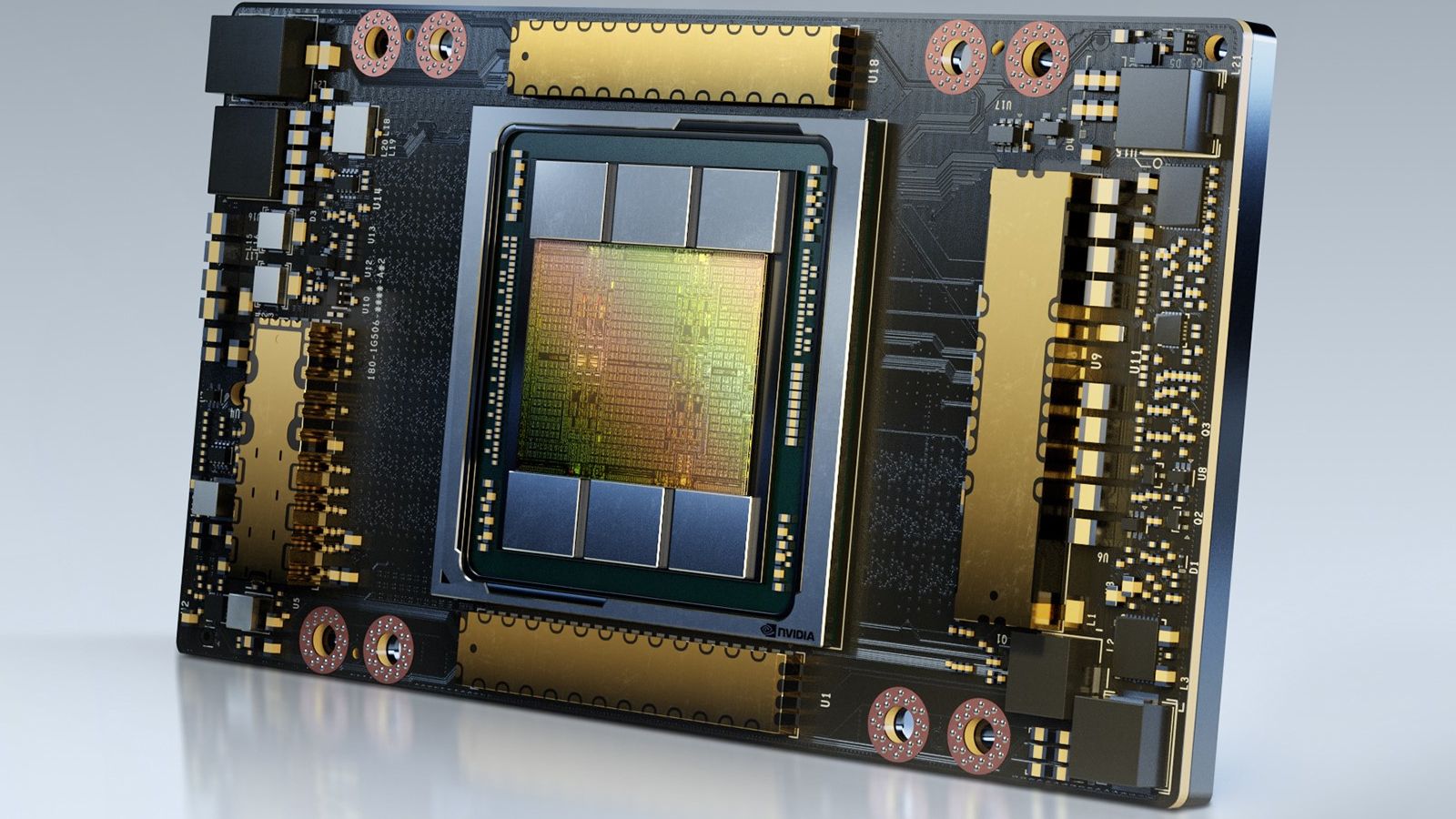
Servers built on the A100, a data-center GPU Nvidia launched in 2020, have climbed from about 200,000 Chinese Yuan ($22,300) to as much as 600,000 ($67,000) since late last year, the FT reported, citing chip traders. Demand has also pulled in gaming processors that can be modified to run inference.
Nvidia's restricted Blackwell hardware sits at the top of the same market: the RTX 6000 Pro workstation card has risen from roughly 50,000 Chinese Yuan ($5,580) at the start of the year to as much as 130,000 ($14,500), and the DGX B300, which retails in the U.S. for nearly $400,000, now trades above $1.1 million. Renting is no cheaper, with an FT survey finding that GPU rates inside China now match or exceed U.S. prices, reversing the discount that the abundant smuggled supply once provided.
Washington tightened enforcement at the end of last year, and in March, a Supermicro co-founder was charged over an alleged $2.5 billion scheme to route Nvidia AI servers to Chinese buyers. Authorities in Taiwan and Malaysia subsequently opened their own smuggling investigations, drying up the re-export routes traders had relied on. Building data centers from smuggled chips is a "dead-end," Nvidia told the outlet, adding that it provides no support or repairs for restricted products.
Beijing itself closed legal channels from the other side. After the Trump administration approved H200 exports to China, Chinese customs were instructed to block the chips at the border, and Commerce Secretary Howard Lutnick later confirmed that Nvidia hadn't sold a single H200 to a Chinese company months later. Both moves push buyers toward the same destination: Huawei, which has positioned its Ascend 950PR , launched in March, as the inference chip of choice for domestic firms.
Chinese Nvidia Cloud Partner procured 300 servers with banned AI GPUs worth $92 million
Taiwan raids 12 locations in its first formal crackdown on Nvidia AI chip smuggling
It’s understood that the 950PR is currently undergoing testing at large data center clients in China, but output is still limited, and its native CANN software stack substantially trails Nvidia’s CUDA, so domestic supply can’t yet absorb the demand the import freeze has redirected.
Rising memory prices are only compounding all this, with one trader saying that moving away from Nvidia hardware had become harder as component costs climbed, a knock-on from the DRAM and HBM shortage now working through every tier of the AI hardware stack. Until Huawei scales the 950PR, which will take some time, or Beijing greenlights H200 imports , which is highly unlikely, prices for the remaining A100 inventory in China will continue to rise.
Get Tom's Hardware's best news and in-depth reviews, straight to your inbox.
Key considerations
- Investor positioning can change fast
- Volatility remains possible near catalysts
- Macro rates and liquidity can dominate flows
Reference reading
- https://www.tomshardware.com/pc-components/gpu-drivers/SPONSORED_LINK_URL
- https://www.tomshardware.com/pc-components/gpu-drivers/five-year-old-nvidia-a100-servers-triple-in-price-in-china#main
- https://www.tomshardware.com/subscription
- These 15 under-$50 gadgets have upgraded my tech life, and they're all on sale
- Today only, you can snag a 37-inch 4K Samsung monitor for just $249 – B&H offers up a big productivity screen for 50% off in a one-day deal
- Anthropic claims that China's Alibaba used 25,000 fake accounts and 28.8 million exchanges to illicitly 'distill' its Claude model — violations occurred from Ap
- Want an RTX 5070 Ti? Here’s where to get one for $899 — don't pay retail and save $220 today
- Micron inks long-term supply agreements worth $100 billion — says it has no idea when RAM crisis will end
Informational only. No financial advice. Do your own research.