
a]:text-inherit [&>a]:underline">
When you purchase through links on our site, we may earn an affiliate commission. Here’s how it works .
Shenyang Aircraft Design and Research Institute, a research organization under the Aviation Industry Corporation of China (AVIC), has been working on 3D-printed aircraft components since 2003. The impressively large 3D-printed components are the culmination of decades of research and development of various metal additive manufacturing techniques.
The engineers are no strangers to large 3D-printed components : in 2005, they achieved secondary load-bearing structures; then, in 2012, large primary load-bearing titanium alloy structures, earning additive manufacturing expert Wang Huaming and his team China’s National Technological Invention Award.
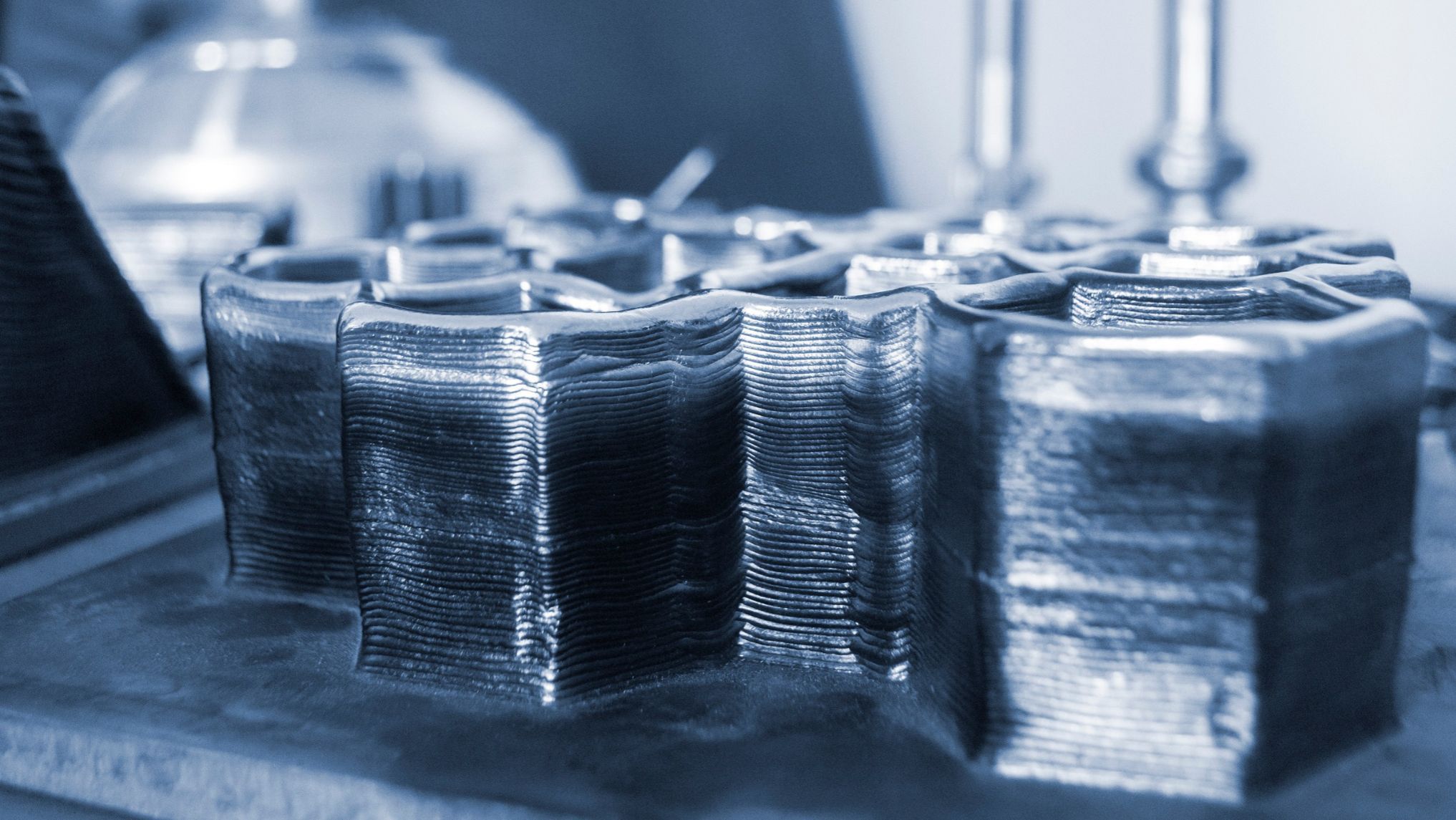
Recently, however, the team created a primary load-bearing structure even larger, at over 16.4 feet. The massive component is not printed in one piece, as printing such a large structure faces warping and cracking issues, as stated in Progress and Challenges of Laser Direct Manufacturing of Large Titanium Structural Components , published in the Chinese Journal of Lasers. To avoid these problems, two techniques were employed: Segmented Additive Manufacturing (SAM) and additive fusion joining. It sounds like fancy words to say it was printed separately and welded, and it technically wouldn’t be wrong — but the key distinction is that it is part of the whole workflow; basically, metal 3D printing into the intentionally designed gaps between the components and creating one whole printed piece.
Additive manufacturing eliminates the need for expensive molds and multi-part construction. Titanium alloys are notoriously difficult to machine, cast components are usually weak, and joining parts using bolts and screws is additional labor — metal 3D printing solves all of this by creating a strong printed part in the desired shape in one large piece, minimizing the need for additional fasteners. By eliminating molds, the team can iterate much faster and create more complex structures that would otherwise not be possible with traditional manufacturing techniques.
World’s first 3D-printed remote control aircraft with a jet turbine takes flight, aims for Mach 0.8 to beat world record for fastest model aircraft
China swiped classified F-35 stealth fighter parts that were diverted through Hong Kong
US Army successfully flies a hybrid electric drone with 3D-printed heavy-fuel rotary engine — uses advanced engineering to ditch a bulky liquid cooling system
Download the Tom's Hardware app for up-to-the-minute updates on iOS and Android . Also follow Tom's Hardware on Google News , or add us as a preferred source , to get our latest news, analysis, & reviews in your feeds.
Get Tom's Hardware's best news and in-depth reviews, straight to your inbox.
Key considerations
- Investor positioning can change fast
- Volatility remains possible near catalysts
- Macro rates and liquidity can dominate flows
Reference reading
- https://www.tomshardware.com/3d-printing/SPONSORED_LINK_URL
- https://www.tomshardware.com/3d-printing/china-engineers-behind-j-35-fighter-jet-pioneer-3d-printed-load-bearing-structures-in-military-aircraft-behemoth-16-4-foot-part-uses-segmented-printing-and-fusion-techniques#main
- https://futureplc.com/terms-conditions/
- The best Warhammer 40K-themed gifts for your gaming setup
- Enhance your PC setup with these great gift ideas under $25
- AI Day Seoul Brings Together Korea’s Industry Leaders, Startups and Developer Communities
- AI safety legislation has a conflict-of-interest problem — Big US labs are warning of risk just as cheaper Chinese open-weight models erode their commercial edg
- Leaked Ohio bill could allow AI data center companies to seize private land for their buildouts using eminent domain law
Informational only. No financial advice. Do your own research.