
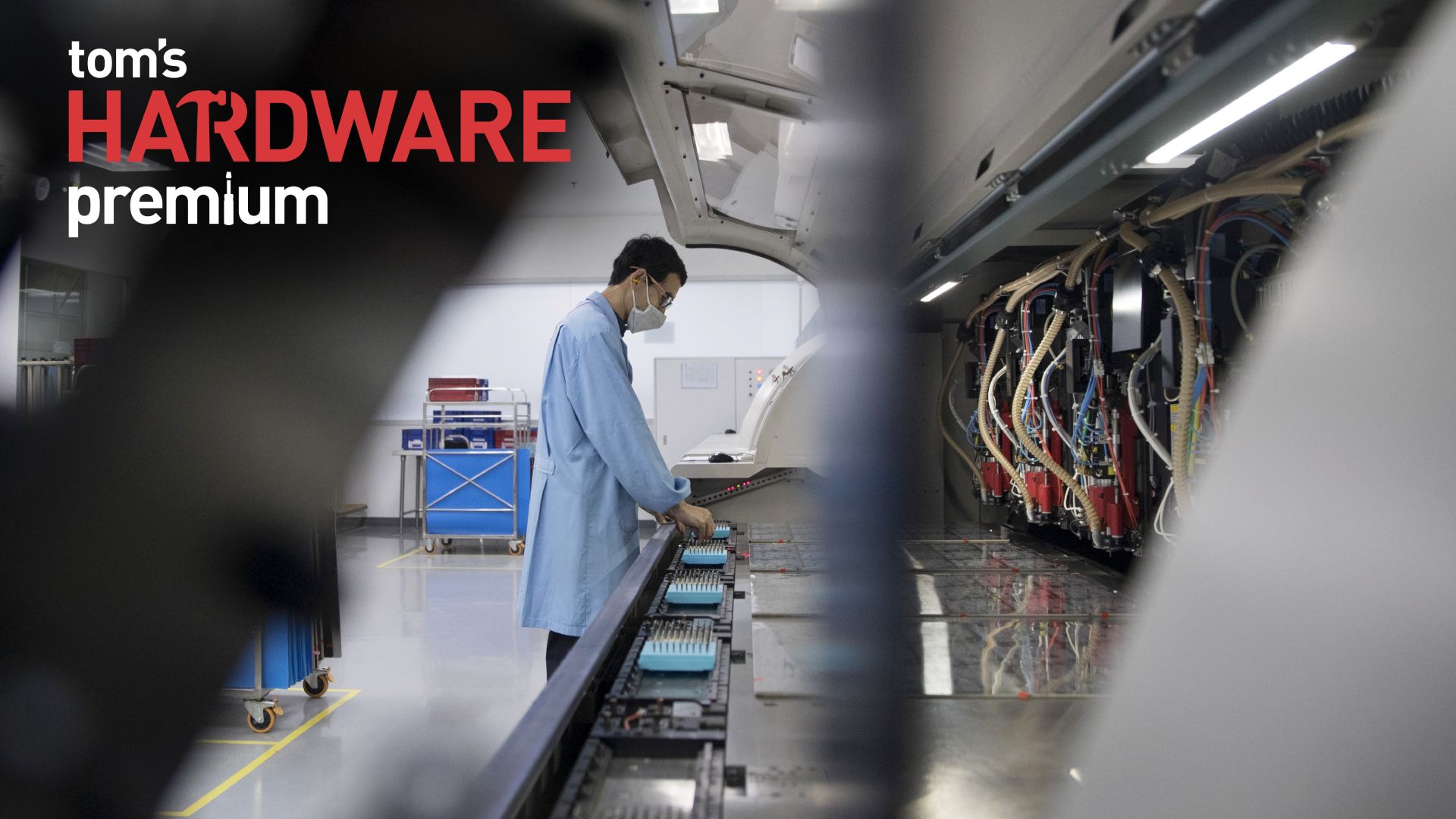
As well as the number of layers which have to be drilled through increasing in number, the materials involved are also adding complexity to the equation. New grades of copper-clad laminate — the glass-fibre-and-resin material onto which copper is bonded — are becoming trickier for the tiny tungsten-carbide tools previously used in the process to cut. “AI PCBs are denser with thicker layers, requiring more holes drilled per PCB,” writes Helen Fang, head of Asia Pacific industrials research at HSBC. The increasingly common use of harder laminates is resulting in the bits being consumed more quickly.
That’s good news for those making drill bits: HSBC forecasts global demand growing 55% a year in the coming three years. And as with many parts of the AI revolution, the voracious appetite of the sector means that supplies can’t keep up. Even with manufacturers increasing production, the bank forecasts a 24% supply shortfall in PCB drill bits in 2027.
That could push the world towards Chinese suppliers, right as the west is trying to wean itself off a dependency on the country for rare earths and other elements necessary to make GPUs. Guangdong Dtech, based in China, is the world’s largest PCB drill bit maker by volume. Around three in every 10 drill bits made in 2025 come from the company, with its monthly capacity potentially climbing from 160 million bits in June to more than 235 million by year-end. Japanese and Taiwanese manufacturers are still dominant at the premium end of the market, according to consultancy Frost & Sullivan, though Chinese manufacturers are trying to close that gap.
In its 2026 interim results , Dtech reported that it had begun mass-producing drill bits with aspect ratios exceeding 40:1, while developing techniques for producing bits exceeding 60:1. Its newer diamond-coated tools for particularly tough M9+ board materials have also entered small-scale use.
It’s not just in drill bits that China has a chokehold. Another Chinese manufacturer, Defu Technology, has historically been a key supplier of copper foil for lithium-ion batteries, but is increasingly changing its manufacturing processes to try and capitalise on the AI boom. “AI server PCB/CCL upgrades require smoother HVLP copper foil to reduce high-speed signal loss,” writes Avery Chan, a JP Morgan analyst.
Huawei shelves global AI chip rollout as China's own demand outstrips supply
Key considerations
- Investor positioning can change fast
- Volatility remains possible near catalysts
- Macro rates and liquidity can dominate flows
Reference reading
- https://www.tomshardware.com/tech-industry/manufacturing/SPONSORED_LINK_URL
- https://www.tomshardware.com/tech-industry/manufacturing/chinas-ai-hardware-push-is-moving-beyond-gpus-to-the-pcbs-underneath-them-beijing-races-to-corner-the-market-on-copper-foil-and-micro-drill-bits-as-board-complexity-explodes#main
- https://www.tomshardware.com/my-account
- This Silicon Power SSD is selling for a stunning 10 cents per GB — at only $209, this is the best 2TB SSD deal on Newegg
- Kioxia's 3rd-gen XL-Flash hits Optane-class 3-microsecond read latency with 70% higher density
- Merry Making: Play, Build and Create With NVIDIA Technologies This Holiday Season
- Into the Omniverse: How Developers Turn Ideas Into Simulations With Frontier AI Agents
- Into the Omniverse: How Developers Turn Ideas Into Simulations With Frontier AI Agents
Informational only. No financial advice. Do your own research.