
Three major PC makers now using Chinese memory to fight 'unprecedented memory shortage,' report claims
His argument stems from historical DRAM market leadership shifts. In 1975, U.S. companies controlled 95% of the DRAM market, with Intel alone holding 75%. Japan then turned DRAM into a commodity business, increased its share to 80% by 1985, while the U.S. fell to 10% and then just 2% by 1990. Then South Korea repeated that playbook in the mid-1980s and eventually displaced Japanese suppliers, and today it accounts for roughly 62% of the global DRAM production.
With Micron's investments of hundreds of billions of dollars in U.S. DRAM capacity, the country is set to regain its massive presence on the global DRAM scene; China could capture 30% of the market by 2030, according to Niles.
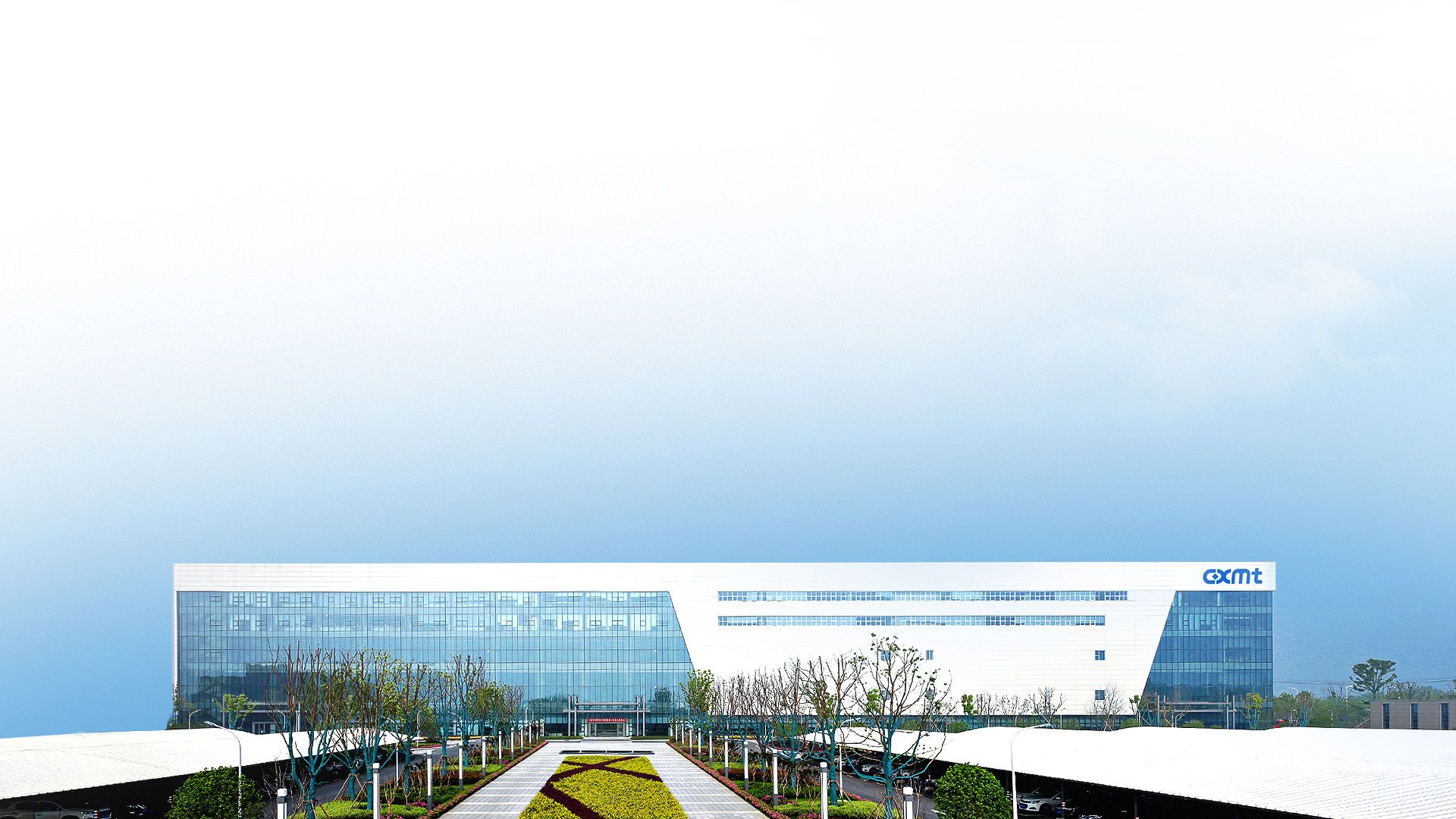
China already consumes around 30% of global memory output, as it produces hundreds of millions of PCs and smartphones both for domestic and global consumption; it is reasonable to expect the country to produce as much commodity memory locally as possible. Keeping in mind China's push for semiconductor self-sufficiency and willingness to invest huge amounts of money in domestic fabs, it is possible to expect the country to rapidly gain DRAM output and share. China is already pushing its chipmakers hard to start DRAM production, and the government reportedly asked CXMT to share its process technologies with others.
There are multiple factors — both technological and political — that may, if not stop, but greatly slow down CXMT's and China's DRAM expansions in the coming years.
First up, there are export controls in place that prevent Chinese entities from getting sophisticated wafer fab equipment required to make DRAM using 18nm-class process technology or more advanced. If the proposed MATCH Act passes, then limitations on Chinese companies will get more severe, which will reduce their expansion ability.
Secondly, even if CXMT (or another Chinese DRAM maker) finds a way to produce more advanced DRAM using relatively outdated tools (i.e., use old tools for sub-16nm nodes), they will need to acquire those tools in quantity to increase their output. Meanwhile, companies like ASML have relatively limited production capacities, and CXMT is certainly not the only memory maker seeking to expand its production capacity in the coming years. While SMEE and SiCarrier are developing lithography tools in China, they will be unlikely to ramp up production of immersion DUV scanners to higher levels any time soon.
Thirdly, building fabs is one thing; operating leading-edge DRAM production at high yields is another. China has recruited engineers from Micron, Samsung, SK hynix, and TSMC for years, but scaling from three to six or more fabs requires thousands of experienced process, yield, device, lithography, and integration engineers. Building fabs adjacent to existing sites enables CXMT and other chipmakers to share experience and knowledge internally, which helps to develop experienced talent. But will it be enough for the long term?
Next, expanding wafer capacity alone is insufficient. DRAM producers must continuously migrate to finer process technologies (e.g., 16nm-class, 14nm-class, 12nm-class) to remain cost-competitive. If export controls delay access to equipment or materials needed for these nodes, Chinese fabs could end up producing more wafers at a higher cost per bit than competitors.
Finally, some American lawmakers want to prohibit U.S.-based companies from acquiring memory from CXMT and other Chinese vendors. They have every reason to believe that China wants to take control of a sizeable DRAM market share in a bid to use it in its strategic interest and have leverage over the market, something the country already has with rare earth metals. If the lawmakers manage to turn the proposal into law, demand for CXMT's and other China-made DRAM will drop. It will probably be sufficient inside China, but whether it will be enough to justify 10 or more big DRAM fabs is a different question.
Anton Shilov is a contributing writer at Tom\u2019s Hardware. Over the past couple of decades, he has covered everything from CPUs and GPUs to supercomputers and from modern process technologies and latest fab tools to high-tech industry trends. ","collapsible":{"enabled":true,"maxHeight":250,"readMoreText":"Read more","readLessText":"Read less"}}), "https://slice.vanilla.futurecdn.net/13-4-25/js/authorBio.js"); } else { console.error('%c FTE ','background: #9306F9; color: #ffffff','no lazy slice hydration function available'); } Anton Shilov Social Links Navigation Contributing Writer Anton Shilov is a contributing writer at Tom’s Hardware. Over the past couple of decades, he has covered everything from CPUs and GPUs to supercomputers and from modern process technologies and latest fab tools to high-tech industry trends.
Key considerations
- Investor positioning can change fast
- Volatility remains possible near catalysts
- Macro rates and liquidity can dominate flows
Reference reading
- https://www.tomshardware.com/pc-components/dram/SPONSORED_LINK_URL
- https://www.tomshardware.com/pc-components/dram/chinas-cxmt-targets-30-percent-dram-memory-market-share-by-2030-with-sixth-mega-fab-future-plans-bottlenecked-by-access-to-advanced-chipmaking-tools#main
- https://www.tomshardware.com/my-account
- US mulling ban on key Chinese networking tech in data center component crackdown — White House wants to impose restrictions in 2026, China says it will respond
- Microsoft wants the next-gen Xbox Helix to play every Xbox game ever made as it urges publishers to opt in — New report also claims Xbox 360 games coming to PC
- AI enthusiast unlocks and mods BIOS with Claude Code — AI defeats RSA-2048 signature checks and unlocks 55 hidden settings
- Iran suspected of conducting cyberattacks on US water suppliers in 45 municipalities — small towns mostly targeted, with utilities switching to manual control
- Texas slams on the brakes for 1,800 data centers, power grid requirements are five times higher than peak record demand — 474 gigawatts of power requests are no
Informational only. No financial advice. Do your own research.