
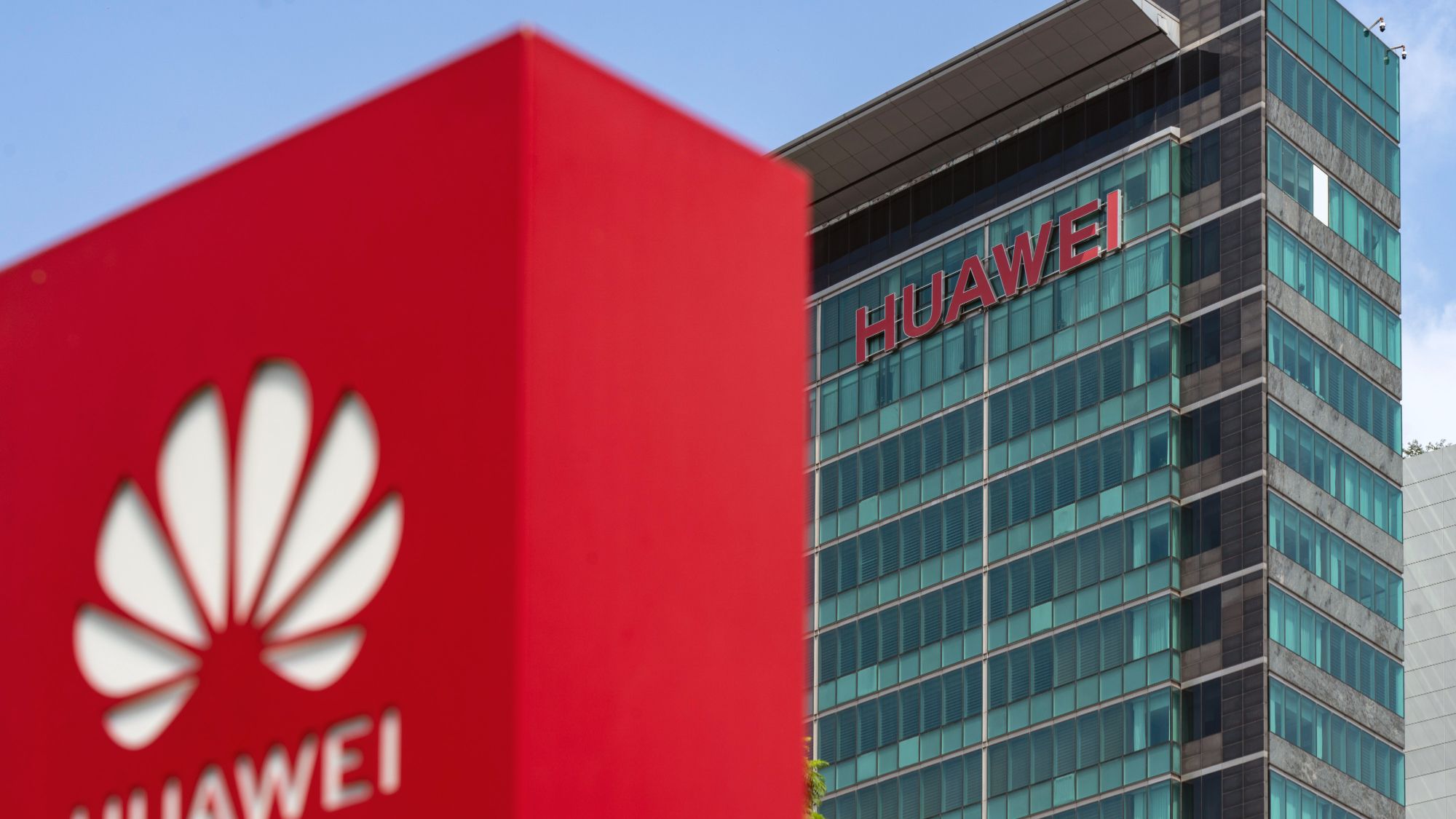
The company claims its Ascend 950PR delivers approximately 2.87 times the inference performance of Nvidia's H20
When you purchase through links on our site, we may earn an affiliate commission. Here’s how it works .
The chips spearheading the move are the Ascend 950PR and the Ascend 950DT, the latest models in Huawei's Ascend line of neural network processing units (NPUs) for AI computing. The Ascend 950PR, an inference-focused chip, entered mass production in April, while the Ascend 950DT, designed for AI training workloads, is scheduled for release in the fourth quarter. Both processors are expected to debut in Korea together with the Atlas 950 SuperPod , an integrated AI computing platform that Huawei says can scale to as many as 8,192 Ascend processors in a single deployment.
According to the report, Huawei Korea has completed master distributor agreements with two local partners, Hansol PNS and longtime Huawei collaborator SK Shieldus, and has already begun preparations for commercialization, including technical training, pricing policies, marketing strategies, and localized branding for the Korean market. Huawei is reportedly building its Korean campaign around aggressive pricing and processing power.
The company claims its Ascend 950PR delivers approximately 2.87 times the inference performance of Nvidia's H20 AI accelerator while costing around one-quarter as much. The H20 is Nvidia's export-compliant AI processor developed specifically for the Chinese market after US export restrictions prevented sales of more powerful GPUs. Huawei concedes its chip falls short on raw performance compared to Nvidia's flagship H200 , but argues the gap can be closed by clustering thousands of Ascend processors together via the Atlas 950 platform.
The Ascend 950 series uses Huawei's "self-developed" high-bandwidth memory (HBM), which the firm constructs from dies obtained from foreign sources. The 950PR uses Huawei's HiBL 1.0 memory and the 950DT its HiZQ 2.0 standard.
Huawei could seize China’s AI chip crown in 2026 as Nvidia’s H200 shipments stall in regulatory limbo
Huawei-led team claims it post-trained DeepSeek's 1.6-trillion-parameter model — 1,000 Ascend 910C chips used in training
Huawei's strategy for the South Korea move, which comes as the country's demand for AI infrastructure surges, appears aimed at competing on both cost and ecosystem maturity, positioning its hardware as a viable Nvidia alternative. Nvidia's flagship accelerators reportedly command tens of thousands of dollars each, with supply remaining tight. A chip at one-quarter the price of the H20 gives Korean buyers a real incentive to seek a second source. Huawei also says it is improving compatibility between its Compute Architecture for Neural Networks (CANN) software stack and Nvidia's CUDA programming ecosystem to ease migration for developers.
Huawei is not new to penetrating South Korea's market, having successfully entered the country’s highly competitive LTE equipment market in 2013. However, past experience is not a guarantee of future success. ETNews notes that industry observers expect Huawei to face resistance in Korea, citing local sensitivity toward Chinese technology, security concerns, the power and heat overhead of high-density Chinese silicon, and the vendor lock-in risk of adopting a proprietary stack. There is also a domestic dimension, as the Korean AI-chip scene is made up largely of accelerator startups, making Huawei's arrival — backed by its supply scale and software depth — read as a competitive threat.
Get Tom's Hardware's best news and in-depth reviews, straight to your inbox.
Key considerations
- Investor positioning can change fast
- Volatility remains possible near catalysts
- Macro rates and liquidity can dominate flows
Reference reading
- https://www.tomshardware.com/tech-industry/semiconductors/SPONSORED_LINK_URL
- https://www.tomshardware.com/tech-industry/semiconductors/chinas-huawei-to-enter-south-korean-ai-chip-market-with-new-atlas-superpods-clusters-pack-8-192-ascend-950-accelerators-per-deployment-reportedly-challenges-nvidia-dominance-with-tripled-inference-performance-of-h20-at-one-quarter-the-cost#main
- https://www.tomshardware.com/membership
- HP OmniBook Ultra 14 review: Potent Snapdragon performance, great endurance, premium pricing
- Joyride Through July With 12 Games Coming to GeForce NOW
- Turtle Beach Command Series KB7 Review: A keyboard with a touchscreen and a lot of potential
- RAMpocalyse pricing prompts maker to construct his own memory using ancient Apollo-era tech — USB drive resurrects hand-threaded magnetic core memory using salv
- PS5 Disc Drive purchase cap predates Sony's disc cutoff — 'high demand' order limit has been on the store page since at least March 2025
Informational only. No financial advice. Do your own research.