
When you purchase through links on our site, we may earn an affiliate commission. Here’s how it works .
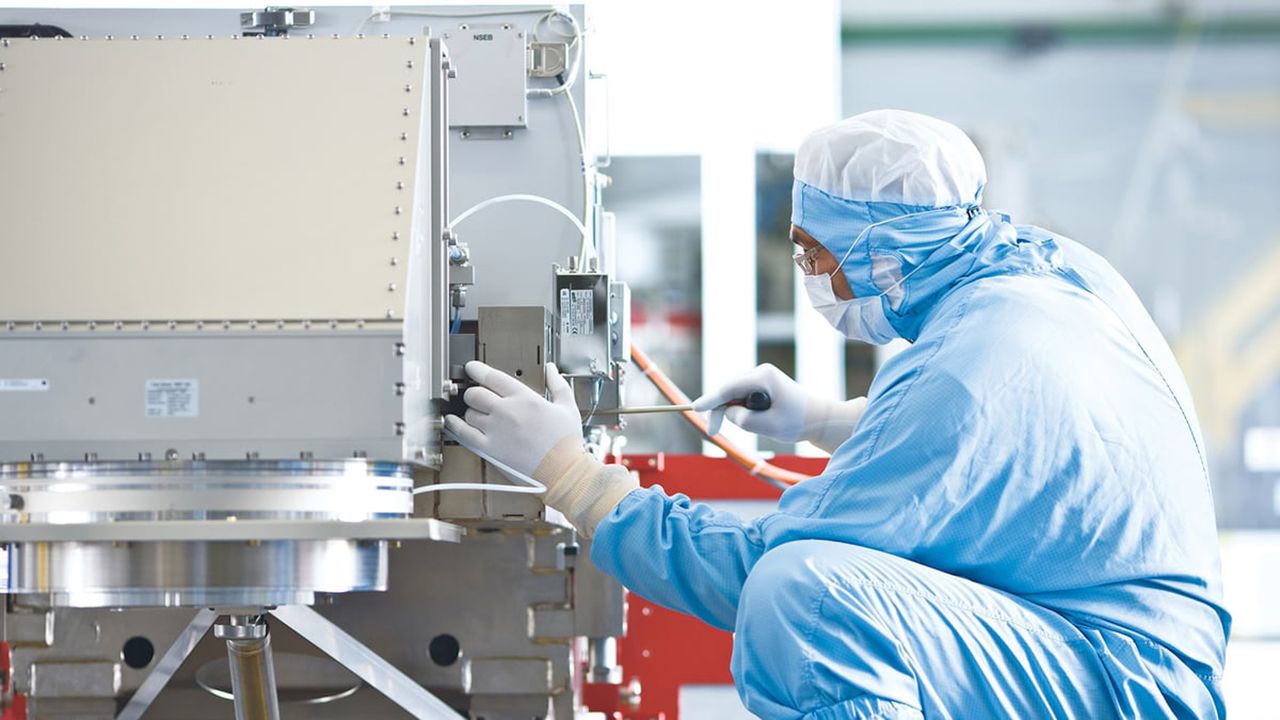
China has been particularly aggressive in procuring wafer fabrication equipment in recent years as the U.S. government has been busy imposing various curbs on its semiconductor industry. Since 2012, Chinese chipmakers, including logic and memory makers, have imported 343 immersion DUV lithography scanners from ASML, excluding imports to multinational fabs located within China.
The authors of the report claim that the existing export controls leave an important gap because lithography equipment originally acquired for less advanced process technologies can potentially be reassigned for more sophisticated process technologies, such as 7nm-class nodes (which the industry adopted in 2018 – 2019). This happens at a cost, but if no other options are available, Chinese chipmakers have no choice. They propose to prohibit exports of all immersion DUV systems to China and restrict replacement components and maintenance services for machines installed at advanced fabs, a proposal consistent with the bipartisan MATCH Act introduced in April.
CTS claims that 270 of these immersion DUV tools are ASML's Twinscan NXT:1980i scanners featuring a 38nm resolution and a 2.5nm matched-machine overlay capability crucial for multipatterning for 7nm-class nodes, which can be used to make chips using 7nm-class fabrication technologies. In addition, CTS claims that Chinese fabs own 22 NXT:2050i and six NXT:2000i systems. It is unclear how many of the 296 advanced immersion DUV scanners shipped to China are currently operational.
Dutch authorities introduced licensing requirements for exports of ASML's NXT:2000i and more capable immersion DUV scanners in September 2023, which effectively prevents their shipment to China. As a result, Chinese chipmakers had to opt for the least capable NXT:1980i. CTS now estimates that Chinese fabs purchased approximately 90 NXT:1980i scanners in 2024 and another 89 units in 2025, spending more than $13 billion during the two-year period. While the Netherlands expanded export controls to the NXT:1980i in September 2024, individual exports of this model can still receive approval. Furthermore, ASML can also potentially sell its NXT:1965Ci systems to clients in China, though we are not sure it has all the components needed for these outdated scanners.
China's DUV technology 'at a similar stage to ASML in 2004,' analyst claims
Key considerations
- Investor positioning can change fast
- Volatility remains possible near catalysts
- Macro rates and liquidity can dominate flows
Reference reading
- https://www.tomshardware.com/tech-industry/semiconductors/SPONSORED_LINK_URL
- https://www.tomshardware.com/tech-industry/semiconductors/china-stockpiled-343-immersion-duv-tools-for-advanced-chipmaking-report-claims-270-asml-scanners-can-produce-7nm-processors-without-sanctioned-euv-tools#main
- https://www.tomshardware.com/membership
- From Enablement to Execution, Egypt’s AI Ecosystem Reaches Production Scale
- 32GB dethrones 16GB as top RAM capacity in gaming rigs despite memory shortage
- Russia's uncrewed robot tank fails during debut military display in front of President Putin
- US Senate kills bill that could potentially shield Americans from skyrocketing power bills due to AI data centers
- Elon Musk confirms discussions with TSMC about Terafab chipmaking collaboration
Informational only. No financial advice. Do your own research.