
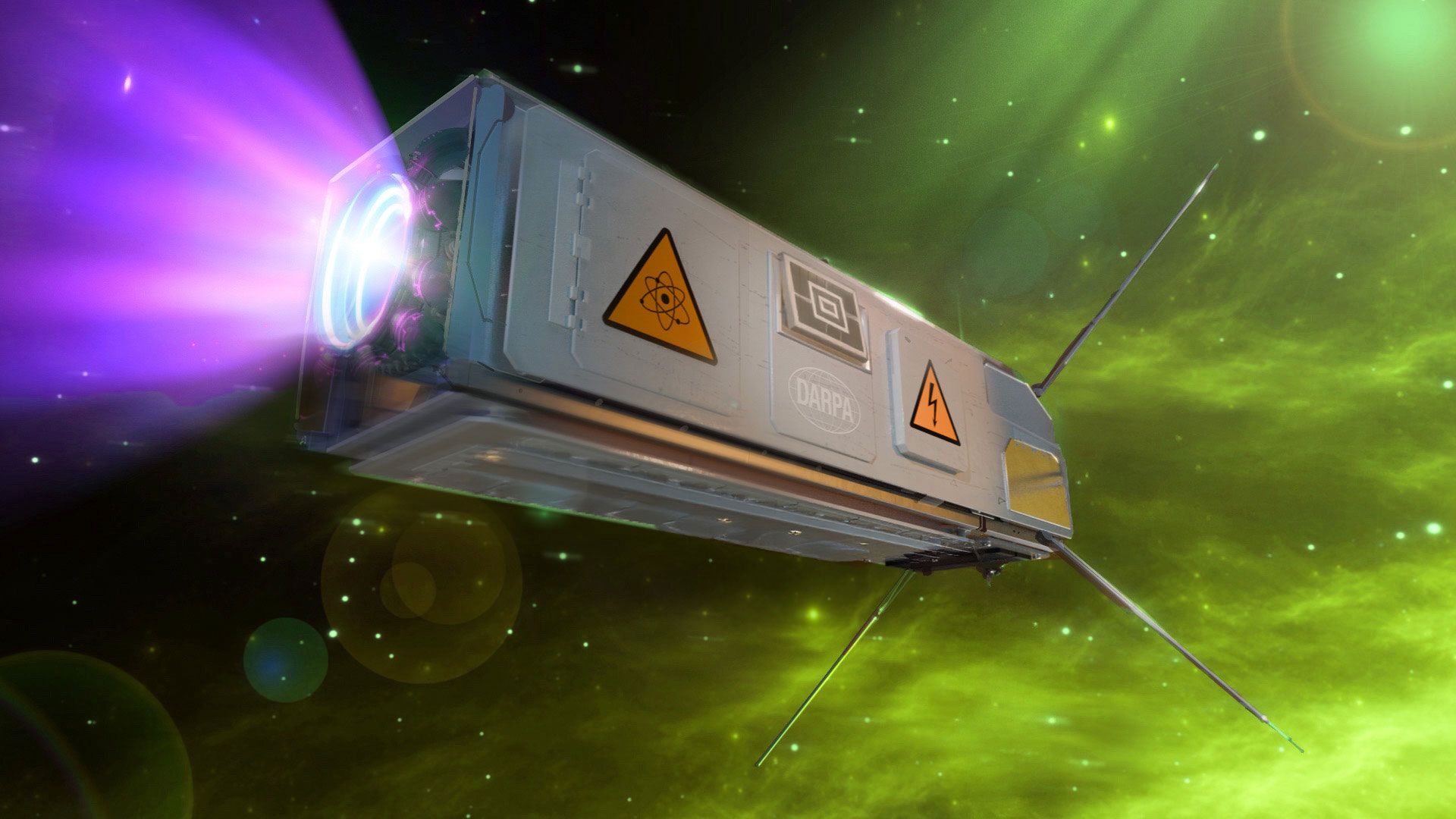
‘Rads to Watts’ program aims to precipitate first step-change prototypes by 2027.
When you purchase through links on our site, we may earn an affiliate commission. Here’s how it works .
Morgan State now has a considerable sum to keep its researchers employed on a project dubbed SYMPHONEE (Strontium-Yttrium Multi-junction PIN-based High-Density Output Nano-system for Extreme Environments). Radioisotope power sources have been used for quite some time in low-power draw applications such as smoke detectors and space systems for decades. However, the new initiative, led by Morgan State and with team members such as Northrop Grumman, PNNL, Project Omega, ARA, and Widetronix, aims to take the tech into the next generation. More specifically, under the auspices of (and with funds from) the 'Rads to Watts' program, they are aiming to build next‑generation radiovoltaic micro‑power systems for extreme environments.
The proposed next-gen power cells make use of radioisotopes extracted from nuclear waste, especially Strontium‑90. Research partner Project Omega has already made some devices and will build the DARPA prototype. We noticed that it has published a promotional video that highlights sea drones with a 10-year battery life, for example. Coordinated by Morgan State researchers, PNNL labs will handle nuclear materials/testing, Northrop Grumman and ARA will provide AI-driven modeling, with Widetronix designing nuclear micro‑generator radiovoltaic converter architectures.
“Our team is pushing the boundaries of radiovoltaic technology, developing high-power, long-life systems that were not previously achievable,” said Professor Michael Spencer, the technical lead for the project. “By integrating advanced materials, device engineering, and nuclear science, we are laying the foundation for a new generation of persistent power systems for extreme environments.”
(Image credit: Project Omega ) (Image credit: Project Omega ) With this research, development, and fabrication powerhouse assembled, it is hoped a step change will be achieved to boost radiovoltaic micro‑power system power density. The goal is to be able to power persistent autonomous operations in remote or difficult-to-access environments like space, underwater, and contested regions – for decades. A Northrop Grumman rep emphasized the potential of a ‘persistent power source’ becoming available for “next-generation defense systems.” Project Omega is also interested in developing “persistent underwater security systems” – sea drones .
DARPA calls for proposals for autonomous underwater drones
Key considerations
- Investor positioning can change fast
- Volatility remains possible near catalysts
- Macro rates and liquidity can dominate flows
Reference reading
- https://www.tomshardware.com/tech-industry/drones/SPONSORED_LINK_URL
- https://www.tomshardware.com/tech-industry/drones/darpa-plans-30-year-endurance-nuclear-waste-batteries-to-power-next-gen-drones-says-report-project-symphonee-aims-to-harvest-strontium-90-to-power-persistent-military-drones#main
- https://www.tomshardware.com/subscription
- Joyride Through July With 12 Games Coming to GeForce NOW
- Memory price surge begins to cool as consumers hit affordability limit — AI demand still keeps DRAM and NAND prices climbing through Q3 2026
- Blackstone-owned QTS abandons planned world’s largest data center campus after years of lawsuits — 2,100-acre Virginia Digital Gateway project dies over a newsp
- Companies join hands to collectively dunk on PlayStation's all-digital future — Domino's pizza, KFC, and GameSir all threaten an end to physical production
- Save up to 71% on HP gaming desktops and laptops this July 4 — weekend sale could land you a gaming PC for less
Informational only. No financial advice. Do your own research.