
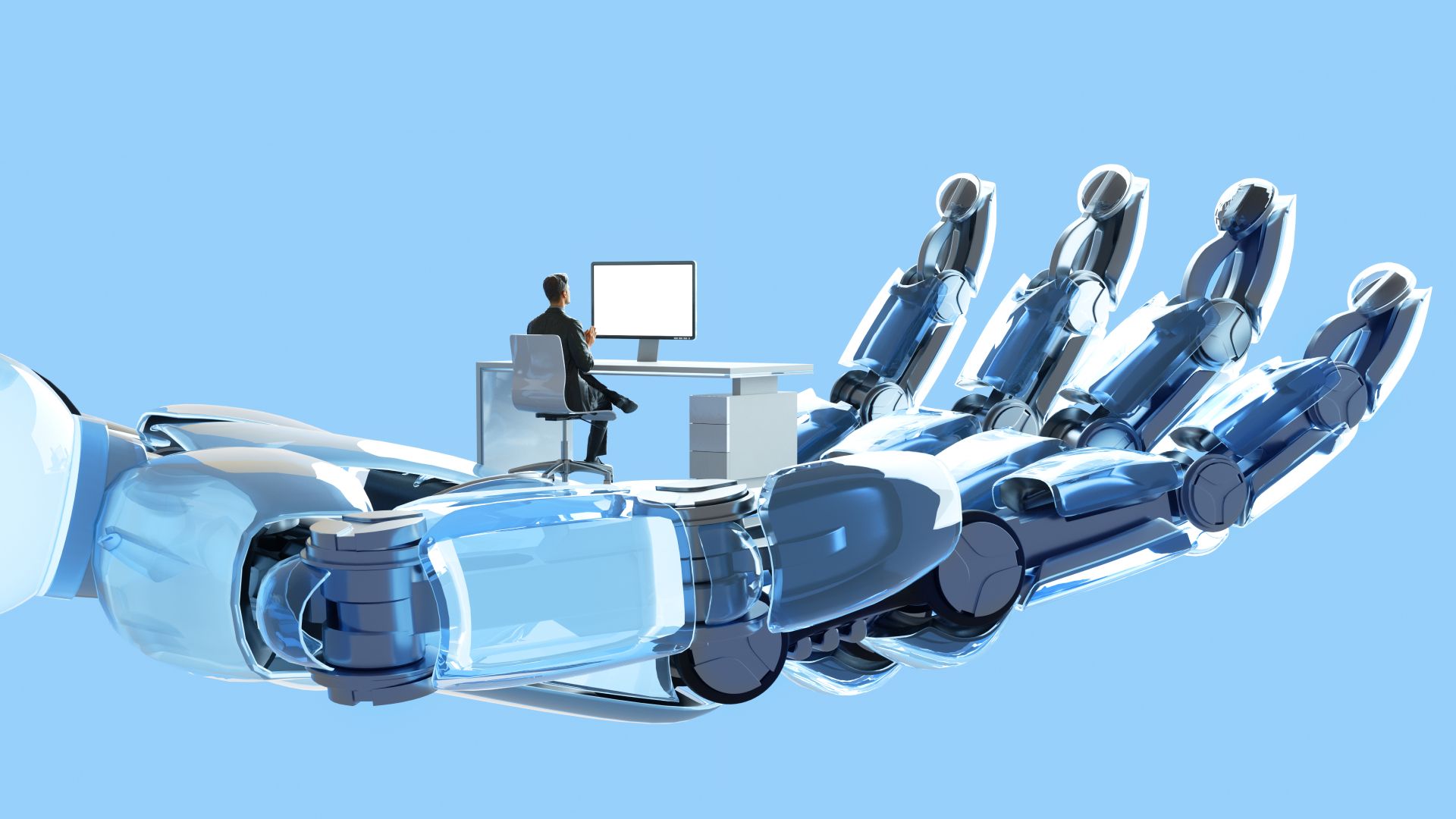
There are workflow redesigns, data cleaning and integration, and compliance risk management, among several other accompanying tasks. Employees need training on how and when to apply AI. They also need cybersecurity training as hackers are increasingly finding ways to exploit systems through AI chatbots. Managers need to know which outputs can be trusted and which require human review. There’s also the question of how much responsibility AI can safely handle. We recently covered a case where a Claude-powered AI coding agent deleted a company's entire database . In many companies, these changes are slower and more difficult than the early AI hype suggested.
European data further complicates the replacement narrative. A European Central Bank analysis of firms that use and invest in AI found no significant overall difference in job creation or destruction between businesses that use AI and those that do not. In some cases, companies with more intensive AI use or investment were slightly more likely to be hiring, especially where AI supported research, development, and innovation.
While none of this proves that AI will not still reduce employment later, it does suggest that the current relationship between AI and jobs is not as straightforward as many layoff announcements imply. In the near term, AI may be helping some companies grow, while leaving many still searching for measurable returns.
As if the data isn’t painting an unclear enough picture, there’s a real possibility that companies are falsely using AI as an excuse to fire workers. Layoff announcements rarely provide enough detail to distinguish genuine AI displacement from broader corporate restructuring or even serious internal issues. Sam Altman, whose company helped trigger the generative AI boom, has warned that some firms are engaging in “AI washing” by blaming AI for job cuts they would have made anyway. He also acknowledged that real displacement is happening and is likely to become more visible over time. Both points can be true.
This is why the current wave of AI-linked layoffs should be read carefully. A company may cite automation while also dealing with overhiring from the pandemic period, weaker demand, outsourcing, margin pressure, a falling share price, activist investors, or a broader strategic reset. AI can be the cause, the tool, the justification, or merely the language used to present a decision to investors.
Now, this does not mean AI is irrelevant to job cuts. Major companies across banking, retail, technology, and professional services are already reorganizing work around automation. Standard Chartered has discussed thousands of job cuts tied to automation and lower-value roles. Other firms, such as Amazon and Meta , have cited AI as part of broader efficiency drives.
As an increasing number of companies now believe AI will allow smaller teams to do more, even uncertain productivity gains are influencing hiring plans. The powerful technology is arriving in companies already under pressure to cut costs, demonstrate growth, and satisfy investors. As a result, managers may delay backfilling roles, and graduate hiring may slow, with entry-level work being bundled into contractor roles or existing mid-level positions.
The danger for companies is that cutting too deeply into junior roles could create a skills shortage later. The danger for workers is more immediate, as the traditional route into white-collar careers may narrow before a clear replacement path emerges. For now, the most defensible reading is also the least dramatic, and may be somewhat on the fence: AI is neither harmless, an automatic jobs apocalypse, nor a magic potion for instant growth and productivity.
Etiido Uko is a news contributor for Tom's Hardware covering the latest updates in big tech and the PC industry. He is a mechanical engineer and senior technical writer with over nine years of experience in documentation and reporting. He is deeply passionate about all things engineering and technology, and is an expert in gadgets, manufacturing, robotics, automotive, and aerospace. ","collapsible":{"enabled":true,"maxHeight":250,"readMoreText":"Read more","readLessText":"Read less"}}), "https://slice.vanilla.futurecdn.net/13-4-24/js/authorBio.js"); } else { console.error('%c FTE ','background: #9306F9; color: #ffffff','no lazy slice hydration function available'); } Etiido Uko Social Links Navigation News Contributor Etiido Uko is a news contributor for Tom's Hardware covering the latest updates in big tech and the PC industry. He is a mechanical engineer and senior technical writer with over nine years of experience in documentation and reporting. He is deeply passionate about all things engineering and technology, and is an expert in gadgets, manufacturing, robotics, automotive, and aerospace.
Key considerations
- Investor positioning can change fast
- Volatility remains possible near catalysts
- Macro rates and liquidity can dominate flows
Reference reading
- https://www.tomshardware.com/tech-industry/artificial-intelligence/SPONSORED_LINK_URL
- https://www.tomshardware.com/tech-industry/artificial-intelligence/executives-are-cutting-jobs-for-an-ai-future-that-hasnt-fully-arrived-yet-even-as-productivity-gains-remain-difficult-to-prove-data-neither-confirms-nor-refutes-an-ai-unemployment-apocalypse#main
- https://www.tomshardware.com
- Travlfi JourneyGo 5G mobile hotspot review – Affordably priced, but lacking in performance and features
- [Daily Due Diligence] NVDA NVDA
- RetroPad is a ‘full-feature-parity version of Notepad from XP’ in just 2,749 bytes — x86 assembly coded apps comes from Windows legend Dave W Plummer
- NVIDIA and Doosan Group Collaborate to Advance Physical AI and AI Factory Infrastructure
- Google signs $920M monthly compute deal with SpaceX — company’s projected annual data center revenue to exceed its combined proceeds from Starlink, launch servi
Informational only. No financial advice. Do your own research.