
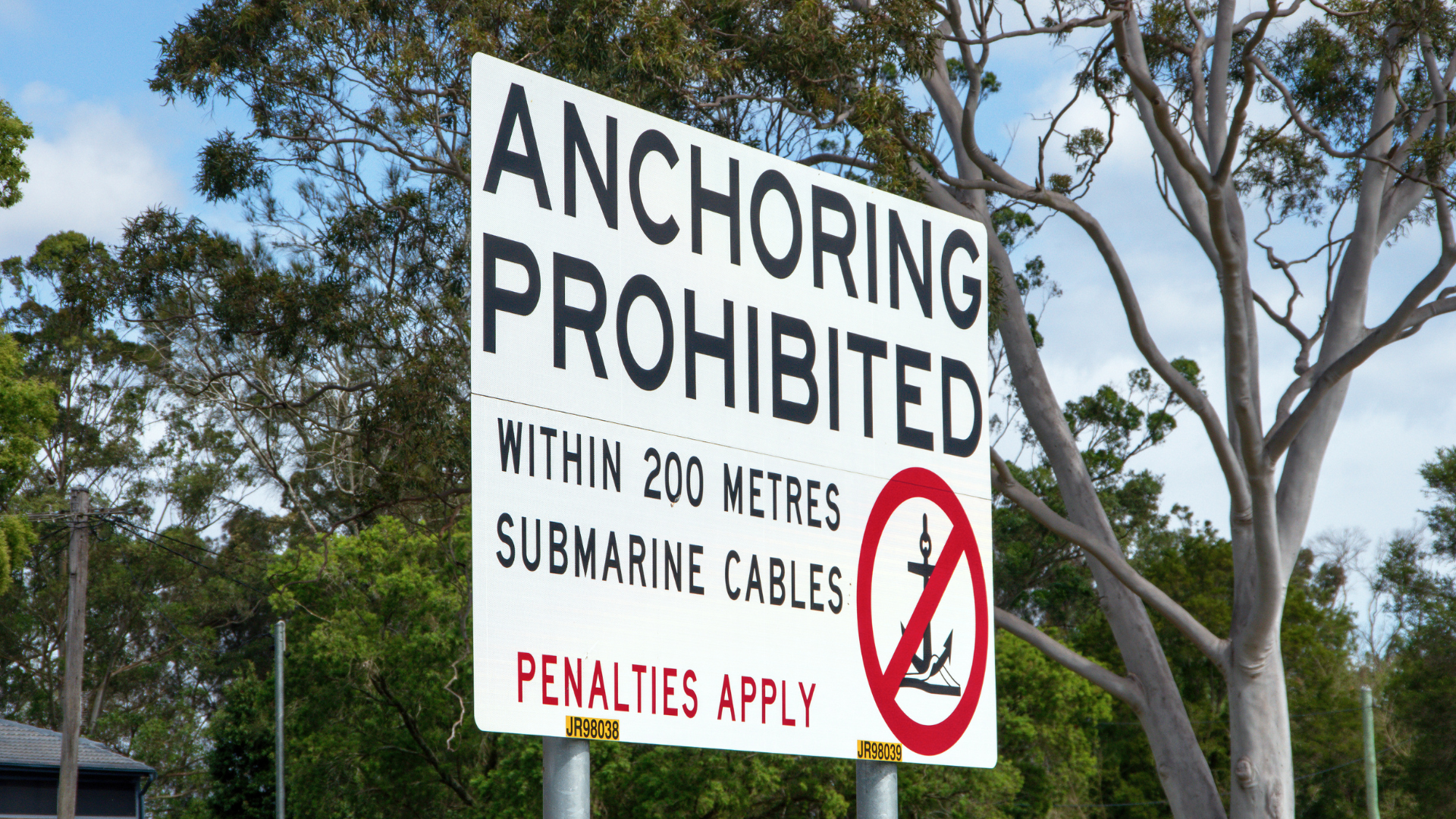
Will Finland be successful in convicting a crew suspected of damaging its undersea infrastructure this time?
When you purchase through links on our site, we may earn an affiliate commission. Here’s how it works .
Prosecutors also say that the ship intended to target eight additional subsea cables in the area before it was stopped by the Finnish Coast Guard. Two other crew members of the Fitburg remain in detention in Finland as prosecutors determine if they will be charged in relation to the suspected sabotage. The lawyers of the accused say that Finland does not have jurisdiction over the crew, but the authorities say that it will leave it up to the courts to decide.
This is the second undersea cable-related investigation to reach prosecution, as another Russian-linked ship, the Eagle S oil tanker, was involved in another suspected sabotage on Christmas Day 2024 . Three officers of the “shadow fleet” tanker were charged with the same criminal cases that the Fitburg crew are facing, although Finland failed to secure a conviction, as the court said that it did not have jurisdiction over the case because the incident happened outside of Finnish territorial waters. The ruling is currently under appeal, though, with prosecutors arguing that “the effects of the crime materialized here in Finland.”
Undersea cables are crucial infrastructure that connect nations to one another, and it is particularly important for Finland as one of the NATO members bordering Russia. The country’s undersea communications, electricity, and gas connections have been hit multiple times in recent years, which is why it has taken steps to protect its sea-line of communications (SLOC). This includes the deployment of a SOSUS-like system that warns cable operators and the Finnish authorities of suspicious activities near vulnerable infrastructure. The technology, called Distributed Acoustic Sensing (DAS), integrates sensors into fiber optic cables that detect sound and vibrations, like an anchor hitting the seabed, coming from the sea floor.
However, suspected attacks on undersea cables aren’t limited to the Baltic Sea. Other incidents have been reported in the Red Sea and in the Taiwan Strait — geopolitical hotspots where tensions often run high. Because of this, both firms and countries are exploring alternative routes to make it harder to disrupt communications. The EU is considering going under the North Pole to bypass Russia and the United States for connecting to Asia, while Meta is building a 50,000-km undersea network that connects the U.S. to Brazil, Africa, India, and Australia, which, notably, avoids bottlenecks like the Mediterranean Sea, the Red Sea, the Strait of Hormuz, and the Strait of Malacca.
Four suspects identified in Finland undersea cable damage investigation
Key considerations
- Investor positioning can change fast
- Volatility remains possible near catalysts
- Macro rates and liquidity can dominate flows
Reference reading
- https://www.tomshardware.com/networking/SPONSORED_LINK_URL
- https://www.tomshardware.com/networking/finland-charges-russian-captain-and-crew-member-of-ship-suspected-of-damaging-undersea-cables-prosecutors-claim-ship-had-eight-more-targets-before-it-was-stopped-by-coast-guard#main
- https://www.tomshardware.com/membership
- AI costs spike as subscriptions hit pricing wall — firms turn towards Chinese LLMs, open-source models to extend budget
- Get an RTX 5090 gaming laptop for less than $3,000 — Acer's 16-inch Predator with 2TB of storage and 32GB of RAM is now $500 off
- Amazon UK has slashed 43% off this excellent 4K 32-inch OLED gaming monitor — lowest-ever price on this ASUS ROG Strix OLED now just £599
- Score 32GB of DDR5 RAM from only $240 in these Newegg hardware bundles for Intel and AMD gaming PC builds — huge savings on premium Gigabyte motherboards couple
- Microsoft's bug-hunting nemesis extends vendetta with more zero-day attacks — Nightmare Eclipse publishes RoguePlanet and GreatXML local privilege escalation ex
Informational only. No financial advice. Do your own research.