
Chinese civilian drone exports to the US fell 60% to 70% year over year after DJI's listing.
When you purchase through links on our site, we may earn an affiliate commission. Here’s how it works .
The four-part test buried in the underlying national security determination catches any ground-traveling robot heavier than 4.4 pounds, including its dock, provided it carries an environmental sensor and a network link running at 200 kb/s or faster, and it names "AI or machine-learning model weights" as covered software. The determination, attached as Appendix C to the FCC's public notice, applies to a mechanical mobile device capable of locomotion, obstacle avoidance, navigation, or movement on the ground that operates at a distance from a human operator.
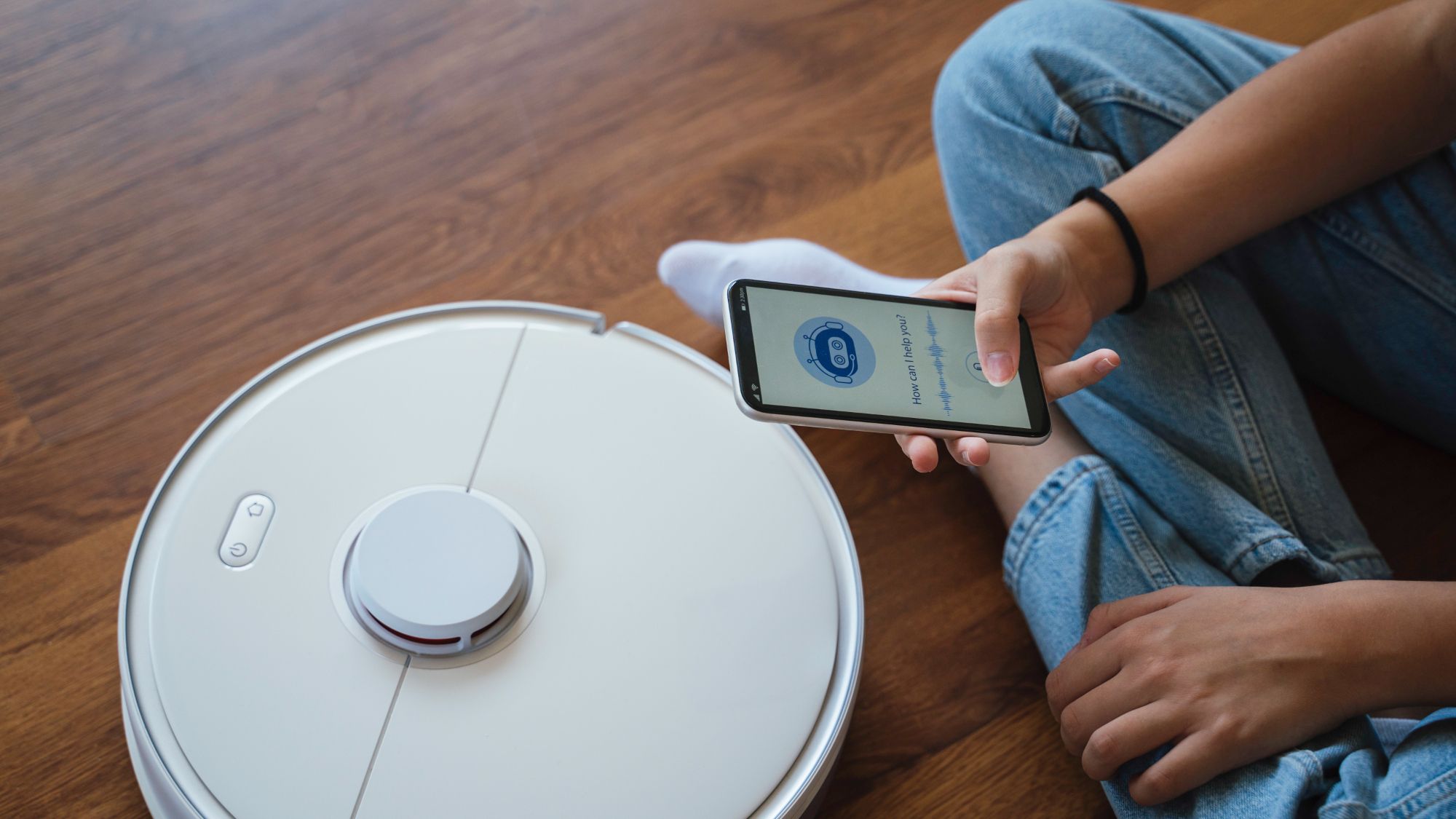
Devices qualify only if they also contain all three of a sensor that perceives its environment, a wired or wireless connection capable of at least 200 kb/s in either direction, and software controlling autonomous navigation, perception, data collection, or remote command and control. Bluetooth satisfies the connectivity test, as do Wi-Fi, cellular, and satellite. FCC media relations director Katie Gorscak confirmed to The Verge that robot vacuums meet the definition.
Six categories are exempted: connected vehicles of any gross weight, rail vehicles, uncrewed aircraft, uncrewed underwater vehicles, FDA-regulated devices including surgical systems and powered wheelchairs, and fixed industrial arms such as SCARA, delta, and gantry designs. Drones were placed on the Covered List separately in December .
Both determinations define "foreign-produced" as anything failing to qualify as a domestic end product under 48 CFR § 25.101(a), the Buy American Act rule. Under that provision, an item must be manufactured in the U.S., and the cost of domestic components must exceed 65% of the cost of all components for goods delivered through 2028, rising to 75% from 2029.
FCC votes to ban all Chinese labs from certifying electronics sold in the US due to national security concerns
Trump administration reportedly debating ban on Chinese cellular modules in expansion of FCC crackdown
FCC reverses course, allows software updates for foreign-made drones and routers until 2029
The same paragraph waives the component test for commercial off-the-shelf items, which would leave only the U.S. manufacturing requirement for a mass-market consumer robot. Manufacturers can apply to the Department of Defence for a Conditional Approval that lifts the restriction, a process that both Netgear and Amazon 's Eero brand cleared within weeks of March's router ban .
Covered List status blocks Class I and Class II permissive changes under 47 CFR §§ 2.932(b) and 2.1043(b), the mechanism manufacturers use to push firmware and security fixes to certified hardware. The Office of Engineering and Technology suspended those prohibitions for robots and inverters hours after the listing, repeating the relief it gave drones in January, routers in March, and both categories through 2029 in May.
Get Tom's Hardware's best news and in-depth reviews, straight to your inbox.
Key considerations
- Investor positioning can change fast
- Volatility remains possible near catalysts
- Macro rates and liquidity can dominate flows
Reference reading
- https://www.tomshardware.com/tech-industry/SPONSORED_LINK_URL
- https://www.tomshardware.com/tech-industry/fcc-robot-ban-covers-any-ground-robot-over-4-4-pounds-with-a-200-kbps-connection#main
- https://www.tomshardware.com/membership
- Lumentum CEO warns of impending bottleneck on critical material used for silicon photonics — fab and material shortfall already lags 30% below customer needs as
- PS5 emulation hits new milestone in record time, multiple 3D games now playable in Kyty — Performance and support steadily improving with 30 FPS gameplay possib
- Memory maker SK hynix's profit rises 557% amid global shortage, expansion costs climb to $27 billion — shares slide despite mammoth earnings as expectations out
- Teacher arrested for clapping in support of opposition at an AI data center meeting — gigawatt-scale project gets approved anyway despite community resistance
- Amazon accidentally spent $1.8 million using Claude for menial coding task, went 860% over budget —'catastrophically expensive' coding blunders discovered in in
Informational only. No financial advice. Do your own research.