
Sipeed reveals Chinese-made DGX Spark and Ryzen AI Halo rival, expected to cost $3,999
Apple Mac mini (Late 2026) Review: Strong performance, but losing its grip on value
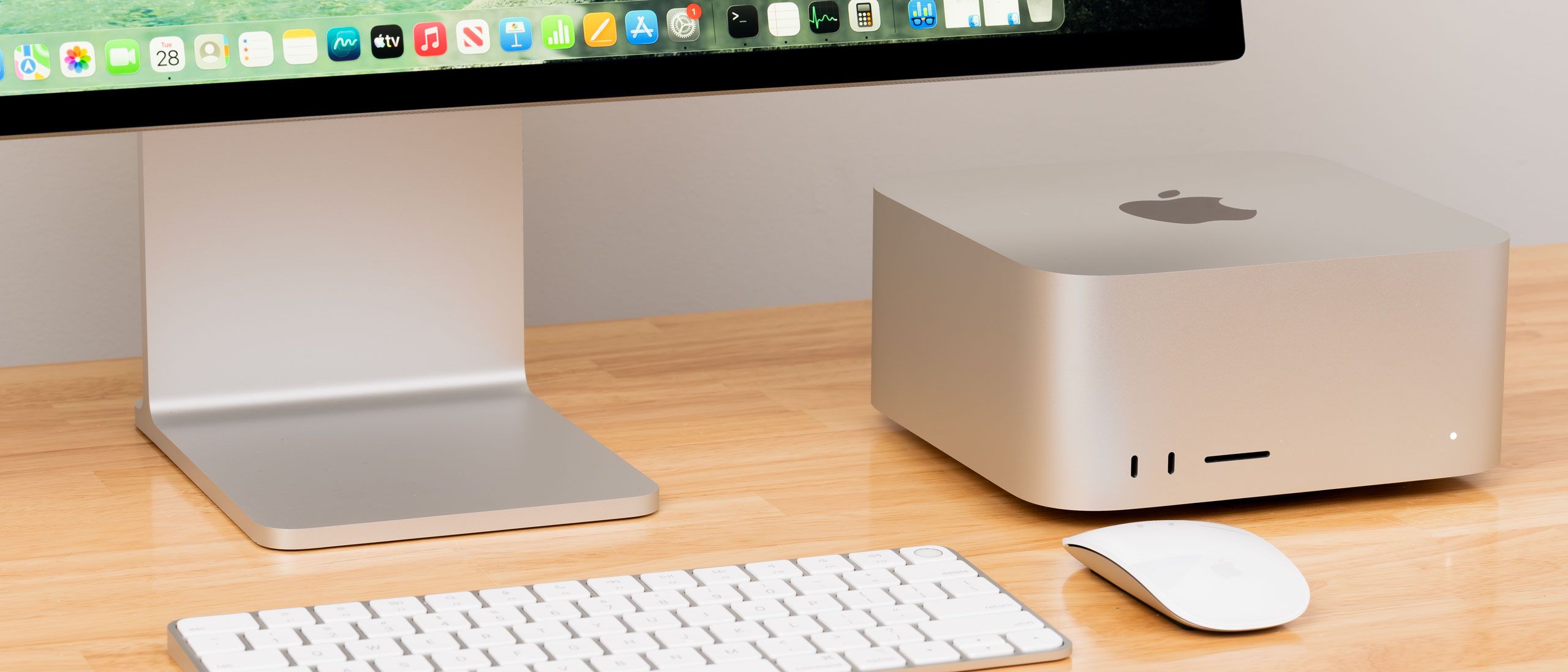
The Mac Studio’s EDP is under half that of the DGX Spark in this test, once again indicating its impressive efficiency and performance with this dense model and workload.
Of course, Qwen 3.8 27B doesn’t need 256GB (or even 128GB) of RAM to do its thing. To really stretch the legs of the Mac Studio, we chose two larger open models that are near the top of capability benchmarks right now: GLM-5.3 Flash and DeepSeek V4.1 Flash 1017.
The M5 Ultra Mac Studio can natively fit quantized versions of these models (a four-bit quantization in the case of GLM 5.3 and a two-bit quantization courtesy of Unsloth for DeepSeek V4.1 Flash) in its 256GB of RAM, but there’s no way even those quantizations will fit on a single 128GB DGX Spark.
That’s where the clustering capability of Nvidia’s platform comes in. We’ve already seen how pairing up Sparks can scale up one’s local inference capacity, and that capability is critical when evaluating them against a Mac Studio like this.
But the rapidly rising prices of GB10 systems have frustrated our value analysis during the course of this testing. For just one example, Lenovo set all of its ThinkStation PGX systems to a “coming soon” status during our tests. And as we’ve already mentioned, the Dell Pro Precision GB10s we’re clustering here are an eye-popping $10K each. We have no reason to believe the rest of the GB10 systems on the market will be that much cheaper once this current volatility shakes out.
No matter how you slice it, getting even a pair of DGX Sparks with 4TB SSDs is going to end up costing quite a bit more than this single Mac Studio, even if $20K for a dual-Dell cluster is at the top end of the market. $15K or more is a relatively more reasonable benchmark, but even then, that’s 25% more money than a single M5 Ultra Studio.
We don't yet have end-to-end agentic tests for these larger models, but directionally, we can still consider prompt processing and decode performance to see which of these systems would deliver faster agentic turnaround.
Because of the limited choice of compatible inference engines for Apple Silicon, we have to use llama.cpp for DeepSeek V4.1 Flash 1017. Worse, the Mac Studio can't hold both the DeepSeek V4.1 Flash 1017 model weights and the DSpark speculative decoding model required to boost token output even with a two-bit quantization, so we’re forced to leave performance on the table.
In contrast, the DeepSeek V4.1 Flash serving recipe for our Spark cluster can take advantage of DSpark speculative decoding and the TensorFold inference engine, which can deliver higher performance than llama.cpp.
(Image credit: Future) (Image credit: Future) (Image credit: Future) (Image credit: Future) Image 1 of 4 View Original
Even with MLX support, llama.cpp performance with DeepSeek V4.1 Flash on the Mac Studio is pokey next to the DGX Spark cluster. Between its slower prompt processing speed and unaugmented decoding, it would end up at a disadvantage in agentic work with this model.
The community two-Spark serving recipe from Mia’s AI Lab with TensorFold is a major asset for owners of those systems, even accounting for the bit of extra work involved in setting up and managing a Spark cluster.
Where the Mac running llama.cpp needs anywhere from 10 to 25 minutes to digest the longest context lengths we tested for DeepSeek V4.1 Flash, the Spark cluster needs under five minutes at most to do the same jobs with this recipe — and the TensorFold inference engine is much faster on the decode side, too. If you want to run this model locally, a pair of Sparks is the clear winner right now.
With DeepSeek out of the way, let’s consider GLM 5.3 Flash, another leading open model for local intelligence. Because MTP with GLM 5.3 Flash doesn't require a separate drafting model, we can give it a decode boost on the Mac Studio without the memory headroom issues we saw with DeepSeek V4.1 Flash. For our Spark cluster, we chose to run GLM 5.3 Flash using a recipe cooked up by Mia's AI Lab.
(Image credit: Future) (Image credit: Future) (Image credit: Future) (Image credit: Future) Image 1 of 4 View Original
GLM 5.3 Flash runs much better on llama.cpp than DeepSeek V4.1 Flash does, but even so, the DGX Spark cluster delivers much faster prompt processing times across the board. The M5 Ultra's memory bandwidth advantage means the Mac is delivering higher tokens per second on the decode side, but it’s likely that any agentic turn would still finish faster on the Spark cluster.
Because a TensorFold serving recipe is available for GLM 5.3 Flash on Apple Silicon, however, we can see just how much extra performance is available from an MLX-specific four-bit model quantization and a theoretically higher-performance inference engine.
(Image credit: Future) (Image credit: Future) Image 1 of 2 View Original
Key considerations
- Investor positioning can change fast
- Volatility remains possible near catalysts
- Macro rates and liquidity can dominate flows
Reference reading
- https://www.tomshardware.com/tech-industry/artificial-intelligence/SPONSORED_LINK_URL
- https://www.tomshardware.com/tech-industry/artificial-intelligence/going-deep-on-local-ai-performance-with-apples-mac-studio-with-m5-ultra-inference-engine-recipes-mandatory-for-bigger-models-as-mlx-stack-matures#main
- https://www.tomshardware.com/my-account
- Korea Advances Physical AI Across Industries With NVIDIA
- LG WOLED TVs suffer from 'edge rot' pixel death
- ‘Hogwarts Legacy’ Gets a Magical NVIDIA DLSS 5 Upgrade on GeForce NOW
- NVIDIA Dynamo Recipes Bring Korea’s Leading Open Models to Production
- LG WOLED TVs suffer from 'edge rot' pixel death
Informational only. No financial advice. Do your own research.