
Hey Google: Is now a good time to launch a premium laptop platform with a 16GB RAM requirement? What about now?
When you purchase through links on our site, we may earn an affiliate commission. Here’s how it works .
The driving force behind all of this is, of course, is the roughly five-fold increase in RAM costs in the past year, driven by AI hyperscaler demand. That’s also why Valve delayed the Steam Machine by roughly six months, eventually forcing its launch price above $1,000. That completely negated the value proposition that made the Steam Deck a success for so long. And I think Google ’s new laptops are in a similarly tough spot, for many of the same reasons.
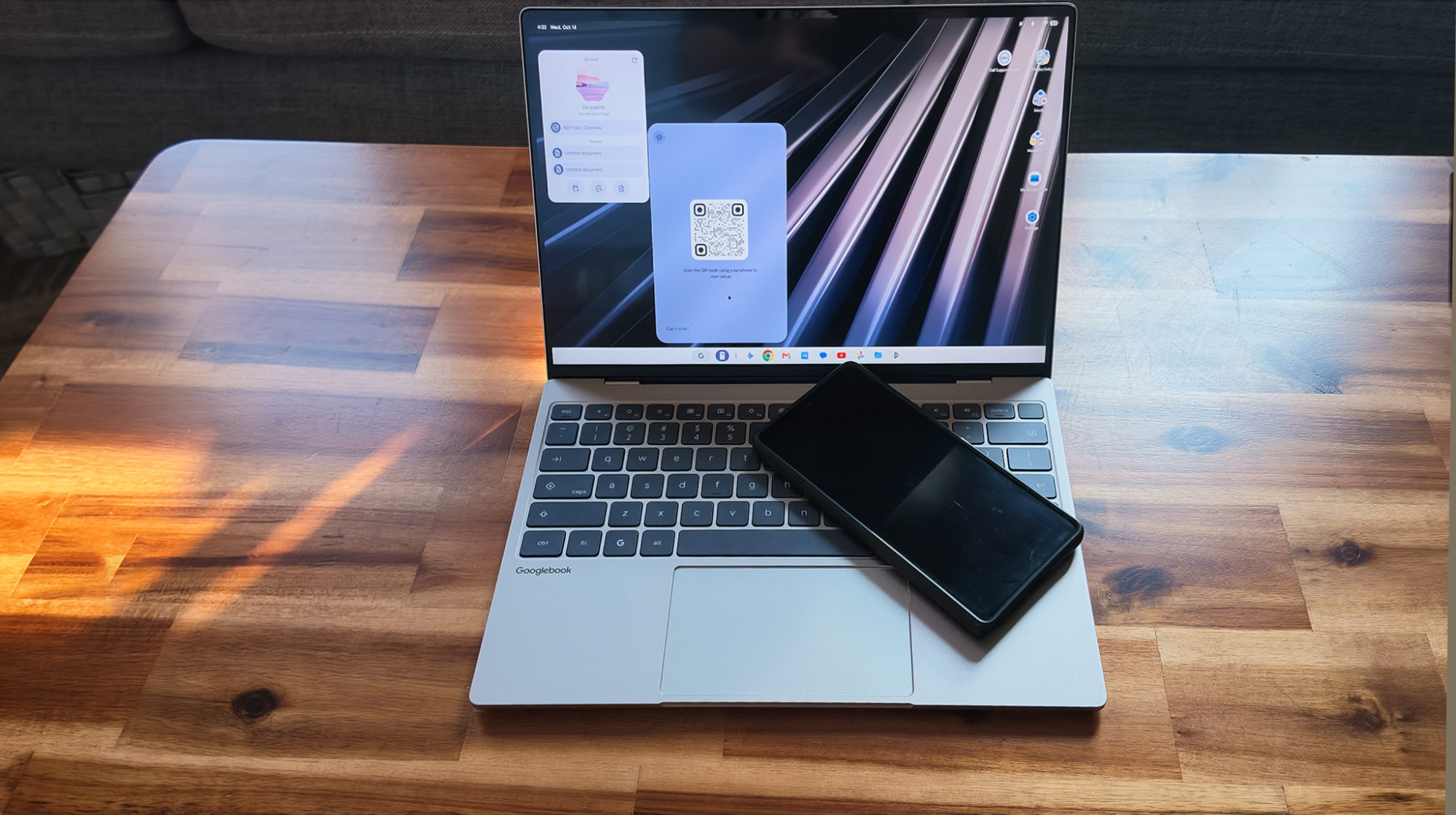
The new Googlebook laptop platform – an AI-focused reimagining of its successful Chromebook platform, complete with its own 16GB RAM requirement and prices that (apart from a limited-time $899 offer from Acer) start at $999. Models from Lenovo and Asus even stretch into MacBook Air pricing territory.
But, like Valve ’s gaming hardware, Google’s previous laptop success has hinged primarily on affordability. Chromebooks launched in 2011, with three models all priced around $500, and Acer again undercut its competition at $349. There have been “high-end” Chromebooks over the years, but the vast majority have remained fairly affordable.
Android phone integration (akin to an iPhone / MacBook pairing) is one of the major new selling points of the Googlebook platform. But you need a phone running Android 17 for that integration to work. That OS iteration launched just four months ago and, so far, is only available on a handful of expensive phones.
Hands-on with Googlebooks — Five models, the new Googlebook OS, and a Mac-style experience for Android users at premium prices
At IFA 2026, computing chased the high and low ends — AI and budget-focused machines left little for the rest of us
Googlebooks from Dell, Lenovo, and HP tested: Nice hardware, but the OS isn't ready yet
Aside from severely limiting the number of current customers, this also ignores the fundamental realities of the Android phone market. The majority of Android devices sold every year are mainstream and budget models. Even with the same RAM and storage pressures pushing prices up, less than 30% of global phone shipments are models priced higher than $600 — and that number includes iPhones, all of which are priced above that mark, unless you’re buying from a reseller.
So in short, Google is launching a new, mostly $1,000-plus (at least for now) laptop platform, hoping to piggyback off the brand recognition and mindshare of its search engine, cheap Chromebooks, and (largely) cheap Android phones. This is at a time when the price of almost everything else has also been on the rise for years, and both Apple and Microsoft’s Windows partners are offering up the best sub-$700 laptops… arguably ever.
It’s hard not to see this as poor timing, at best. Given software and hardware lead times, Googlebooks as a concept were almost certainly pretty far along a year ago when RAM pricing started to skyrocket. But with solid indications that the cost of RAM and storage could continue to climb into next year and beyond, Google may have effectively been forced into an “if not now, when” launch window, which also seems to have been the case with the Steam Machine launch earlier this year.
Of course, Nvidia’s also brand-new Spark laptops are priced much higher, starting at $2,599 and going up to $5,899 or even $6,999 for 128GB models. But those Nvidia-silicon laptops are aimed primarily at AI coders, not average Android-toting consumers who might also be interested in AI features. And, in case you somehow haven’t noticed, Nvidia has become one of the largest companies in the world by selling ever-pricier GPUs to gamers, workstation users, and the global AI hyperscaler market. Nvidia may be halting RTX 5090 production in favor of more profitable AI hardware, despite that gaming GPU continuing to sell out while being consistently priced thousands of dollars above its MSRP. Early indications point to similar demand for at least some Spark laptops, with preorders of Microsoft’s 128GB Surface Laptop Ultra seemingly sold out before the platform even officially launches.
Google’s hardware division, meanwhile, has spent the last 15 years selling its mostly budget laptop platform, while repeatedly attempting and failing to make premium Google-designed devices a mainstream success. Yes, there was the Chromebook Plus rollout in 2023, but those devices were mostly priced below $700, and multiple retailer list filters suggest the sub-$500 models are the most popular. Even Google’s flagship Pixel phones are priced well below flagships from Samsung and Apple.
This is a strange time to go upmarket, to require 16GB of RAM, and to launch a new laptop OS and platform at all, considering PC shipments are down 20% . And that’s especially true if you’re Google, a company known primarily for free, ad-supported software and services, and hardware that you primarily buy because it’s what you can afford, not because it’s what you want.
Matt Safford Managing Editor After a rough start with the Mattel Aquarius as a child, Matt built his first PC in the late 1990s and ventured into mild PC modding in the early 2000s. He’s spent the last 15 years covering emerging technology for Smithsonian, Popular Science, and Consumer Reports, while testing components and PCs for Computer Shopper, PCMag and Digital Trends.
Key considerations
- Investor positioning can change fast
- Volatility remains possible near catalysts
- Macro rates and liquidity can dominate flows
Reference reading
- https://www.tomshardware.com/laptops/SPONSORED_LINK_URL
- https://www.tomshardware.com/laptops/googlebooks-are-as-poorly-timed-as-valves-steam-machine-and-may-suffer-a-similar-fate#main
- https://www.tomshardware.com/my-account
- The Nordics and NVIDIA Show What’s Possible When a Region Commits to Advanced Computing
- Taiwan targets illicit AI server exports to China with five-year prison terms
- Researchers train AI to detect concealed handguns using Wi-Fi signals
- Official DLSS 5 running on unsupported games delivers up to 90% better performance than the leaked version
- Official DLSS 5 running on unsupported games delivers up to 90% better performance than the leaked version
Informational only. No financial advice. Do your own research.