
US closes loophole that allowed Chinese-owned subsidiaries located outside China to buy AI chips
A transcript of DeepSeek founder Liang Wenfeng's May 20 closed-door investor meeting, leaked online in July, arguably explains why Beijing is letting any Nvidia silicon in at all. According to the document, whose authenticity DeepSeek hasn't confirmed, Liang told investors he wanted 200,000 Huawei accelerators to train a frontier model and received an allocation of 16,000 , against total Huawei capacity of roughly 750,000 chips this year split across every Chinese AI company, a constraint he reportedly expected to persist for around three years. The remarks circulated widely enough that DeepSeek paused a fundraising round targeting a roughly $71 billion valuation days after they appeared.
If we look at DeepSeek’s production history, it appears to match the numbers Liang cited during the meeting. lab's attempts to train its R2 model on Huawei Ascend hardware failed repeatedly, and training moved back to Nvidia chips while Ascend accelerators handle inference. Per the Financial Times’ unnamed source, which broke the story of resuming H200 imports, domestic silicon increasingly serves inference, while Nvidia hardware still carries training.
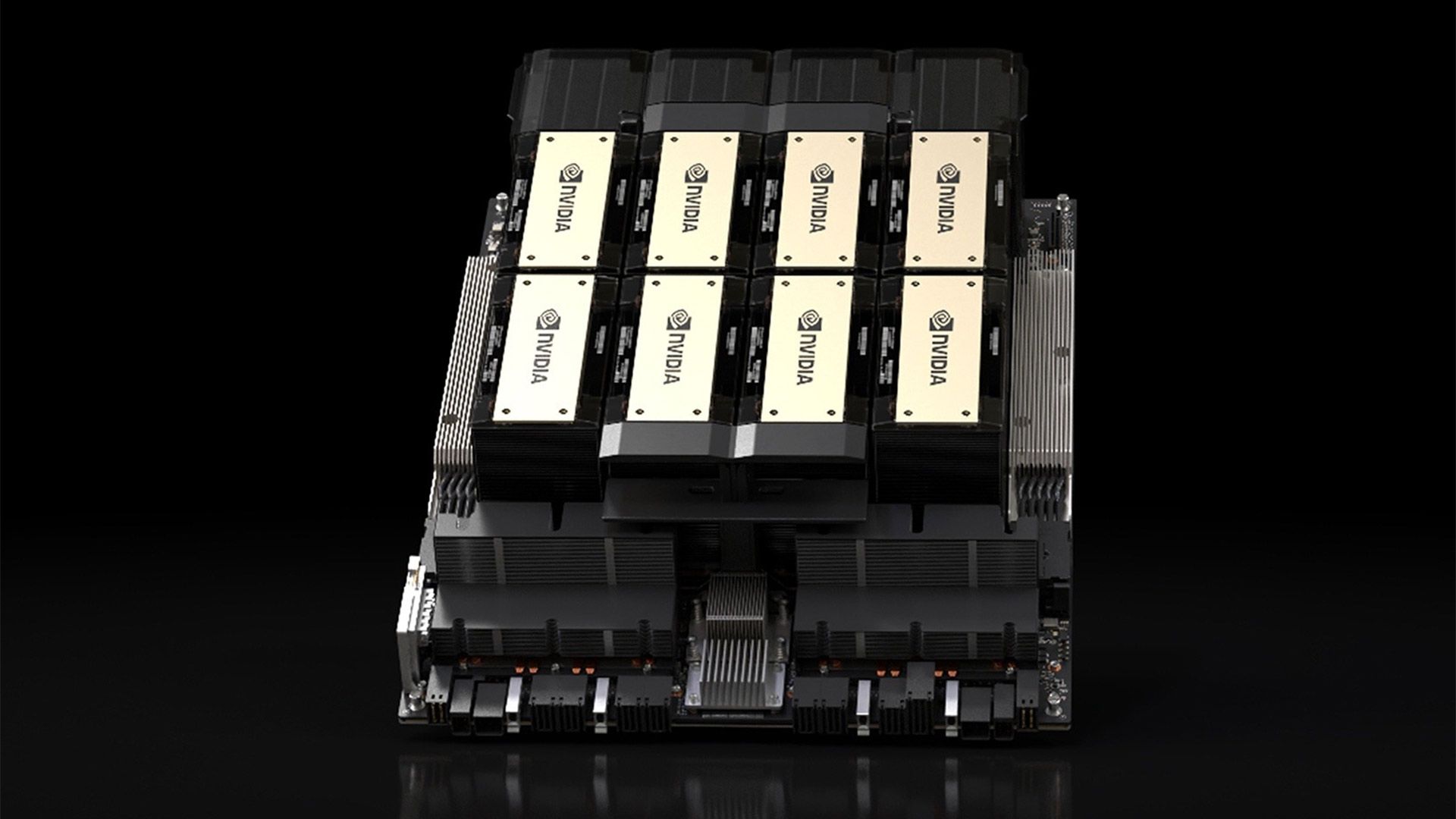
The H200 obviously fills that gap nicely, with each unit carrying 141GB of HBM3e at 4.8 TB/s, delivering roughly six times the performance of the H20 , and approaching the banned H100. A 10,000-GPU cluster is genuine frontier-training capacity, comparable to the builds behind the GPT-4 generation, though it represents a fraction of the 100,000-GPU-plus systems U.S. labs now run. That ratio seems to have been precisely calibrated by Beijing officials, large enough to keep flagship labs training their models, but small enough that inference stays a captive market for domestic chipmakers.
TrendForce's August 10 supply chain survey projects that domestic chips will take nearly 90% of China's high-end AI chip market this year, with domestic high-end shipments growing 83% year over year, a projection that TrendForce itself revised up from roughly 50% in its December outlook. Bernstein has recorded the same displacement from the other direction, with Nvidia's China share falling from 66% in 2024 to 40% in 2025 and a projected 8% this year.
Huawei planned to roughly double output of its 910C Ascend chip to about 600,000 units in 2026, against a total Chinese accelerator market that ran to roughly 4 million units in 2025, 2.36 million of them supplied by Nvidia and AMD. So, while domestic chips can cover the volume, they can't yet cover frontier training, making the 90% projection and H200 easing two halves of the same policy.
Washington's case for export controls rests on exactly the dependence these deliveries demonstrate: Four years into the restrictions, China's leading labs still can't train frontier models without American silicon, and Beijing has now conceded as much through its licensing decision.
The leaked transcript has Liang arguing that open access to Nvidia would make domestic substitution a much harder commercial proposition, meaning the controls themselves built the market Huawei and Cambricon now hold, and TrendForce's numbers show that market approaching 90% share three years after the first Hopper bans. This month's deliveries disprove neither side's theory, but Nvidia does bear the cost of both, with 500,000 chips reportedly in inventory, a 25% fee on anything that sells, and a Chinese market rationed to 10,000 units per buyer — admittedly, that’s better than zero.
Luke James is a freelance writer and journalist.\u00a0 Although his background is in legal, he has a personal interest in all things tech, especially hardware and microelectronics, and anything regulatory.\u00a0 ","collapsible":{"enabled":true,"maxHeight":250,"readMoreText":"Read more","readLessText":"Read less"}}), "https://slice.vanilla.futurecdn.net/13-4-25/js/authorBio.js"); } else { console.error('%c FTE ','background: #9306F9; color: #ffffff','no lazy slice hydration function available'); } Luke James Social Links Navigation Contributor Luke James is a freelance writer and journalist. Although his background is in legal, he has a personal interest in all things tech, especially hardware and microelectronics, and anything regulatory.
Key considerations
- Investor positioning can change fast
- Volatility remains possible near catalysts
- Macro rates and liquidity can dominate flows
Reference reading
- https://www.tomshardware.com/pc-components/gpus/SPONSORED_LINK_URL
- https://www.tomshardware.com/pc-components/gpus/china-approves-first-nvidia-h200-deliveries-to-bytedance-and-tencent-under-case-by-case-import-licenses#main
- https://www.tomshardware.com/my-account
- CXMT planned to use stolen Samsung IP to develop its DRAM, court hears — former Samsung engineer who jumped to Chinese memory maker now behind bars
- NVIDIA Alpamayo 2 Super, the Frontier Open Model for Robotaxis and Autonomous Vehicles, Now Available for Commercial Use
- Get a $75 discount on your next Corsair upgrade — stack your cart up to $350 to enjoy big savings
- H200 AI GPUs finally reach China under case-by-case import licenses, but it's already too late for Nvidia — homemade chips corner the China market as country se
- China shifting massive AI data center complexes to rural provinces to tap surplus energy — ‘Eastern Data, Western Computing’ strategy has Chinese tech giants Hu
Informational only. No financial advice. Do your own research.