
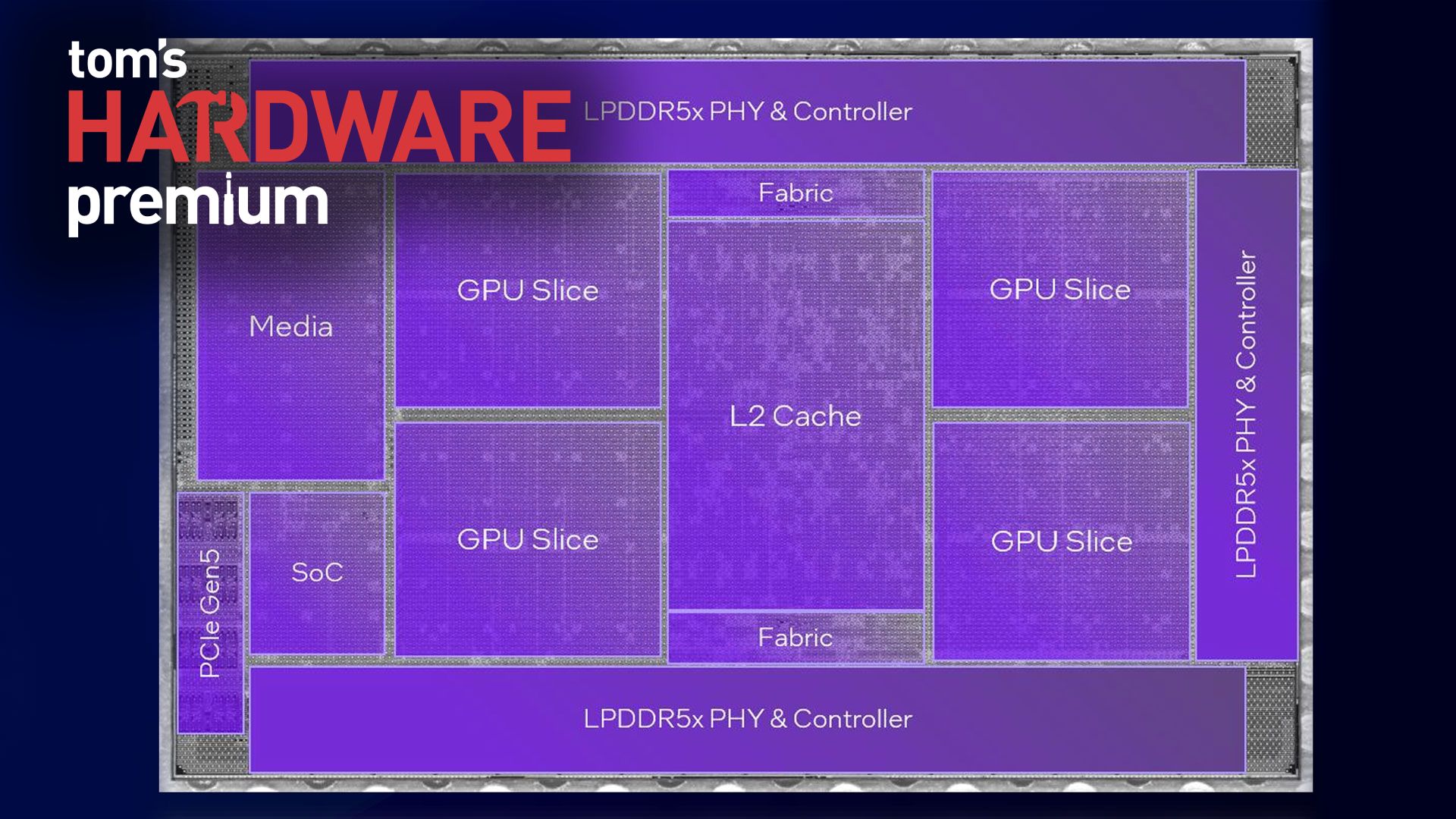
As a data-center-focused part, Crescent Island offers a full suite of reliability, availability, and serviceability features, including ECC and parity protection across the die and a range of memory reliability features.
As for the specific applications that Crescent Island will target, Intel highlights the rise of mixture-of-experts models paired with speculative decoding as a new class of workload that Crescent Island can serve well.
Speculative decoding strategies vary, but in general, they use a fast, lightweight mechanism to create drafts of future tokens that the main model can then be used to accept or reject, potentially improving decode performance. Not every draft token generated this way will be approved, but much like speculative execution in CPUs, it helps produce useful work from compute resources that would otherwise be left idle.
As model serving recipes pursue more aggressive drafting mechanisms, more compute is required to generate those draft tokens. At a high level, that understanding changes the common perception of decode as being a mostly memory-bandwidth-bound operation.
As an LPDDR5X-powered chip, Crescent Island won't have the eye-popping bandwidth of HBM-backed accelerators at its disposal for maximum performance with traditional autoregressive decode, so any help it can get from these speculative methods will be helpful.
Overall, Intel claims that Crescent Island is built to offer high FLOPS per watt and that it's optimized for compute-bound workloads like prefill (aka prompt processing and KV cache construction). Intel's emphasis on those areas of AI performance, as well as heterogeneous deployments, suggests that this chip could have a niche alongside HBM-backed accelerators whose resources are best used for decode operations.
Intel and its partner SambaNova could both stand to benefit from such an arrangement, as that company's SN50 inference accelerators are explicitly built to benefit from disaggregated prefill processing powered by GPUs . SN50 racks and Crescent Island are both meant to serve as lower-power, air-cooled systems that customers can deploy in existing data centers without dramatic upgrades to power or cooling infrastructure, so there is broad synergy in the shape of those products.
Intel still isn't discussing just how many theoretical compute FLOPS to expect from Crescent Island, nor is it disclosing memory bandwidth figures. But the architectural decisions it's shared so far — getting lots of data close to the compute engines of the chip and processing more of it at once in a relatively narrow power envelope — seem sound in a world where the company is still trying to reset its AI ambitions after a string of high-profile product failures and cancellations.
Intel has promised Crescent Island for a second-half 2026 time frame, and the clock is ticking on that launch window, so we’re eager to learn more about the chip’s final specifications, as well as customer and partner wins, when that launch does occur.
(Image credit: Intel) (Image credit: Intel) (Image credit: Intel) (Image credit: Intel) (Image credit: Intel) (Image credit: Intel) (Image credit: Intel) (Image credit: Intel) (Image credit: Intel) (Image credit: Intel) (Image credit: Intel) (Image credit: Intel) (Image credit: Intel) (Image credit: Intel) (Image credit: Intel) (Image credit: Intel) (Image credit: Intel) (Image credit: Intel) (Image credit: Intel) (Image credit: Intel) (Image credit: Intel) Image 1 of 21 View Original
TOPICS Intel See all comments (0) Jeffrey Kampman Senior Analyst, Graphics As the Senior Analyst, Graphics at Tom's Hardware, Jeff Kampman covers everything that has to do with graphics cards, gaming performance, and more. From integrated graphics processors to discrete graphics cards to the hyperscale installations powering our AI future, if it's got a GPU in it, Jeff is on it.
Key considerations
- Investor positioning can change fast
- Volatility remains possible near catalysts
- Macro rates and liquidity can dominate flows
Reference reading
- https://www.tomshardware.com/pc-components/gpus/SPONSORED_LINK_URL
- https://www.tomshardware.com/pc-components/gpus/hot-chips-2026-intel-dives-deep-on-crescent-island-ai-accelerator-larger-caches-and-deeper-xmx-engines-target-maximum-ai-flops-per-watt#main
- https://www.tomshardware.com/my-account
- TP-Link Deco 7 Pro BE13000 Wi-Fi 7 mesh router review: Value pricing, but average performance
- Kyoto University builds transistor that survives 600C temperatures, compatible with standard fabs — Standard ion implantation and bottom-gate design fix leakage
- Into the Omniverse: How Open World Models Push the Frontier of Physical AI
- AliExpress allegedly uses your browser's audio system to fingerprint your PC — hidden code runs even when no sound is playing
- Nvidia Jetson Orin-guided Russian AI drone killed three civilians in Ukraine, forensic teams say — first documented case of civilian deaths caused by a Russian
Informational only. No financial advice. Do your own research.