
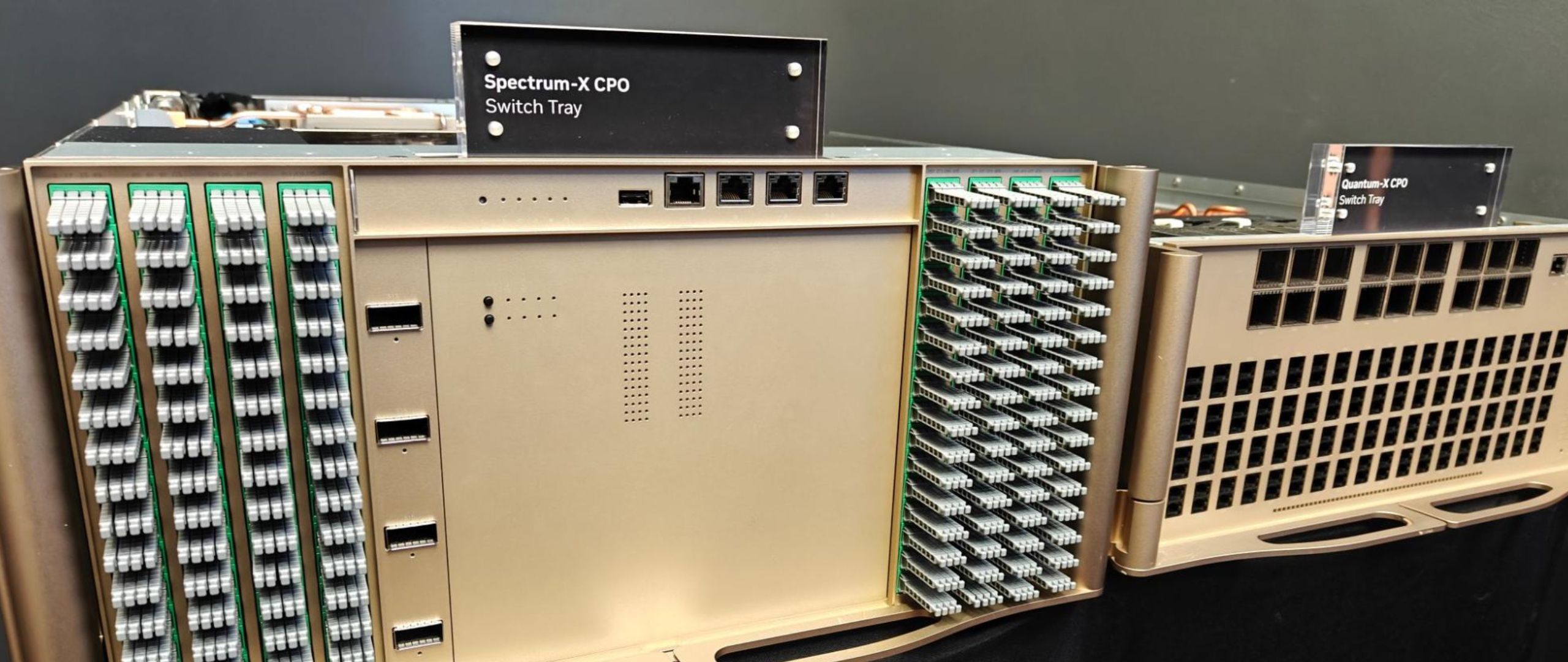
Bayvel says the wider contest is one between CPO and linear-drive pluggable optics (LPO). CPO integrates lasers and optics alongside the processing and is probably more power-efficient, “but probably less reliable –so if your laser fails, you need to replace the whole board.” LPO keeps things in conventional pluggable slots and is more serviceable. “There’ll be a brave person who will bet their house on which will win,” she said. She guesses that they coexist, split by application, with a rough 60/40 lean towards CPO.
The problem is that silicon can do almost everything except the one thing this industry increasingly needs it to do: shine.
Silicon is cheap, abundant, and brilliant for electronics. It is why the modern chip industry exists. But it is terrible at emitting light. “Silicon doesn’t emit light at all — that’s a big problem,” said Frederic Gardes, professor of silicon photonics at the University of Southampton, in an interview with Tom’s Hardware Premium .
For decades, the industry has worked around that by using so-called III-V materials such as indium phosphide and gallium arsenide, which are much better at producing light. But that fix brings its own problem. Those materials sit in a much tighter, more geopolitically exposed supply chain, with China controlling around 80 percent of supply. Getting lasers onto silicon is, Gardes said, “one of the key problems” the field now has to solve.
But it’s also where the money is. “Half of the revenue opportunity for this industry is lasers,” Harris said. “It’s a freaking power supply, but it turns out that it’s half of the revenue opportunity.” The irony is that the bit everyone needs most is also the bit that may prove most fragile. Gardes calls lasers “the weakest link.”
That weakness is already showing up in the supply chain. Laser makers Lumentum and Coherent are booked out for years. And the industry is starting to standardise. In March, AMD, Broadcom, Meta, Microsoft, Nvidia and OpenAI founded the Optical Compute Interconnect (OCI) Multi-Source Agreement , a hyperscaler-led effort to define a common optical physical layer for scale-up — one that can carry both NVLink and UALink, starting at 200Gbps per direction and scaling towards 3.2Tbps per fibre .
Whichever route wins, Bayvel worries the industry is fixating on the data center while neglecting the networks that must carry all this AI-generated traffic across land, sea and space. “Really, nobody’s looking at that,” she said, “and I think that's going to be a big problem down the line.”
Chris Stokel-Walker is a Tom's Hardware contributor who focuses on the tech sector and its impact on our daily lives\u2014 online and offline.\u00a0He is the author of How AI Ate the World, published in 2024, as well as TikTok Boom, YouTubers, and The History of the Internet in Byte-Sized Chunks. ","collapsible":{"enabled":true,"maxHeight":250,"readMoreText":"Read more","readLessText":"Read less"}}), "https://slice.vanilla.futurecdn.net/13-4-25/js/authorBio.js"); } else { console.error('%c FTE ','background: #9306F9; color: #ffffff','no lazy slice hydration function available'); } Chris Stokel-Walker Freelance Contributor Chris Stokel-Walker is a Tom's Hardware contributor who focuses on the tech sector and its impact on our daily lives— online and offline. He is the author of How AI Ate the World, published in 2024, as well as TikTok Boom, YouTubers, and The History of the Internet in Byte-Sized Chunks.
Key considerations
- Investor positioning can change fast
- Volatility remains possible near catalysts
- Macro rates and liquidity can dominate flows
Reference reading
- https://www.tomshardware.com/tech-industry/SPONSORED_LINK_URL
- https://www.tomshardware.com/tech-industry/inside-optical-and-the-battle-for-scale-how-the-ai-industry-is-racing-to-integrate-photonic-interconnects#main
- https://www.tomshardware.com/my-account
- AMD takes the wraps off its Instinct MI455X AI accelerator — CDNA 5 and Helios rack-scale architecture combine to take the fight to Nvidia in the data center
- GeForce NOW Sets Sail With ‘Path of Exile: Curse of the Allflame’ Joining the Cloud
- Save 10% on the brand-new Creality Pika 3D scanner — easily scan models and textures for $629
- At SIGGRAPH, NVIDIA Advances Graphics and Simulation With Agentic and Physical AI
- Meta to use custom AMD Instinct MI400 accelerators with 144GB of HBM4 for select workloads, report claims — could dramatically reduce cost at the expense of ver
Informational only. No financial advice. Do your own research.