
Nish Neelalojanan : Yeah, and like in terms of all the different agentic AI workloads, you need CPU as an orchestrator, having nth number of threads, cleaning up data, lining up a memory, a lot of threads help. So, like I said, when there is utility, and when there is a need, we will constantly evaluate it's, it's rigid to say, oh, it's behind us, or it's rigid to say, oh, we are going to run towards it: If it makes sense, it makes sense, yes. That’s where the data center decision is. They talk more about the growing workload, there is a need.
Jake Roach : It has been interesting. We're coming up at Tom's Hardware on 30 years, and we did a retrospective on CPUs, so I went back to the very first Pentium Two review on Tom's Hardware, and seeing the hyper-threading, and how it was used over decades, it was really fascinating to look at.
Nish Neelalojanan : A lot of the low-power segments, like now, handheld, yes? Those eight E-Cores on that performance cluster are significantly helping with all the low-power gaming, right? So, a lot of these decisions are paying off as it stands. As the workload evolves, as we evolve into different architectures, we will have to evaluate based on at that time what would be the right decision. Okay.
Jake Roach : For years now, Intel Foundry has laid out a really aggressive foundry roadmap. We saw 18A first and now we finally have 18A in data center with Xeon Six Plus. Is that the kind of the cadence we should expect going forward for Intel's cutting-edge hooks to see them debut first on the consumer front?
Nish Neelalojanan : It's the same answer I said before wherever it makes sense first. So we've got especially a lot of our consumer client CPUs, we pick the right process node, which made sense for the right tile, especially now we have multi-chip solution. It gives us the flexibility to pick and choose the right process node for cost, readiness, optimizing for R&D, because sometimes you won't have that IP on a different process, so it's easier to just reuse it, based on availability. Sometimes it's costing some bigger tiles, you can put it on latest and get it to get performance. Some of the tiles where you don't need to push frequency as much, you put it on an older node. And now with all the supply in and around the industry, picking the right process nodes, which is more available, is also going to be important. So we always go through all of these considerations and pick and choose, so there is no settling on client will start data center will follow, vice versa. It's we pick the right process choice based on that architecture, for that side.
Jake Roach: I want to get your reaction to [Nvidia’s RTX Spark]. If you need any better reminder that Twitter is not real life, there's a lot of talk on Twitter that Nvidia entering this market completely decimates and it rules everything. I don't think that's true, but I want to see your reaction to Nvidia getting into that space.
Nish Neelalojanan : I mean, Nvidia puts out great products, and they know how to do gaming. They know how to do all these different things. So we always take everything with a healthy dose of paranoia, but we are also very, very confident with our products, in the sense that X86… Let me put it this way, when we entered this discrete graphics business, our graphics business, it took a painful few years for us to work through all the drivers, all the compatibility issues, and everything ironed out, same thing goes on when an ARM CPU enters a market that's going to be tons of compatibility DRM issues, backward compatibility As a result, we are very confident that we have the right CPU, GPU mix for clients, both for gaming and when it comes to what you call AI inference workloads.
That said, Nvidia is a great partner. We will continue to work with them. You saw some of our announcements. We have some longer-term commitments with them, so both of us have different parts of the roadmap that we will expand together, where there'll be a roadmap where we will be partnering, and where there might be places where we will be competing, but I think it's great for the industry that there is different choices.
Jake Roach : I know, it's a weird situation, especially for Intel, because you guys, you guys do work with Nvidia. Yeah, when I pose similar questions to the other guys, they, they're a little bit more fiery in their responses.
Nish Neelalojanan : Compatibility is going to be a key thing there. x86 on the CPU side is going to have a lot of advantages. We talked about some of the new instruction sets, which got announced by the x86 Consortium, a lot of those lend itself as much to gaming as much as AI, and you'll see a lot of that being talked about more.
A lot of it were agentic AI examples and stuff, because you have to say AI three times before you can talk about anything else, but they also help with gaming significantly, so yeah, it doubles the amount of registers, which you would execute one instruction, so it's based off of AVX, but there’s a few others which came out with it.
Jake Roach : Finally I want your reaction more broadly to the PC market right now, because we have all the rising component prices, we have very expensive laptops. On the desktop, it's really, really hard to build a PC right now. I think motherboard sales are down some 30-40% I know you're releasing products to address that market between Wildcat Lake and Arrow Lake pretty refresh, but I kind of want to see your reaction to how that pans out over the next maybe three to five years. Is it a continual area of focus, or is it something that hopefully we're just dealing with over the next few years, where we're really focusing on the budget segment?
Nish Neelalojanan : Large memory is completely overshadowing any CPU prices, right? Memory and storage. The CPU is not anymore determining your system price point, and when you're paying that amount, people will obviously start upgrading. Now, that said, there are still Panther Lake systems you can get below $1,500 out there, right? It's going to be dependent on OEM. It's going to be dependent on markets, and even the Wildcat Lake, they'll announce a $599 starting price point. Yeah, so there are definitely designs which are coming at comparatively reasonable price points, which are available, and longer term, I think something has to give right. The over inflation, we will have to keep an eye, but if I could predict the memory market, I would be rich in stock!
Jake Roach : Let me phrase the question a little bit better, because are you making plans for a longer term, a longer term squeeze on the consumer front, because surely you're going to have to make those plans if you see the headwinds going that way.
Nish Neelalojanan : We do have products with support for DDR4 both on desktop and mobile, so Raptor Lake, you're not end of life in any of them, they're there. We'll continue to make sure that there are products which can take care of older memory technologies if they're available and cheap. Second thing is, we are making sure we are validating lower configs as well. Wildcat Lake starts at 8GB, Wildcat Lake is a single channel product, so there are products which can leverage with low memory and give reasonably good performance, so we are doing everything we can from our perspective to be able to help in any small way. But like I said, when CPU becomes the least relevant from an overall BOM (Bill of Materials) perspective, because it's so expensive. Then we also have CPUs you can buy out into that.
Jake Roach: Speaking of memory, I don't know if you had any involvement with half ranked? Is that what they call them, half ranked DIMMs from ASRock? It was with ASRock and Intel.
Nish Neelalojanan : I am not familiar with that, but we are working with a lot of indigenous memory suppliers to validate them, so we’re doing everything we can in terms of it's not just one, two, or three. If there are some local specific memory vendors, but like in PRC, and now Indonesia is even bringing up a couple of them. We're trying to validate as much as we can, so there's enough choice that people can get pockets of relief. Right? We are looking at UFS for a longer-term horizon, so that every little thing helps, right?
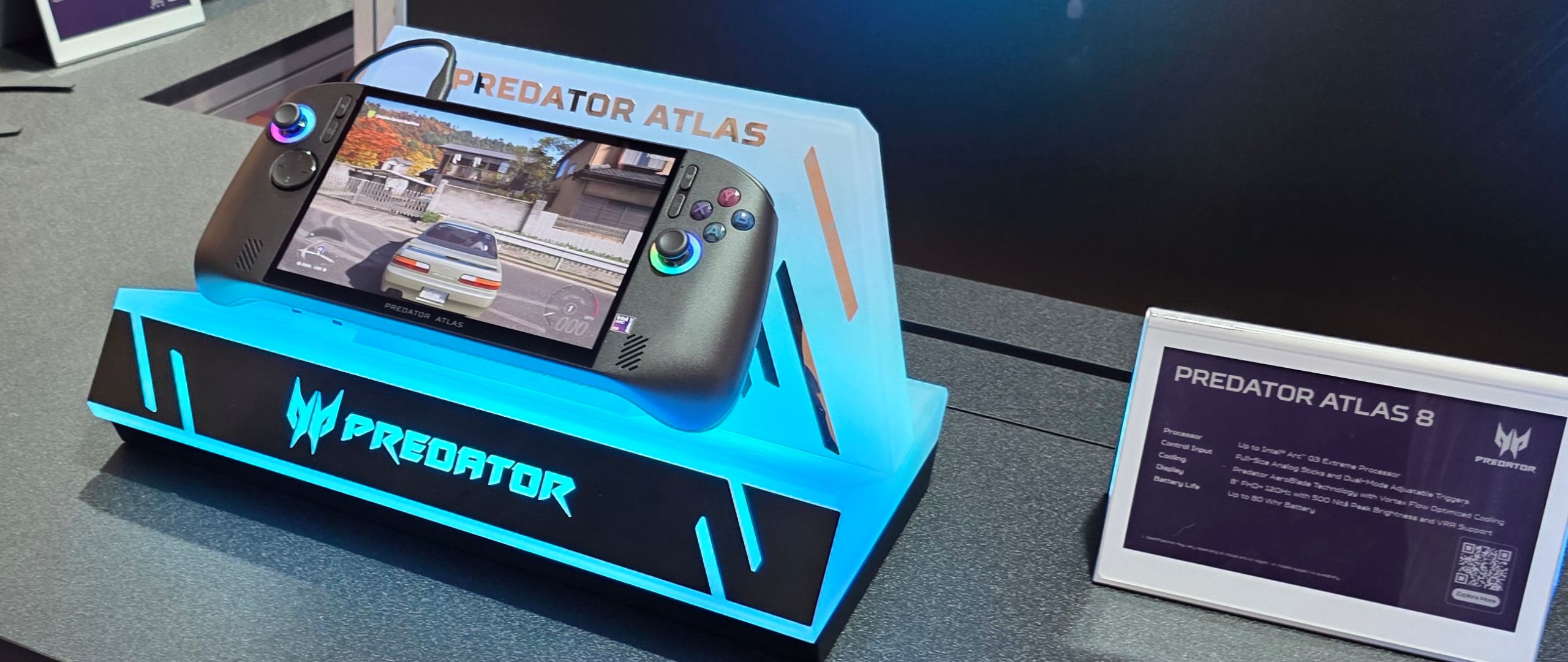
Jake Roach : Absolutely. I appreciate you taking the time and talking over everything. I'm very excited to see the G3 chips in action. I saw them yesterday at the Acer showcase, and I played a little bit of Forza Horizon 6, and these are pretty good.
Nish Neelalojanan : With G3 at least we're putting out some latest and greatest stuff, and in terms of a lot of these, it's not necessarily exclusive. We're broadly available, the 12 Xe on the PC side, and on the handheld, it's not like limited to one OEM. Unlike some people who hold it back, just only give it to one OEM.
Jake Roach : So all these handhelds, I believe all the ones that announced are all Windows-based handhelds. Is there consideration for Linux? How much consideration or weight do you put on that, given things like Steam OS proper?
Nish Neelalojanan : So highest level stuff we announced now is Windows based, but you can take those devices and install… and I'm sure you would imagine we would continuously want to make sure that those experiences are reasonable for end users, and we are, we would talk more about as we get closer to something, but we are exploring beyond Windows, and as we get closer, we'll talk more about.
Jake Roach is the Senior CPU Analyst at Tom\u2019s Hardware, writing reviews, news, and features about the latest consumer and workstation processors. ","contributorText":"With contributions from","contributors":[{"name":"Jon Martindale","role":"Freelance Writer","link":{"href":"https:\/\/www.tomshardware.com\/author\/jon-martindale"}}],"collapsible":{"enabled":true,"maxHeight":250,"readMoreText":"Read more","readLessText":"Read less"}}), "https://slice.vanilla.futurecdn.net/13-4-24/js/authorBio.js"); } else { console.error('%c FTE ','background: #9306F9; color: #ffffff','no lazy slice hydration function available'); } Jake Roach Social Links Navigation Senior Analyst, CPUs Jake Roach is the Senior CPU Analyst at Tom’s Hardware, writing reviews, news, and features about the latest consumer and workstation processors.
Key considerations
- Investor positioning can change fast
- Volatility remains possible near catalysts
- Macro rates and liquidity can dominate flows
Reference reading
- https://www.tomshardware.com/pc-components/cpus/SPONSORED_LINK_URL
- https://www.tomshardware.com/pc-components/cpus/intel-arc-g3-interview-transcript-intels-senior-product-director-talks-new-handheld-chips-arrow-lake-refresh-and-rtx-spark#main
- https://www.tomshardware.com
- Grab this RTX 5070 gaming PC with a 7800X3D from CyberPowerPC for under $1,960 right now — exclusive discount available on 4K-ready pre-built rig with 32GB DDR5
- Computex 2026 Live: Every update and announcement from day two in Taipei
- Computex 2026 Day Zero Wrap-Up: Nvidia launches RTX Spark Superchip assault on laptop and desktop markets, Intel readies Xeon 6+
- Qualcomm aims Snapdragon C laptop chip at the budget laptop segment, as manufacturers feel the DRAM squeeze — analysts warn sub $500 laptop market may disappear
- SK hynix to double memory wafer capacity within five years, chairman says — AI-driven shortage will persist until at least 2030
Informational only. No financial advice. Do your own research.