
When you purchase through links on our site, we may earn an affiliate commission. Here’s how it works .
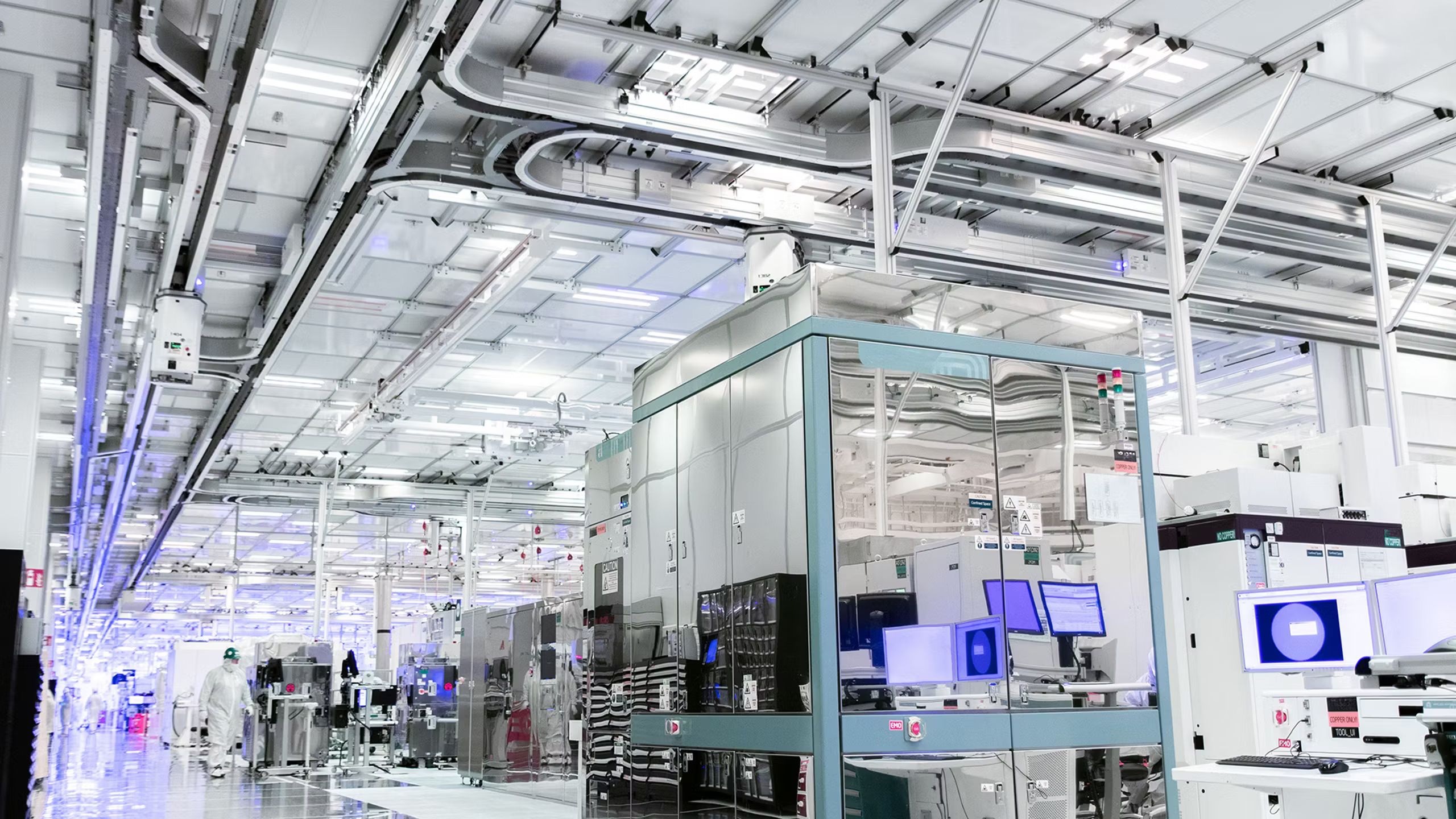
Delivering 'within 5%' performance is an ambiguous statement that may mean that 14A will be 5% faster than A14, or that 14A will be 5% slower than A14. While 'within 5%' performance compared to the direct rival of the same class may sound like a good competitive position, in recent years Intel's process technologies trailed TSMC's nodes in transistor density and remained competitive in performance or power. This was, to a large degree, attributed to Intel's historic focus on CPU performance, but not necessarily transistor density, as its own fabs have offset additional costs associated with larger dies.
In fact, actual shipping processors suggest Intel's 18A is at least competitive with TSMC's N2 in maximum achievable CPU frequency as Intel's Core Ultra X9 388H 'Panther Lake' can hit 5.10 GHz (at an 80W max turbo power), AMD's EPYC 9586F has the highest single-core clock of 5.0 GHz (at a default 500W CPU power), Apple's A20 Pro can achieve 4.93 GHz, whereas Apple's M6 can hit 4.78 GHz. These numbers should not be converted directly into a statement such as '18A is X% faster than N2,' because the processors use different architectures, voltages, standard-cell libraries, thermal envelopes, and physical implementations. However, they do provide a useful real-world reference point: the available N2 processors do not show a substantial frequency advantage over 18A. If anything, the highest observed CPU frequencies favor Intel's process.
Based on internal estimates, Intel officially states that compared to its already fast 18A, its 14A is expected to provide 15% – 20% higher performance at the same power , or 25% – 35% lower power at the same frequency and transistor count. By contrast, TSMC expects its A14 to be 10% – 15% faster than N2 at the same power, or 25% – 30% lower power at the same clocks and transistor count.
Combining the observed 18A and N2 CPU frequencies of Intel's 18A and TSMC's N2 with Intel's stated 15% – 20% 14A gain and TSMC's assumed 10% – 15% A14 gain would ordinarily suggest a modest 14A performance advantage of A14 even in most conservative scenarios for Intel. Therefore, Intel's new expectation that 14A will be 'within 5%' of A14 is notably less ambitious than one might infer from the company's published process specifications, even though the 'within 5%' statement does not tell us which process Intel expects to lead.
TSMC confirms significant yield and performance improvements in A14 update
Key considerations
- Investor positioning can change fast
- Volatility remains possible near catalysts
- Macro rates and liquidity can dominate flows
Reference reading
- https://www.tomshardware.com/tech-industry/semiconductors/SPONSORED_LINK_URL
- https://www.tomshardware.com/tech-industry/semiconductors/intel-expects-14a-to-be-within-5-percent-the-performance-of-tsmcs-a14-conservative-forecast-clashes-with-18as-frequency-lead-and-promised-20-percent-gains#main
- https://www.tomshardware.com/membership
- Nvidia’s RTX Mega Geometry 2.0 streams ray-tracing geometry into VRAM on demand
- British Columbia sues OpenAI and Sam Altman for 'aiding and abetting' school shooter
- CyberPowerPC lands rare RTX 50-series Founders Edition cards in discounted Walmart rigs
- Logitech refreshes legendary Blue Yeti microphone with 3D voice tracking and AI denoising
- Nvidia CEO says 'we have to shut the labs down' if AI experiments are unsafe
Informational only. No financial advice. Do your own research.