
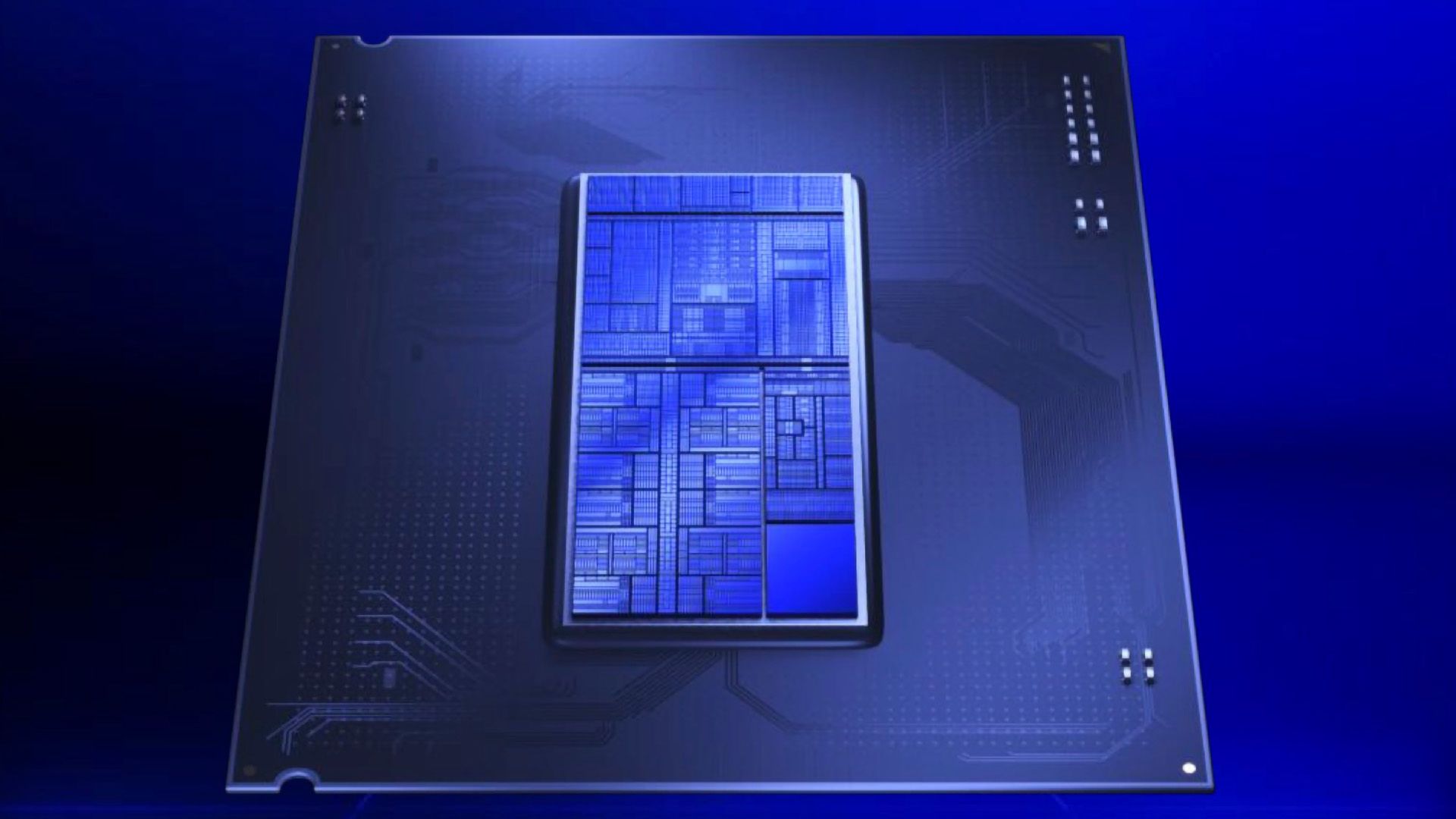
Intel may pull all the stops on its Nova Lake launch and flood the market with up to 13 SKUs, ranging from the accessible Core Ultra 3 to the elite Core Ultra 9. However, it's still uncertain how Intel will market the 44- and 52-core SKUs, but these may be the rumored Core X series for the HEDT market, a segment that Intel has abandoned for a while. Additionally, Intel doesn't usually launch a full stack of CPUs at once. We'll most likely see a lineup of three to four chips out of the gate if Intel's previous releases are any indication.
With their unprecedented core counts, the Nova Lake 44- and 52-core chips are set to push thermal and power boundaries to new heights. Intel’s Product Base Power (PBP) for these powerhouse CPUs will reportedly reach up to 175W, a significant 40% increase over the current Core Ultra 9 285K flagship. The incredible jump in processing capability justifies this leap in power consumption, as these chips are expected to offer more than double the core count of Intel's current offerings.
Examining the leaked Nova Lake SKU list reveals that, at first glance, the upcoming processors largely mirror the Arrow Lake models they are set to replace in both core counts and product positioning. However, Nova Lake includes the LPE cores, adding an extra four cores across the range for improved multitasking and background task handling.
While the headline-grabbing 44- and 52-core chips feature much higher PBP figures, the rest of the lineup maintains familiar power profiles, with unlocked models operating at 125W. Intel will continue to offer 65W and 35W power-optimized variants, catering to a broad range of system builds. Notably, this generation reportedly marks the return of a Core Ultra 3 SKU, filling a gap left by Arrow Lake and broadening access to Nova Lake’s advances for more budget-conscious consumers.
Nova Lake will launch on Intel’s brand-new LGA1954 socket, marking a significant step forward for the company’s desktop platform. According to materials reviewed by VideoCardz, Intel is placing a strong emphasis on the Socket V solution’s reusability and forward compatibility. Socket longevity is important for consumers and system builders alike. By designing the LGA1954 socket to be compatible with multiple generations of processors, Intel is addressing a long-standing criticism regarding the short-lived nature of its recent sockets, such as the LGA1851, which saw limited generational support.
Intel has confirmed that Nova Lake will arrive in late 2026. However, due to the current climate, many believe early 2027 is a more rational time, but we'll have to wait and see.
Follow Tom's Hardware on Google News , or add us as a preferred source , to get our latest news, analysis, & reviews in your feeds.
Zhiye Liu is a news editor, memory reviewer, and SSD tester at Tom\u2019s Hardware. Although he loves everything that\u2019s hardware, he has a soft spot for CPUs, GPUs, and RAM. ","collapsible":{"enabled":true,"maxHeight":250,"readMoreText":"Read more","readLessText":"Read less"}}), "https://slice.vanilla.futurecdn.net/13-4-20/js/authorBio.js"); } else { console.error('%c FTE ','background: #9306F9; color: #ffffff','no lazy slice hydration function available'); } Zhiye Liu News Editor, RAM Reviewer & SSD Technician Zhiye Liu is a news editor, memory reviewer, and SSD tester at Tom’s Hardware. Although he loves everything that’s hardware, he has a soft spot for CPUs, GPUs, and RAM.
Makaveli 52 cores that will be idle for the most part. Will be interesting to see how it goes as it will be facing Zen 6 also with 144MB of X3D cache per CCD. Reply
usertests Makaveli said: 52 cores that will be idle for the most part. Will be interesting to see how it goes as it will be facing Zen 6 also with 144MB of X3D cache per CCD. If you do manage to load up all 52 cores, you may end up using 350-450 Watts. It will be nice to see head-to-head competition for X3D, presumably surpassing Zen 5 X3D with Intel's first try. Reply
hotaru251 Makaveli said: 52 cores that will be idle for the most part. also fact that some stuff literally freaks out if you cpu has too many cores. (less common now-a-days but still happens) anything over 32cores should be like TR…. basically budget server grade. will say AMD seems to always be what intel needs to do stuff. increasing core count, "chiplet" design, now now v-cache. just hope it continues going well for em as amd needs competition again as they are starting to get the bad habits of arrogance after intels slacking. Reply
thestryker usertests said: If you do manage to load up all 52 cores, you may end up using 350-450 Watts. The comments section of the VC article is a goldmine because Jaykihn added information, context and answered questions. The preliminary performance PL2 is 471W (expected to change). Other preliminary info: There are no more T SKUs which is part of why the lineup currently looks weird: yay marketing. TB5 support exists, but requires a retimer so isn't a baseline feature like TB4. It's also restricted to the Z990/W980/Q990 chipsets. The bLLC parts use a D suffix for unlocked and the dual Compute Tile ones are DX. The 6 P-core bLLC SKU is new and may be moved around depending on how it comes to market. Reply
rluker5 Makaveli said: 52 cores that will be idle for the most part. You can say the same with 8 cores for most people. You just get a little more performance for non workstation tasks over 6. But if you want 288MB of what is looking to be unified cache you need 44 cores. Reply
usertests thestryker said: The comments section of the VC article is a goldmine because Jaykihn added information, context and answered questions. The preliminary performance PL2 is 471W (expected to change). I noticed. Jaykihn helped clarify some of the very confusing stuff in the article, which barely mentioned bLLC at all. Yeah, I doubt it's going to need 450W in the end, so I just gave a range. 14900KS didn't even pull over ~320W in the Tom's review. thestryker said: There are no more T SKUs which is part of why the lineup currently looks weird: yay marketing. Users could benefit by selecting the cTDP they prefer to run at, users and benchmark sites will be impacted by 35W and 65W being mashed into one part. Oh well. thestryker said: The 6 P-core bLLC SKU is new and may be moved around depending on how it comes to market. I think it was a clarification of a non-existent 7 P-core SKU. It will be interesting to see how cheap that part gets, and when it launches. Facing no cache-based competition, AMD takes its time launching budget X3D parts. At least those should have 8 or 10 cores starting with Zen 6. rluker5 said: But if you want 288MB of what is looking to be unified cache you need 44 cores. I doubt it's going to be unified. It should be the same deal as the 9950X3D2, and the exact same L3 cache as a Zen 6 successor to the 9950X3D2. Reply
kinney I've been waiting years for this release. Unfortunately my Z590 board died on me and those have dried up on the used market. I had no real choice unless I was going to lock myself into a non 3D V-Cache / bLLC setup for many years, so I had to get a 9850X3D. Works a lot better from a reliability and stability standpoint than all of my prior Ryzen builds (1700, 1800X, 2700X, 5900X) for sure. Probably my best AMD build since my AMD 286, and less finicky than those Ryzens or my Thunderbird, FX55 and other builds. It'd be nice to have Nova Lake-S but Intel just took too damn long for me. I'm also unsure I need more than 700-1200FPS in Valorant or not, so whatever performance bump I would get probably isn't worth the CPU/board swap. It will be very interesting to see how much faster Nova Lake is than Zen 5 or if we're at the point of diminishing returns on what cache can do. I'm expecting Intel domination of Zen 5 and 6. Especially after seeing the 270K improvements even without bLLC. One thing I've learned over the last 40 years is that sometimes buying the tried-and-tested platform like Zen 5 is a blessing in disguise. As most things new have bugs and issues to be worked out and you get to be the beta tester. But it looks like LGA1954 and Nova Lake built on Intel's exceptional platform engineering is going to be the way to go for anyone needing an upgrade. Reply
usertests kinney said: It will be very interesting to see how much faster Nova Lake is than Zen 5 or if we're at the point of diminishing returns on what cache can do. The average uplift will see diminishing returns, but specific games will keep benefiting from more cache up to a certain point. Having a new per-CCD/tile L3 cache size on the market (144 MiB) from two companies will be exciting. And it may be followed by a ~56% increase with Zen 7 (224 MiB) on the same socket. We'll definitely see diminishing returns. Reply
thestryker usertests said: Yeah, I doubt it's going to need 450W in the end, so I just gave a range. 14900KS didn't even pull over ~320W in the Tom's review. If NVL is going to be 250W PL2 for 8/16 then I don't think I'd run less than 450W PL2 for a dual Compute Tile part. However I'm pretty confident these will have more compute than the top Zen 6 desktop part will have so Intel might want to cut the PL2 as low as they can to still stay ahead without blowing the power budget. Without power limits my 270K Plus is around 280W package power when running Cinebench 2024 multi and my 265K was around 210W. Intel is definitely getting better with the standard power ratings being meaningful rather than just holding the CPU in check. usertests said: I doubt it's going to be unified. It should be the same deal as the 9950X3D2, and the exact same L3 cache as a Zen 6 successor to the 9950X3D2. This is the million dollar question as it were. So far it sounds like the dual Compute Tile parts are only going to be bLLC. Since those are their own separate die Intel could add in a ring stop that is for direct Compute Tile interconnect. While nothing is free this would be about as low latency as is currently possible (think the SPR/EMR tile designs). No matter what I'm extremely curious as to how the tiles are going to fit together for the dual Compute Tile parts given that the other tiles are all the same across the stack. Reply
beyondlogic Admin said: VideoCardz shares the alleged preliminary SKU list for Intel's upcoming Core Ultra 400S (codenamed Nova Lake) processors. Intel's Nova Lake CPUs gear up to seize AMD’s 3D V-Cache gaming throne — early leak points to up to 52 cores, blazing DDR5-8000 support, and massiv… : Read more ha the cpu will be cheaper them the damn ram. also 175 tdp is quite nuts will need to turn of the heating with that thing on lol europe will love it in winter. Reply
Key considerations
- Investor positioning can change fast
- Volatility remains possible near catalysts
- Macro rates and liquidity can dominate flows
Reference reading
- https://www.tomshardware.com/pc-components/cpus/SPONSORED_LINK_URL
- https://www.tomshardware.com/pc-components/cpus/intels-nova-lake-cpus-gear-up-to-seize-amds-3d-v-cache-gaming-throne-early-leak-points-to-up-to-52-cores-blazing-ddr5-8000-support-and-massive-175w-tdp#main
- https://www.tomshardware.com
- Framework founder says that ‘personal computing as we know it is dead’ — vows to keep building ‘computers that you can own at the deepest level’
- FAA courts gamers to become air traffic controllers — boasts $155k average annual salary after three years as the agency prepares for 8,000 applicants
- Intel Core Ultra 7 270K Plus vs Ryzen 7 9700X faceoff — a new midrange CPU champ emerges
- From RTX to Spark: NVIDIA Accelerates Gemma 4 for Local Agentic AI
- Into the Omniverse: NVIDIA GTC Showcases Virtual Worlds Powering the Physical AI Era
Informational only. No financial advice. Do your own research.