
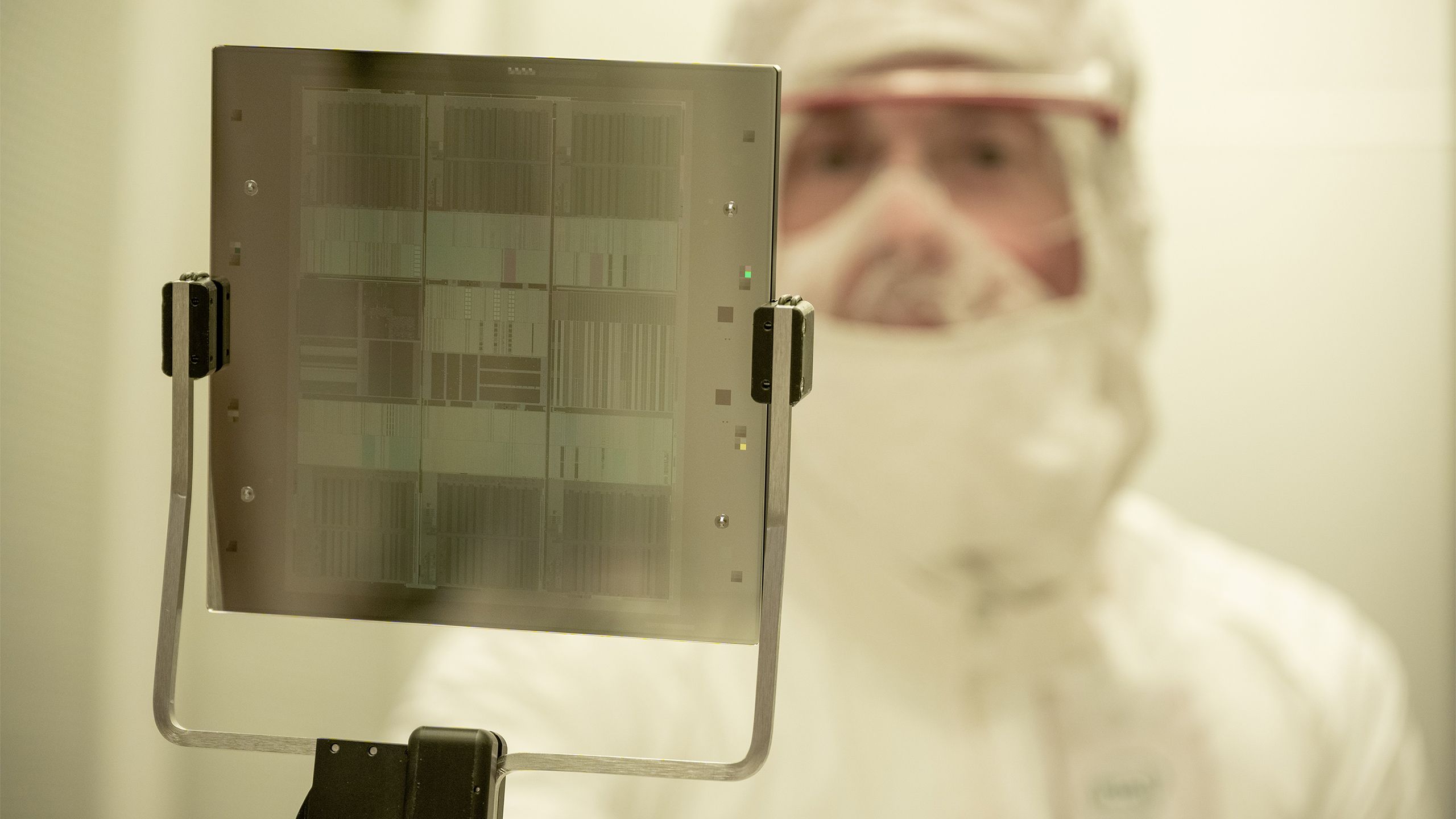
In addition to offering early versions of its PDK to its own product design groups and to select potential external customers, Intel seems to be developing different variants of 14A for different applications, which proves that the company is developing the fabrication process with different customers in mind.
"Of course, there will be different variants of 14A, but High-NA is targeted [for insertion into] 14A [flow]," said David Zinsner, chief financial officer of Intel, when asked whether the company plans to use ASML's Twinscan EXE High-NA lithography tools for making chips on 14A.
Zinsner did not elaborate on the difference between different versions of 14A process technology and whether he meant 14A-E (a feature extended intra-node update) as a version of 14A, or if he meant something else, possibly aimed at different applications than the original 14A. For example, a version of 14A aimed at smartphones could come without a backside power delivery network, which would cut costs. Also, for applications that do not need the maximum transistor density, Intel could skip the usage of ASML's ultra-expensive Twinscan EXE High-NA lithography scanner, which costs around $400 million, to cut costs further. However, this is speculation.
Follow Tom's Hardware on Google News , or add us as a preferred source , to get our latest news, analysis, & reviews in your feeds.
Anton Shilov is a contributing writer at Tom\u2019s Hardware. Over the past couple of decades, he has covered everything from CPUs and GPUs to supercomputers and from modern process technologies and latest fab tools to high-tech industry trends. ","collapsible":{"enabled":true,"maxHeight":250,"readMoreText":"Read more","readLessText":"Read less"}}), "https://slice.vanilla.futurecdn.net/13-4-11/js/authorBio.js"); } else { console.error('%c FTE ','background: #9306F9; color: #ffffff','no lazy slice hydration function available'); } Anton Shilov Social Links Navigation Contributing Writer Anton Shilov is a contributing writer at Tom’s Hardware. Over the past couple of decades, he has covered everything from CPUs and GPUs to supercomputers and from modern process technologies and latest fab tools to high-tech industry trends.
Gururu It's all coming down to price I am sure. Doing stuff in the U.S.A is almost not feasible. Reply
thisisaname Thinking about getting you to make their stuff and doing it are rather different things. Intel can shout about it when they have customers for theirs fabs not just a couple "showing interest" about doing business with you. Reply
Key considerations
- Investor positioning can change fast
- Volatility remains possible near catalysts
- Macro rates and liquidity can dominate flows
Reference reading
- https://www.tomshardware.com/tech-industry/semiconductors/SPONSORED_LINK_URL
- https://www.tomshardware.com/tech-industry/semiconductors/intel-says-it-has-two-prospective-customers-for-14a-expects-to-hear-about-commitments-in-second-half-of-2026#main
- https://www.tomshardware.com
- Shopper walks out with a $4.99 Radeon RX 5700 XT GPU from Goodwill — thrift stores are the hidden goldmines amid the AI-driven GPU crisis
- Turtle Beach Atlas 200 Review: It sounds better than $60
- Toilet maker Toto scores a royal flush as share price rises due to AI demand in unlikely chipmaking side-gig — Japanese company develops electrostatic chucks to
- Customer buys ROG Astral RTX 5080, cancels order but receives GPU and $1,850 refund anyway — Amazon tells him to keep GPU and the $1,850 refund
- How to Get Started With Visual Generative AI on NVIDIA RTX PCs
Informational only. No financial advice. Do your own research.