
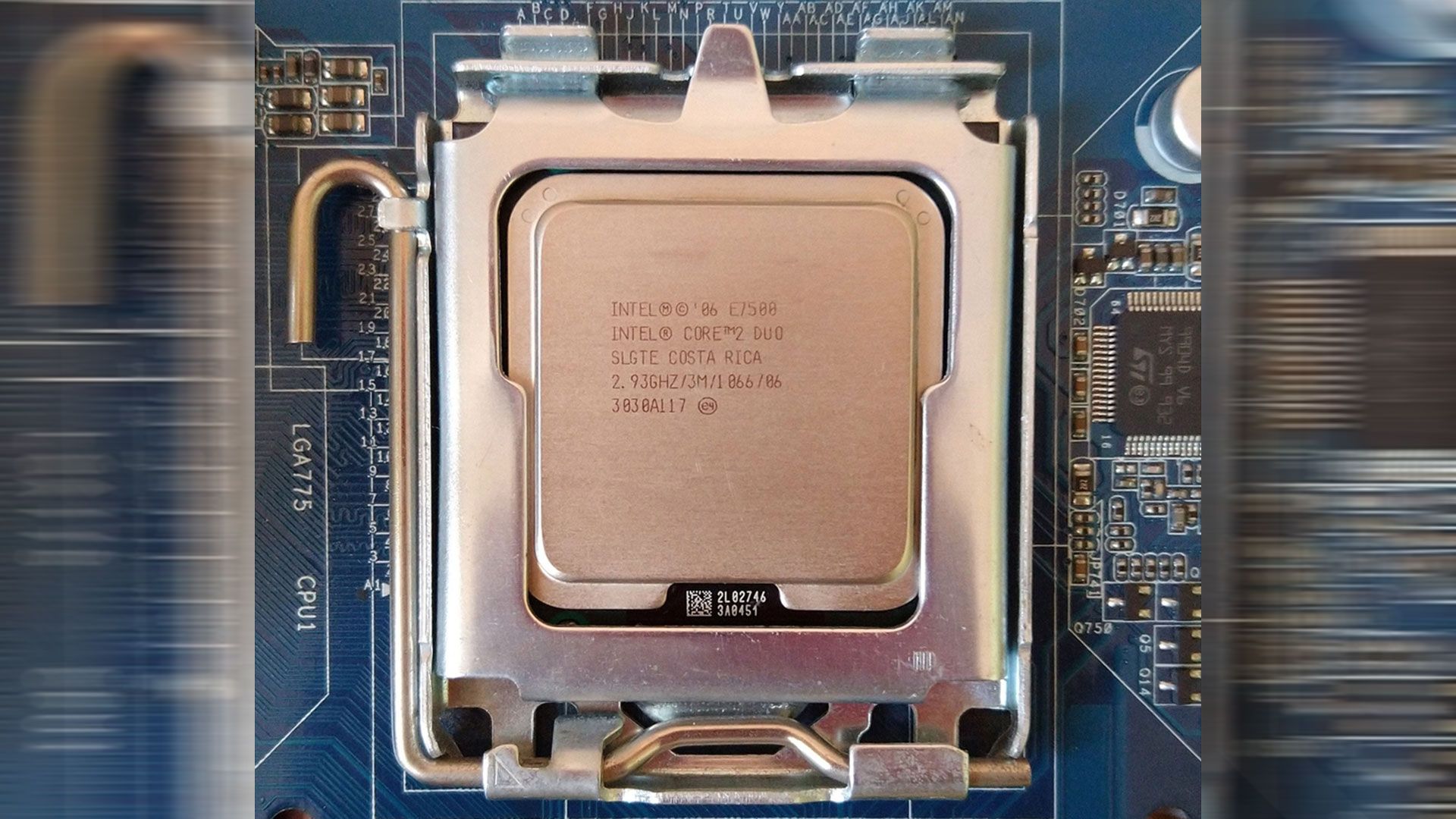
Team Blue crowed these efficient 65nm CPUs were “simply the best processors in the world” and reviewers tended to agree.
When you purchase through links on our site, we may earn an affiliate commission. Here’s how it works .
The four mainstream and one high-end desktop Core 2 Duo processors that launched on July 27, 2006 Core 2 Model
One of the defining characteristics of the first Intel Core 2 Duo chips was that they kicked the GHz race to the periphery of the battlefield. After years of chips being sold with this performance statistic placed most prominently, Intel and the tech media had to educate the wider public that higher GHz numbers didn’t define performance.
Intel Conroe desktop chips came with a generational performance uplift we don’t see often. These third-generation dual-core processors from Team Blue would “provide up to a 40 percent increase in performance and are more than 40 percent more energy efficient versus Intel's previous best processor,” according to launch-day PR. Testers also observed that even the entry-level new Conroe chips could outpace the mighty flagship desktop Pentium Extreme Editions , despite running at nearly half the clock speed.
Behind the real-world performance successes Intel eagerly highlighted, and reviewers seemed genuinely excited by, there were a number of architectural innovations and refinements. Intel boasted that the Core 2 Duo contained “a whopping 291 million transistors” and had achieved many benchmark firsts in internal tests. Conroe arrived with higher efficiency, shorter pipelines, improved branch predictions, new shared Smart Cache, and substantially higher IPC, all built upon Intel’s newest 65nm process technology. With this attractive new price, it wasn’t difficult for Intel to retire its former king, with its hot, power-hungry, and big GHz Netburst architecture.
With the Core 2 Duo, Intel regained its performance leadership from AMD and its Athlon parts. Conroe, the desktop Core 2 architecture, didn’t get singled out in our five best Intel CPUs of all time article (2024), but it was the direct ancestor of the legendary Core 2 Quad CPUs. These quad-core CPUs would take the Gillette-like next logical step with four cores on a chip, combining two Conroe dies in a single package, and launching in January 2007.
Intel introduced ‘the first processor in the x86 series and the first 8086 microprocessor’ on this day in 1978
Intel Core Ultra 7 270K Plus drops below MSRP for the first time
Key considerations
- Investor positioning can change fast
- Volatility remains possible near catalysts
- Macro rates and liquidity can dominate flows
Reference reading
- https://www.tomshardware.com/pc-components/cpus/SPONSORED_LINK_URL
- https://www.tomshardware.com/pc-components/cpus/intel-unveiled-its-iconic-core-2-duo-family-20-years-ago-legendary-chip-dethroned-amd-athlon-restoring-the-chipmakers-performance-lead#main
- https://www.tomshardware.com/membership
- Built for Vera Rubin, NVIDIA Spectrum-6 Arrives in Gigascale AI Factories
- Security flaw in Vatican’s ‘Click to Pray’ app leaves over 700,000 global users exposed — app has been leaking user data for over six months and still does
- Zeiss expands German site that caps ASML's EUV scanner output — first new building opens four years after Oberkochen site groundbreaking
- Built for Vera Rubin, NVIDIA Spectrum-6 Arrives in Gigascale AI Factories
- 'It sounds like someone set up a vacuum, like in your living room': Michigan residents sue AI data center emitting noise 24/7 — company fined for industrial noi
Informational only. No financial advice. Do your own research.