
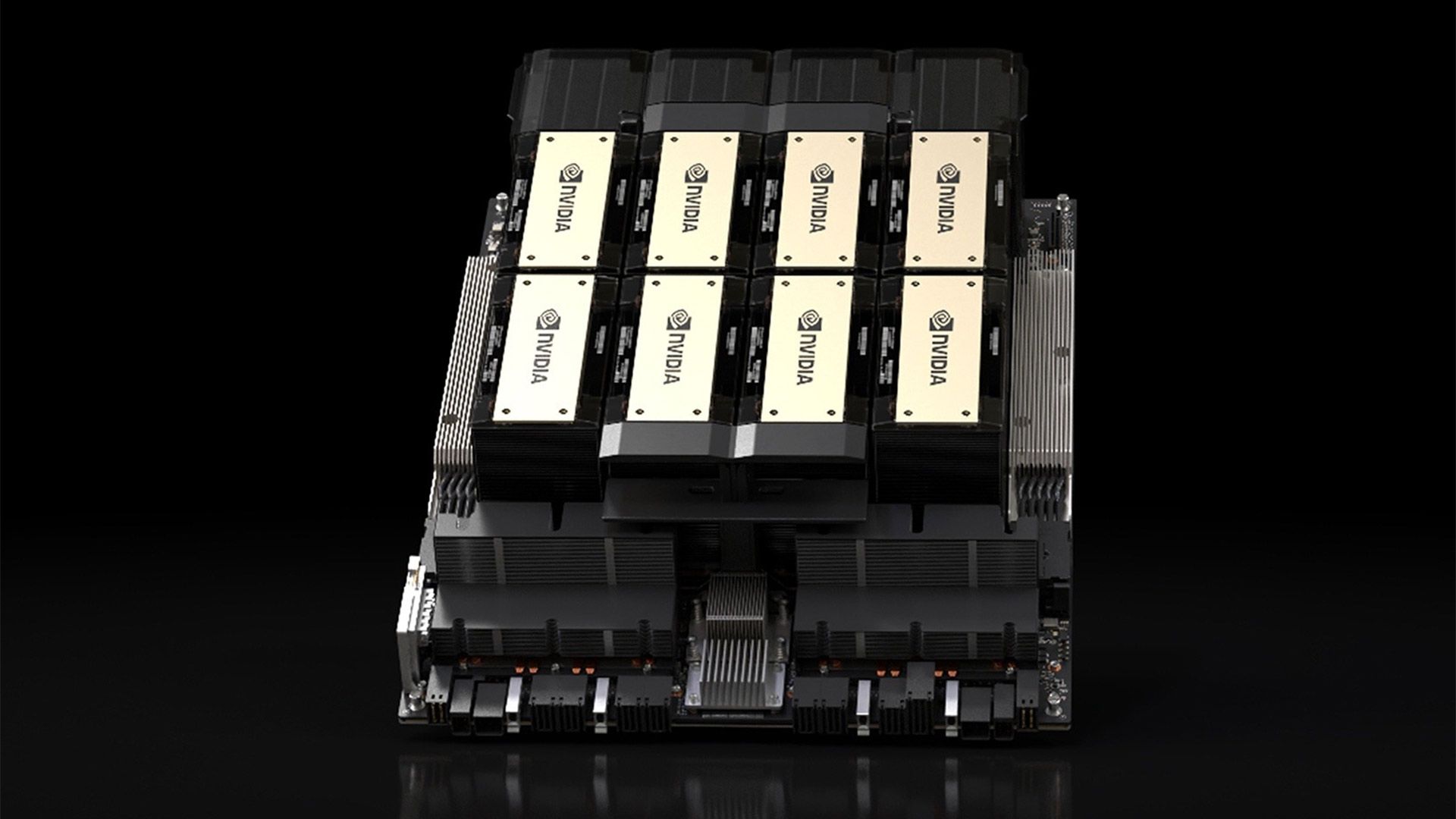
Nvidia slashes list of authorized customers in Asia in a bid to reduce AI chip smuggling, report claims
The report also claims that some buyer institutions have ties to the CCP and the country's defense and intelligence sectors. C4ADS says that it tracked 56 chips worth $1.7 million sold this way in the report's July 2025 to January 2026 period. Additionally, it says that its 2024 investigation covering multiple years of government records revealed $6.48 million worth of silicon heading to China in this manner.
The second route for smuggling potent silicon is technically legal, via drop-shipping it through Southeast Asian countries including Vietnam, India, and Malaysia. C4ADS analyzed transactions between 2022 and 2025, and found $13.4 million of Nvidia A100, H100/GH100, and AD102-series GPUs routed through the aforementioned countries, in a "consistent pattern." Some chips traveled from Taiwan to Vietnam, possibly aided by the fact that Vietnam's chip testing facilities offer a good excuse for the trip. The investigation remarks that the timing, volume, and destination of many shipments could obscure their true intent.
A portion of purportedly tested chips traveled on to Hong Kong, where two companies "[dominate] the import side", Profit New Limited and ELB International Limited. The former traded trading $8.7 million of silicon in a single day in March 2025, likely in preparation for April 2025's tightened export controls. Some high-value shipments in the dataset were apparently bereft of cost, insurance, weight, or freight values, and also had nice round zeros in their import value declarations, raising suspicions about the veracity of their documentation.
The largest category, though, is opaque ownership — or shell companies. According to C4ADS, this method accounted for $4.6 billion worth of intelligent sand migrating to China, on the account of just one entity, Megaspeed International. This firm was reportedly the biggest Southeast Asian importer of Nvidia hardware in the time span between 2023 and 2025. However, its actual ownership is "unresolved."
Megaspeed has multiple companies across Singapore, Indonesia, and Malaysia, but it was purchased in 2023 by Swiftdata, another Singaporean firm. Before that, it was owned by Chinese gaming firm 7Road Holdings. During the transition, however, Megaspeed's major shareholder was temporarily Chinese businesswoman Huang Le, who's also a director of a Hong Kong company that bought transceivers from Megaspeed Indonesia. C4ADS believes Le may still be calling the shots at Megaspeed, though, seeing as she's identified as the firm's chairwoman at a conference as recently as 2025.
The speed and manner in which Megaspeed changed hands also raised some eyebrows, and it's still seemingly unclear who owns Swiftdata itself. Given that Megaspeed reportedly obtained export-locked Blackwell chips, it's hard not to find its dealings more than a tad murky.
C4ADS does issue recommendations to try and mitigate the problem. Namely, it remarks that the U.S. Bureau of Industry and Security gets allocated additional staff and resources so it can verify where the wares landed after their sale, and who their end users are. This could arguably be difficult to enforce, as it would require a level of cooperation from other nations that might prove a tad tricky to obtain in the current political climate.
In the researchers' own words, "U.S. and friend-shored semiconductor manufacturers, equipment makers, and distributors should invest in a robust end-user verification system that goes beyond standard restricted-party list screening, incorporating on-the-ground due diligence, corporate ownership tracing, and post-shipment verification." To the private sector, C4ADS recommends that firms add geopolitical and risk analysis into their frameworks, in a bid to assess if their direct or downstream customers could be selling wares to China's military or intelligence sectors.
Bruno Ferreira Social Links Navigation Contributor Bruno Ferreira is a contributing writer for Tom's Hardware. He has decades of experience with PC hardware and assorted sundries, alongside a career as a developer. He's obsessed with detail and has a tendency to ramble on the topics he loves. When not doing that, he's usually playing games, or at live music shows and festivals.
Key considerations
- Investor positioning can change fast
- Volatility remains possible near catalysts
- Macro rates and liquidity can dominate flows
Reference reading
- https://www.tomshardware.com/tech-industry/artificial-intelligence/SPONSORED_LINK_URL
- https://www.tomshardware.com/tech-industry/artificial-intelligence/billions-worth-of-export-restricted-ai-accelerators-sold-to-china-report-details-how-chinese-firms-skirt-trumps-regulations#main
- https://www.tomshardware.com/my-account
- Developer uses GPT-6 Astra to get CoD Black Ops 2 Hijacked map running natively inside Minecraft — achieves 45fps performance using Minecraft’s OpenGL context
- Emerald AI, Google and NVIDIA Launch Alliance to Advance Flexible AI Data Centers
- Perplexity Portable Computer Is Now Available on Windows, Powered by NVIDIA RTX
- Micron announces 512GB DDR5-9200 memory modules with 16W power draw — up to 12TB per server, claims 60% less energy-intensive than four 128GB modules
- New York State recommends demanding AI data centers pay $1 million in community investment per megawatt — framework advises towns to plan for maintenance costs,
Informational only. No financial advice. Do your own research.