
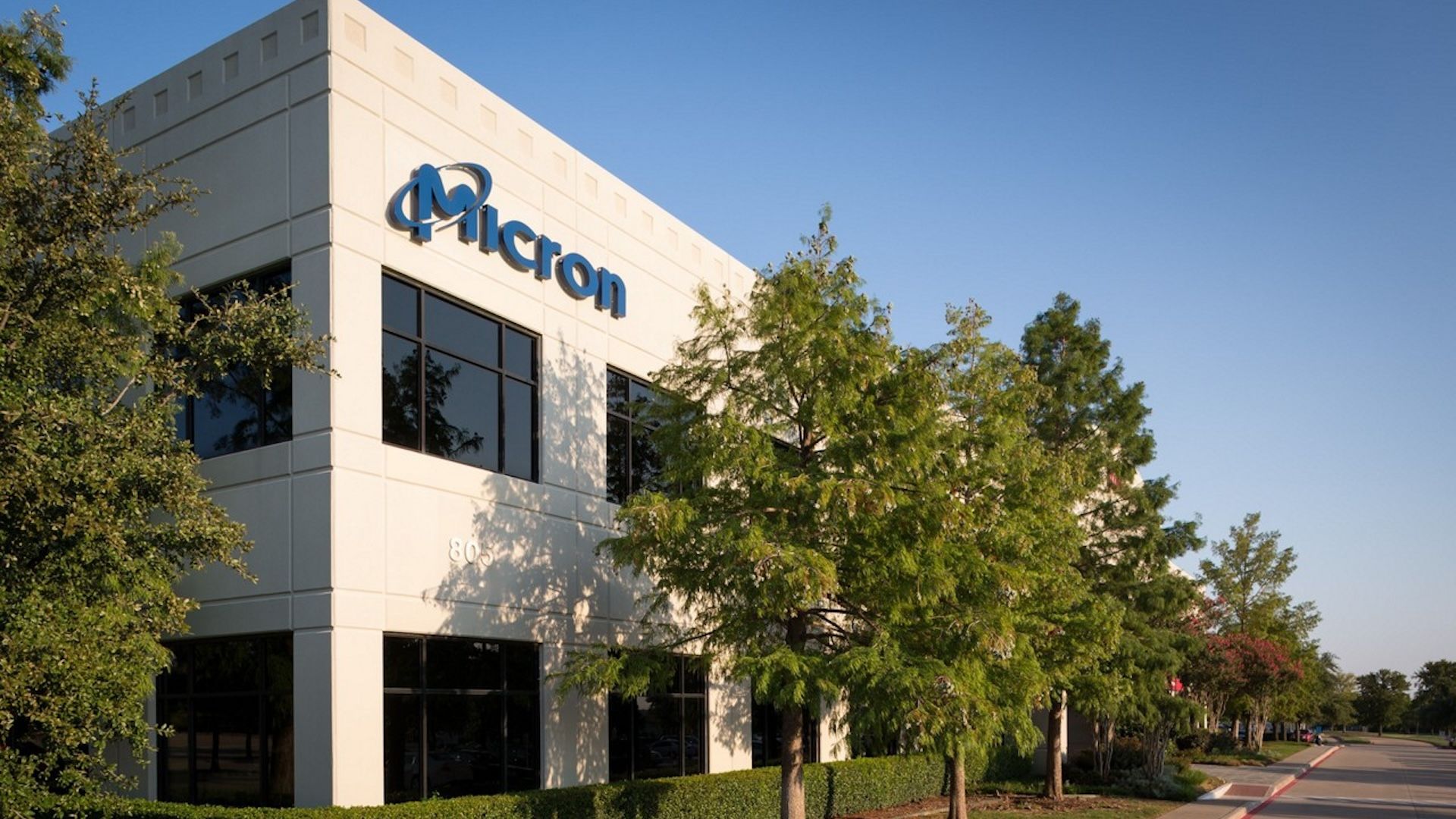
GlobalWafers chairperson and CEO Doris Hsu set out her terms for that at the Sherman opening, announcing an additional $4 billion for the site and telling Reuters that further phases depended on the first two turning a profit, on customers signing long-term contracts, and on reasonable pricing, prepayments, and government support. Micron's $500 million in financing and a decade-long supply commitment cover most of that list, and Hsu has since called the Micron agreement the largest long-term deal in her company's history and said a second Sherman phase is now necessary.
Micron is locking in its own customers on the same basis, having signed a strategic customer agreement with General Motors on July 1 and another with Ford on July 6, two of 16 such agreements the company cited on its fiscal Q3 2026 earnings call. Each ties future memory output to a named buyer.
We’ve seen the industry do this before. During the memory boom of 2017-2018, chipmakers signed prepaid, take-or-pay wafer agreements to guarantee supply, but those prepayments became balance-sheet liabilities when DRAM pricing fell through 2019. SK Group chairman Chey Tae-won told an audience at Nvidia's GTC conference that the current wafer shortage could last through 2030 with a deficit above 20%, which is the argument for signing now. Conversely, the 2019 write-downs are the argument against.
High-bandwidth memory is of course the component that’s currently carrying the steepest premiums in the AI market, and a fabbed wafer isn’t yet HBM. The die has to be stacked and packaged using advanced 2.5D methods with through-silicon vias, the capacity for which is located almost entirely in Asia. Micron's committed HBM packaging anchor is a roughly $7 billion facility in Singapore, with operations starting in 2026. Per a June 2025 SEC filing , the company lists U.S. HBM packaging as an intention, but no committed site or date has yet been announced.
As for U.S. packaging capacity that is scheduled, it’s all clustered in or around 2028. SK hynix is building the first U.S. 2.5D advanced packaging plant in West Lafayette, Indiana, a roughly $3.87 billion project with mass production set for the second half of 2028. Amkor, meanwhile, has expanded its Peoria, Arizona campus to $7 billion, with production slated for early 2028. TSMC's Arizona fabs run leading-edge logic but don’t yet offer high-volume 2.5D packaging on U.S. soil — this is reportedly planned for 2029. While it’s true that a wafer fabbed in New York and packaged in Singapore counts toward domestic DRAM, it doesn’t make the finished HBM stack domestic.
Micron's Manassas, Virginia fab began producing 1-alpha DRAM in May, and it’s the only U.S.-made memory in volume, representing roughly 2% of the world’s supply. The first new Idaho fab should reach wafer output in mid-2027, and the second in late 2028, while the Clay, New York campus isn’t expected to produce until around 2030. The $250 billion capex figure runs five years past that, while conventional DRAM contract prices continue to rise at record amounts — more than 90% quarter over quarter in early 2026, according to TrendForce — and manufacturers increase prices. Apple raised MacBook, iPad, and Vision Pro prices last month , citing memory costs, and none of the announced U.S. capacity will do anything to alleviate such shortages.
Samsung and SK hynix committed a combined $880 billion under a South Korean government-coordinated chip and AI program announced last month, spread over roughly a decade. That spending is domestic to Korea and separate from Samsung's $37 billion Texas footprint. But set next to Micron's $250 billion, we’re seeing a pattern of more companies announcing more capex than construction projects can physically absorb.
HBM consumes roughly three times the wafer area per bit of standard DDR5, so shifting production to HBM removes more commodity memory from the market. DRAM already takes around a fifth of global 300mm capacity, and memory is the largest single application for 300mm silicon. Micron's Sumit Sadana told CNBC in January the company could meet “at most” two-thirds of some customers' medium-term demand.
Luke James is a freelance writer and journalist.\u00a0 Although his background is in legal, he has a personal interest in all things tech, especially hardware and microelectronics, and anything regulatory.\u00a0 ","collapsible":{"enabled":true,"maxHeight":250,"readMoreText":"Read more","readLessText":"Read less"}}), "https://slice.vanilla.futurecdn.net/13-4-25/js/authorBio.js"); } else { console.error('%c FTE ','background: #9306F9; color: #ffffff','no lazy slice hydration function available'); } Luke James Social Links Navigation Contributor Luke James is a freelance writer and journalist. Although his background is in legal, he has a personal interest in all things tech, especially hardware and microelectronics, and anything regulatory.
Key considerations
- Investor positioning can change fast
- Volatility remains possible near catalysts
- Macro rates and liquidity can dominate flows
Reference reading
- https://www.tomshardware.com/tech-industry/semiconductors/SPONSORED_LINK_URL
- https://www.tomshardware.com/tech-industry/semiconductors/micron-commits-500-million-to-globalwafers-texas-wafer-plant-as-it-raises-us-spending-to-250-billion#main
- https://www.tomshardware.com/my-account
- Razer Blade 16 (2026) review: Competitive gaming performance and class-leading endurance
- Into the Omniverse: Three Workflows for Improving Vision AI Agent Accuracy With Synthetic Data and Fine-Tuning
- Razer Blade 16 (2026) review: Competitive gaming performance and class-leading endurance
- Ireland’s data centers consumed nearly as much electricity as every home in the country combined in 2025 — server farms gulped 23% of national power despite yea
- Best Buy has slashed $900 off this Asus 64GB 2-in-1 touchscreen gaming laptop — $2,099 RoG Flow Z13 is great for both gaming and AI use
Informational only. No financial advice. Do your own research.