
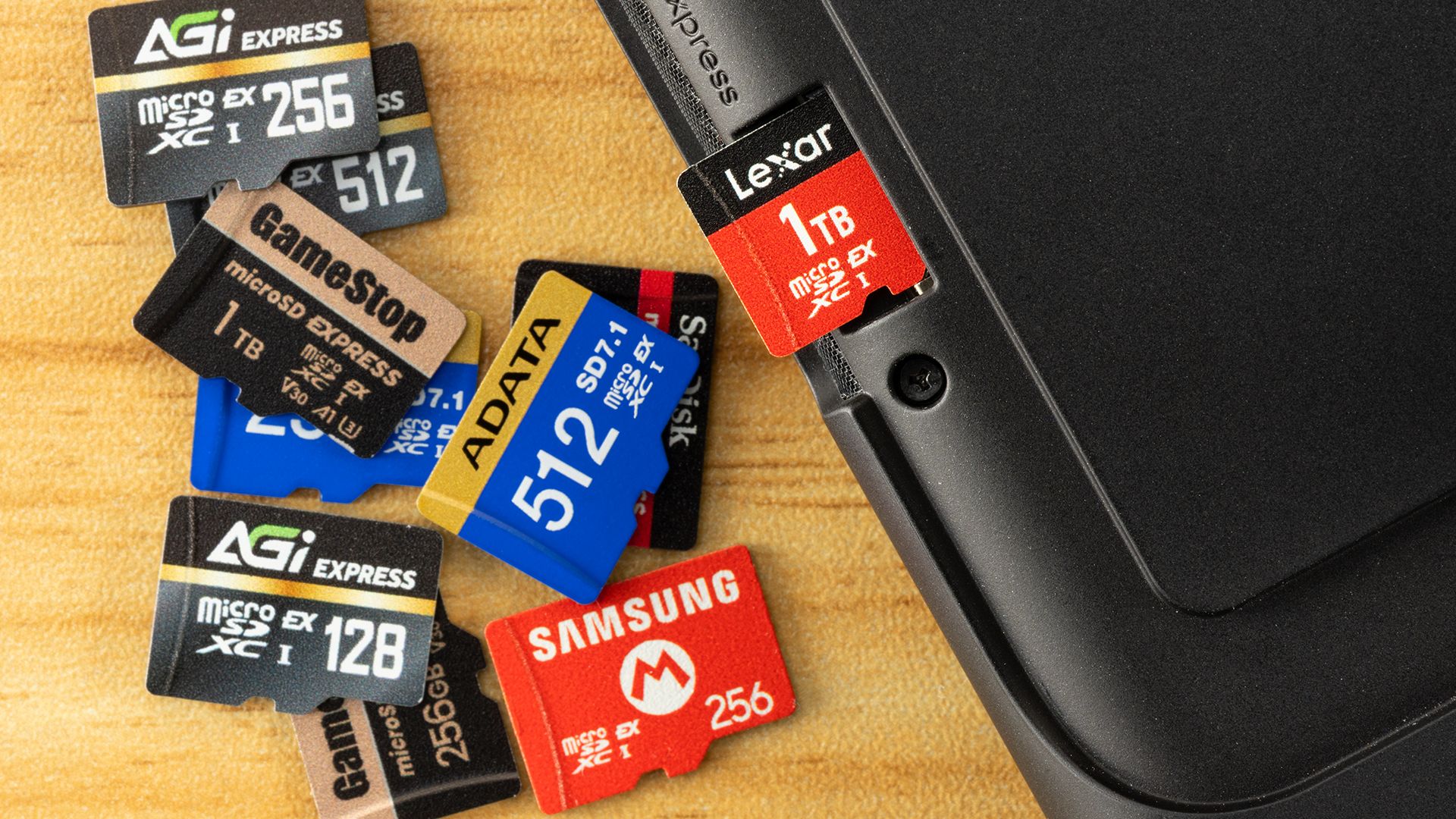
Follow Tom's Hardware on Google News , or add us as a preferred source , to get our latest news, analysis, & reviews in your feeds.
Jowi Morales is a tech enthusiast with years of experience working in the industry. He\u2019s been writing with several tech publications since 2021, where he\u2019s been interested in tech hardware and consumer electronics. ","collapsible":{"enabled":true,"maxHeight":250,"readMoreText":"Read more","readLessText":"Read less"}}), "https://slice.vanilla.futurecdn.net/13-4-25/js/authorBio.js"); } else { console.error('%c FTE ','background: #9306F9; color: #ffffff','no lazy slice hydration function available'); } Jowi Morales Social Links Navigation Contributing Writer Jowi Morales is a tech enthusiast with years of experience working in the industry. He’s been writing with several tech publications since 2021, where he’s been interested in tech hardware and consumer electronics.
chaz_music It is great to see an article like this on TH. This kind of stress testing is done all the time in engineering design and product quality assessment, and it is a great tool for finding where your margins are for a given stress type. If you test to failure, it is call HALT testing, and if you use it to act as hurdle, such as for manufacturing, it is called HASS test. In manufacturing these tests might be burn-in testing or hipot testing (insulation system verification). Knowing that Flash memory lifespan is also temperature dependent, the testing done in the article would have been even more interesting if the internal controller temp could be recorded while it was running, or conversely, if the ambient temperature had been set differently with two samples of each memory card (but – twice the cost of the study). If you move two stressors around at the same time, it is called a MEOST test. It is unfortunately that the GPU industry did not do this for the power connectors and used temperature and humidity as the stressors. They would have found that there exists a problem before even launching the product. But note – delaying a product launch is often a career damaging move at many companies. I myself have had my job threatened for stopping a product launch to fix an issue. All of these concepts can be found on Wikipedia where some people have done a great job explaining the ideas. If I remember correctly, these test methods were originally proposed in US academics around the mid 1950's, but not really used in industry until the Japanese automakers started utilizing them. I have used them successfully myself many times to find difficult failure modes in designs, and chasing root failure modes in warranty cases. Reply
Faiakes Sandisk among the failures? Seriously? This really worrying. They are the most or second most common brand. Reply
USAFRet Faiakes said: Sandisk among the failures? Seriously? This really worrying. They are the most or second most common brand. How is that worrying for SanDisk? ALL brands had fails. Given the amount of data was seen before the fails, this is like when buying a new car. Comparing Ford, Chevy, Toyota, Nissan. Looking at the published top speeds: Ford – 152mph Chevy – 155mph Toyota – 151mph Nissan – 154mph And then concluding TOYOTA SUX!!!! Reply
Nate1994a Faiakes said: Sandisk among the failures? Seriously? This really worrying. They are the most or second most common brand. Another thing is it seems like he's using different computers and therefore different readers and hardware configurations for it, so that's at least one or two possible variables not being accounted for from what I've read in the article. Unfortunately there no way of knowing if the SD readers themselves are part of the failure rates because we don't know what's being used. Reply
Sluggotg USAFRet said: How is that worrying for SanDisk? ALL brands had fails. Given the amount of data was seen before the fails, this is like when buying a new car. Comparing Ford, Chevy, Toyota, Nissan. Looking at the published top speeds: Ford – 152mph Chevy – 155mph Toyota – 151mph Nissan – 154mph And then concluding TOYOTA SUX!!!! If you look at the chart, SanDisk had 6 out of 7 fail. When you add up the other 4 companies, they had 3 out of 11 fail. That is a very high failure rate compared to the others. I think most people would be concerned by the high failure rate. Reply
USAFRet Sluggotg said: If you look at the chart, SanDisk had 6 out of 7 fail. When you add up the other 4 companies, they had 3 out of 11 fail. That is a very high failure rate compared to the others. I think most people would be concerned by the high failure rate. And again, what was written is FAR more than what one would actually do. "They lasted an average of 452 days and about 16,200 program/verify/erase cycles before failing (with the MAX ENDURANCE 32GB's lasting about twice as long as the High Endurance 64GB's). I've written about 4.7PB to these cards in total." When pushed waaaaaay out on the edge (4.7PB), yes, the SanDisks failed more than the others. But that has exactly zero to do with real world longevity. 4.7PB across 7 drives = 670TB each (if distributed evenly) Now really…how much are YOU actually going to write across similar drives. Reply
markhahn The endurance reported here implies that the cards are using MLC (around 10k cycles spec). Is this even possible? It seems like fabs have been converted to TLC for years, and even QLC has been pushed across the market… Reply
markhahn Nate1994a said: Another thing is it seems like he's using different computers and therefore different readers and hardware configurations for it, so that's at least one or two possible variables not being accounted for from what I've read in the article. Unfortunately there no way of knowing if the SD readers themselves are part of the failure rates because we don't know what's being used. Isn't this pretty trivial? The computer shouldn't matter unless it's badly broken (reporting writes that it doesn't perform). It's not as if different computers can just decide to write to storage differently, since the media must always be in canonical format/ordering/etc. If the SD adapters are failing, it should be simple to verify. The one row of the data I looked at averaged 68 MB/s, which is reasonable, but probably implies that the load generator is not writing, then verifying each write. It's entirely reasonable that a motley collection of low-end computers could sustain this rate (though of course we have to toast the experimenter's fortitude as much as the SD cards' endurance!) Reply
Razzi16 His comments about SanDisk make no sense at all. In the title he says "SanDisk as the outlier with 6 failures of the 7 tested", but in the actual table of testing results it says 3 failed out of 10 tested for SanDisk. So, which is it? Reply
Key considerations
- Investor positioning can change fast
- Volatility remains possible near catalysts
- Macro rates and liquidity can dominate flows
Reference reading
- https://www.tomshardware.com/pc-components/microsd-cards/SPONSORED_LINK_URL
- https://www.tomshardware.com/pc-components/microsd-cards/microsd-card-testing-database-celebrates-third-anniversary-with-133-petabytes-of-data-written-across-4-6-million-cycles-hundreds-of-cards-tested-to-failure-reveal-sandisk-as-the-outlier-with-6-failures-of-the-7-tested#main
- https://www.tomshardware.com/membership
- Samsung's fab roadmaps examined — Taylor, Pyeongtaek, and the yield woes behind a $16.5 billion Tesla deal
- Jason Kelce-led marketing campaign asks beer drinkers to send their pee to AI data centers — Liquid Death and Garage Beer skit claims 'AI data centers waste mil
- Console modder builds working Switch 2 Joy-Cons inside original Wii Remote shells — motion-sensing controllers snap magnetically onto a Switch 2
- NVIDIA CEO Tops Glassdoor’s 2026 List of Best CEOs
- China shifting massive AI data center complexes to rural provinces to tap surplus energy — ‘Eastern Data, Western Computing’ strategy has Chinese tech giants Hu
Informational only. No financial advice. Do your own research.