
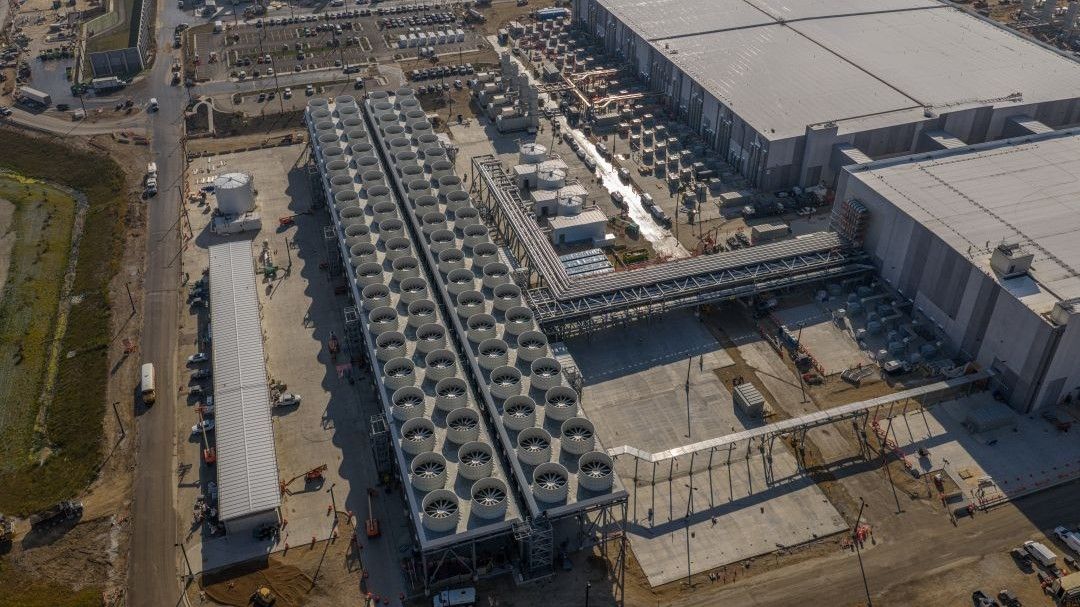
While Nadella did not specify the size or type of restaurant used for comparison, the claim is striking given the scale of modern hyperscale AI facilities. Industry estimates suggest that restaurants can consume anywhere from several hundred thousand to more than a million gallons of water annually, while 100MW+ hyperscale data centers have historically required tens to hundreds of millions of gallons of water annually for cooling, depending on climate, workload, and cooling design.
Nadella's statement — not the first time Microsoft has used a restaurant comparison — is based on Microsoft's new closed-loop liquid-cooling architecture. Traditional data centers often rely on evaporative cooling systems that continuously consume water to remove heat generated by servers and networking equipment. In Microsoft’s new approach, over 90% of the facility's cooling relies on a closed-loop liquid cooling system that is filled during construction and then continuously recirculates the same water rather than constantly consuming a fresh supply. The remaining portion of the cooling system primarily relies on outside air and only uses additional water in the hottest conditions.
The system works by circulating cooled water through heat exchangers connected to the AI hardware. As the water absorbs heat, it is routed to a massive chiller plant where large cooling fans dissipate the heat before the water is recirculated back through the facility. Because the water remains in the cooling loop rather than evaporating and being discarded, ongoing water consumption is dramatically reduced. This can translate to savings of multiple billions of gallons of water across Microsoft’s data centers.
Amazon, Microsoft, and Google under investor pressure to disclose data center water and power use
AI data center project secretly sucked 29 million gallons of water over 15 months before detected by residents complaining about low water pressure
US startup plans to build data centers inside ocean-based wind turbines, servers water cooled via chilly North Sea
The current reality is much more subdued. The new cooling design and its water savings are currently implemented only at Microsoft's Fairwater AI data center campus in Mount Pleasant, Wisconsin. On the other hand, the company has stated that the new cooling approach will become the standard design for future AI-focused data centers. Microsoft has confirmed that multiple identical Fairwater facilities are already under construction elsewhere in the United States as part of a broader expansion of its AI infrastructure footprint. The rollout forms part of Microsoft's longer-term goal of becoming water positive by 2030, meaning the company aims to replenish more water than it consumes globally, as part of its community-first strategy .
While the new cooling design will substantially reduce water use in future facilities, critics note that Microsoft already operates a vast global network of data centers. Azure now spans more than 500 facilities across 80 regions worldwide, many of which were built before Fairwater's cooling architecture was introduced.
Get Tom's Hardware's best news and in-depth reviews, straight to your inbox.
Key considerations
- Investor positioning can change fast
- Volatility remains possible near catalysts
- Macro rates and liquidity can dominate flows
Reference reading
- https://www.tomshardware.com/tech-industry/big-tech/SPONSORED_LINK_URL
- https://www.tomshardware.com/tech-industry/big-tech/microsoft-ceo-says-new-ai-data-centers-use-as-little-water-annually-as-a-restaurant-closed-loop-cooling-system-aims-to-slash-consumption-from-millions-of-gallons-as-ai-infrastructure-faces-mounting-environmental-scrutiny#main
- https://www.tomshardware.com/subscription
- The rise of local agentic computing faces a brutal reality: rising DRAM prices — RTX Spark, Gorgon Halo chips subject to 63% DRAM contract price hike this quart
- Samsung shows first HBM5 mockup with Heat Path Block cooling — thermal race with SK hynix shaping up
- NVIDIA Research Unlocks Advanced Grasping, Smarter Autonomous Driving and Agent Training at Scale
- Take your OpenClaw box back to the future with retro Mac Mini, Mac Studio docks — Wokyis tempts Nintendo and Apple lawyers, while adding a screen, ports, and st
- NVIDIA Jetson Brings Agentic AI to the Physical World
Informational only. No financial advice. Do your own research.