
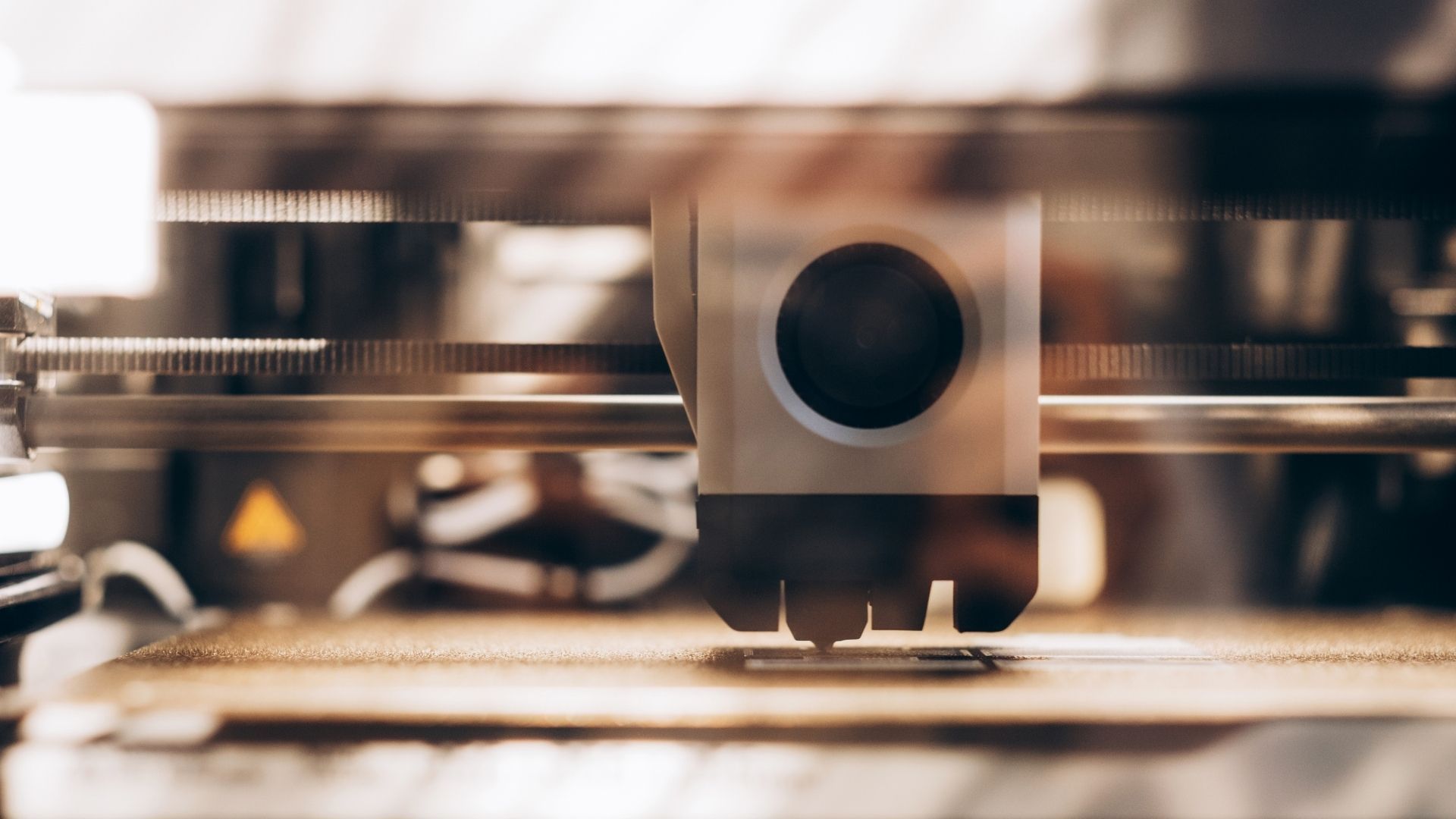
Microbiologists modified an Ender 3 FDM printer to print macrostructures from microbes and make research on engineered living materials more accessible.
a]:text-inherit [&>a]:underline">
When you purchase through links on our site, we may earn an affiliate commission. Here’s how it works .
Synthetic biology is like combining engineering with microbiology, treating microbes as machines and physical building blocks to achieve various functions. In the journal ACS Applied Polymer Materials, biologist Anne S. Meyer et al. published a 3 D Bioprinting of Engineered Living Materials paper in August. The paper says that synthetic biology and 3D bioprinting have advanced ELM research, but the hardware costs and the inability of the expensive hardware to maintain the structure limit further progress. Hitting two birds with one stone, the researchers built an open-source, affordable 3D bioprinter from an Ender 3 and created their own support slurry, allowing the ELMs to keep their shape.
The researchers kept most of the 3D printer's structure, mainly replacing the print head with a syringe pump mounted with custom 3D-printed PETG components, designed to utilize a 10 mL glass Luer-lock syringe with a plunger mechanism to control extrusion and retraction. The workflow is very similar to normal 3D printing, with the shape created with CAD using SolidWorks, exported as an STL, and sliced in Slic3r. The researchers tweaked the print settings in Slic3r to match the 0.254mm needle, with the extrusion multiplier dialed down all the way to 0.004, resulting in a flow rate of 2 mL/h at a print speed of 23 mm/s.
Instead of a filament, the researchers created a bio-ink from a mix of bacteria and alginate to be printed inside two types of support material: Agarose or gelatin gels. Agarose is used for long-term incubation, with the printed ELM staying viable for four or more weeks, and gelatin is used for extractable prints. The support slurries are enriched with Calcium ions, which cause the alginate strands to cross-link, creating a solid structure that encapsulates the living bacteria.
ELMs are not limited to bacteria, but the paper mainly experiments with bacteria to explore bacteria-generated biomaterials with desirable characteristics such as biofilms for antimicrobial treatments, plastic degradation, or even wastewater treatment — or bacterial cellulose with structural characteristics to be used in applications such as a biodegradable plastic alternative. With the team’s efforts to make ELM research more affordable, developments could happen faster, with many applications across many fields, possibly even bacteria-based bioplastic 3D printing filaments for FDM printers.
Mechatronics student builds 3D printer made from 92% LEGO for less than $180
Key considerations
- Investor positioning can change fast
- Volatility remains possible near catalysts
- Macro rates and liquidity can dominate flows
Reference reading
- https://www.tomshardware.com/3d-printing/SPONSORED_LINK_URL
- https://www.tomshardware.com/3d-printing/university-of-rochester-researchers-made-a-3d-bioprinter-from-a-modified-ender-3-usd450-bioprinter-makes-engineered-living-material-research-accessible#main
- https://futureplc.com/privacy-policy/
- Practice Makes Precise: At CoRL, NVIDIA and Partners Reveal How Robots Rehearse Delicate Work in Simulation
- Wacky PC and gadget gift guide
- Two HPE Juniper network routers grounded all the US flights on Friday
- Contractor turns a Milwaukee Hackzall into a portable Ethernet untwister after facing job requiring 50,000 custom Cat6 cables
- Nvidia CEO Jensen Huang resigns in the wake of multiple affairs, Chinese spy allegations
Informational only. No financial advice. Do your own research.