
When you purchase through links on our site, we may earn an affiliate commission. Here’s how it works .
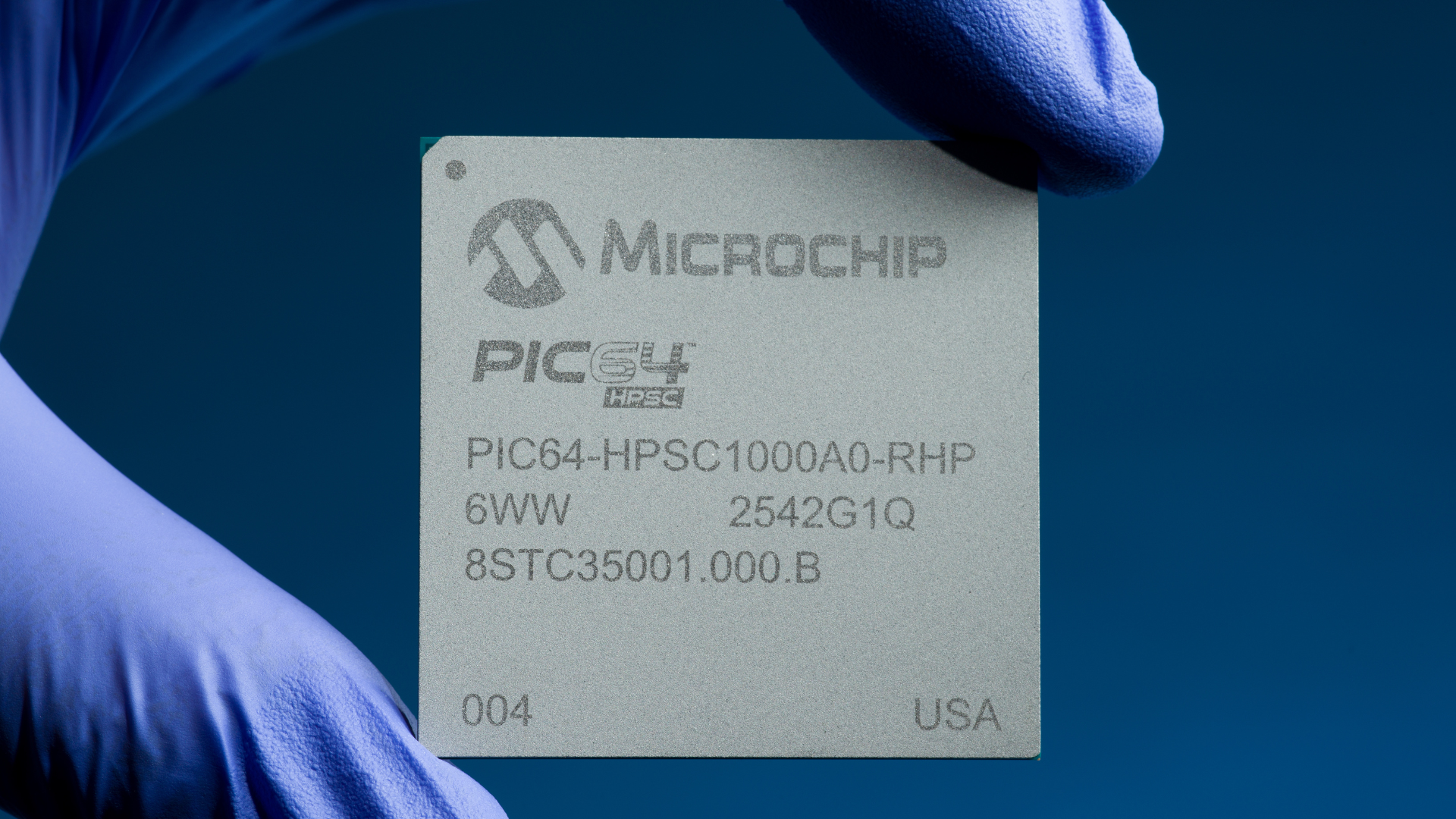
The SoC will combine both computing and networking capabilities on a single device, reducing cost and complexity, as well as allowing for better power efficiency. More importantly, it will feature a scalable architecture so operators can turn off unnecessary functions in case they need to conserve energy. We’ve seen NASA selectively turn off instruments on distant spacecraft to reduce power consumption — it executed this procedure on the nearly 50-year-old Voyager 1 , which left the solar system in 2012, after scientists noticed an unexpected drop in onboard power levels.
These chips are also designed to scale as multiple units connected via advanced Ethernet. This would give NASA spacecraft massive computing power and even allow for some autonomy, like deciding the speed at which a rover will traverse a landscape or using it to analyze images independently. The Perseverance rover actually used something similar when it paired NASA’s satellite data of the Red Planet’s surface with its panoramic camera and a Qualcomm Snapdragon 801. This allows it to compare what it sees with the information gathered from space so it can determine its location with pinpoint accuracy .
NASA engineers reprogrammed Mars helicopter's Snapdragon chip to run the rover instead, reconfiguring system from 140 million miles away
Elon Musk unveils $20 billion ‘TeraFab’ chip project to make chips, memory, and package processors all under one roof
TSMC's details next-gen CoWoS roadmap: over 14-reticle packages and 48x leap in compute power expected by 2029
What’s interesting, though, is that NASA envisions that the technology developed from this project will be used in Earth-bound applications, as well. The agency said that its potential applications include “drones, energy grids, medical equipment, communication services, artificial intelligence, and data transmission.” This won’t be the first time that space-borne technology has become ubiquitous on our planet. Several technologies that we use daily were initially built for space exploration, says NASA’s Jet Propulsion Laboratory . This includes camera phones, CAT scans, LEDs, water purification systems, wireless headphones, and memory foam, among others.
Advancements in the semiconductor space have so far been driven by chip makers, like Apple and Nvidia, and fabs such as TSMC. This partnership will allow NASA and Microchip to build technological advancements of their own. But instead of focusing on raw computing power, the two entities will push for reliability, power efficiency, scalability, and security .
Follow Tom's Hardware on Google News , or add us as a preferred source , to get our latest news, analysis, & reviews in your feeds.
Get Tom's Hardware's best news and in-depth reviews, straight to your inbox.
Key considerations
- Investor positioning can change fast
- Volatility remains possible near catalysts
- Macro rates and liquidity can dominate flows
Reference reading
- https://www.tomshardware.com/tech-industry/semiconductors/SPONSORED_LINK_URL
- https://www.tomshardware.com/tech-industry/semiconductors/nasa-partners-with-microchip-to-build-next-generation-spaceflight-chips-with-100x-the-power-of-current-offerings-chip-designed-to-withstand-radiation-for-extended-missions-on-the-moon-and-mars#main
- https://www.tomshardware.com
- 2TB Samsung 9100 Pro SSD and 32GB of Corsair Vengeance RAM is just $363 in this staggering Newegg 9850X3D bundle — $558 off this $1,200 AM5 haul includes an X87
- Trump administration reportedly debating ban on Chinese cellular modules in expansion of FCC crackdown — potential restrictions could impact everything from sma
- Google's new laptop platform, 'Googlebook,' leaks ahead of reveal event — new laptops powered by Android and Google Gemini, meant to succeed Chromebook
- Microsoft's massive Kenya AI data center would require switching off 'half the country' to meet power requirements, government says — $1 billion project stalls
- Klipsch Pro Media Lumina Review: Slimmer subwoofer, even slimmer bass
Informational only. No financial advice. Do your own research.