
When you purchase through links on our site, we may earn an affiliate commission. Here’s how it works .
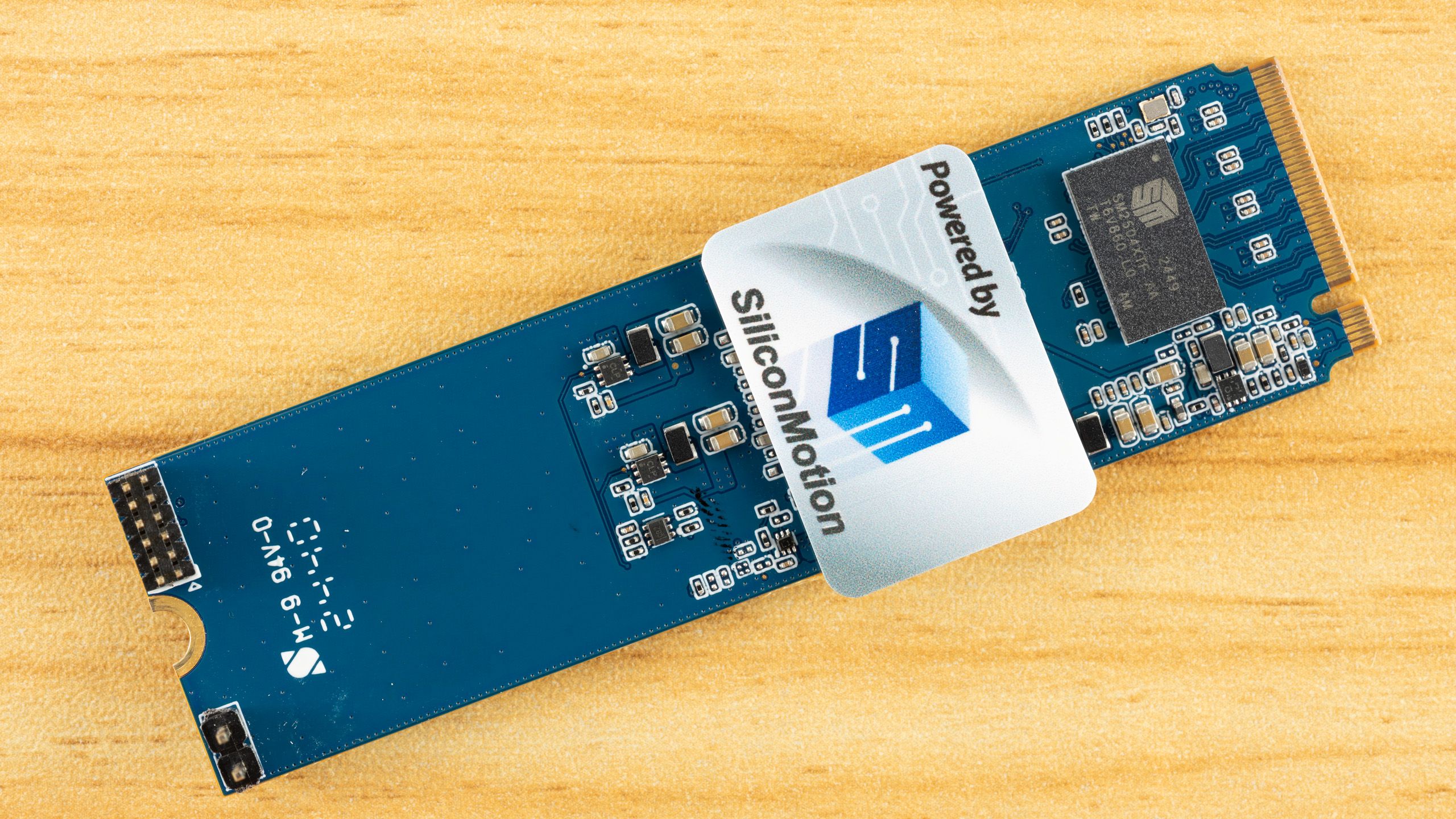
Silicon Motion’s SM2524XT controller is based on four (presumably Arm Cortex-R-series) cores, does not use DRAM, and complies with the NVM 2.0 specification. The unit has four NAND channels supporting data transfer rates of up to 4,800 MT/s as well as a PCIe 5.0 x4 host interface. The platform supports the latest types of 3D TLC and 3D QLC NAND and features SMI’s NANDXtend LDPC ECC technology to cope with the inevitable read errors of the latest flash memory, though Silicon Motion hasn't disclosed the generation of the NAND or the codeword size.
The company says the controller can deliver up to 2.5 million random IOPS alongside sequential read speeds reaching 14 GB/s, which is a very good result for mainstream solid-state drives. SMI uses TSMC’s services to produce the controller using a 6nm-class process technology.
Samsung preps PCIe 5.0 QLC SSD with a controller based on open-source RISC-V architecture
Kioxia announces new Super High IOPS SSD that helps accelerate AI workloads on Nvidia GPUs
Chinese SSD maker YMTC lists its first commercial PCIe 5.0 SSD as worldwide shortage intensifies
Compared to its predecessor introduced about a year ago, the SM2524XT boosts random workload throughput by as much as 25%, reduces latency, and improves responsiveness during the fragmented read/write operations typical of KV cache and AI inference tasks. In fact, KV cache and enhanced AI inference performance are among the key advantages of the new SSD controller platform.
“KV Cache has become a critical factor in AI inference performance, driving the need for sustained high random read/write throughput and low-latency data access,” said Nelson Duann, Senior VP of Client & Automotive Storage Business at Silicon Motion. “As AI PCs evolve to support increasingly complex Local Agent and on-device LLM workloads, the SM2524XT is designed to deliver the random I/O performance, latency stability, and power efficiency required for next-generation AI storage architectures.”
KV cache is a storage area used by AI models to keep previously processed data so the model does not need to recalculate it for every new token. While this significantly reduces compute overhead, it also creates massive amounts of small, random, latency-sensitive memory and storage accesses. While this may not be a big problem in the data center environment, it may create performance bottlenecks when AI workloads run locally on a PC with a relatively limited DRAM capacity. As a result, latency and KV cache performance may limit the performance of long-context and multi-agent workloads.
To address these performance penalties, the SM2524XT controller integrates several of Silicon Motion’s technologies, including Separated Command Address (SCA) technology, which separates command and address traffic inside the NAND interface and enables the controller to process both simultaneously (rather than serially) to lower latency, increase effective bandwidth, and therefore maintain predictable performance. As an added bonus, these technologies make SM2524XT useful not only for PCs but also for edge AI devices.
Get Tom's Hardware's best news and in-depth reviews, straight to your inbox.
Key considerations
- Investor positioning can change fast
- Volatility remains possible near catalysts
- Macro rates and liquidity can dominate flows
Reference reading
- https://www.tomshardware.com/pc-components/ssds/SPONSORED_LINK_URL
- https://www.tomshardware.com/pc-components/ssds/new-silicon-motion-sm2524xt-chip-brings-14-gb-s-to-mainstream-ssds-6nm-dramless-controller-boasts-heavy-ai-pc-optimization-and-slashes-kv-cache-latency#main
- https://www.tomshardware.com/subscription
- Leaks reveal US authorities concerned about the rise of ‘anti-tech extremists’ as AI data center issues become increasingly contentious — critics say this could
- Researchers say they can spy on your browsing by measuring SSD activity through a browser API — claim FROST attack requires no permissions or user interaction t
- Linked and Loaded: Gaijin Single Sign-On Now Available on GeForce NOW
- Mystery company accidentally blew $500 million on Claude AI in a single month — failed to put usage limit on licenses for employees
- NVIDIA and Google Cloud Empower the Next Wave of AI Builders
Informational only. No financial advice. Do your own research.