
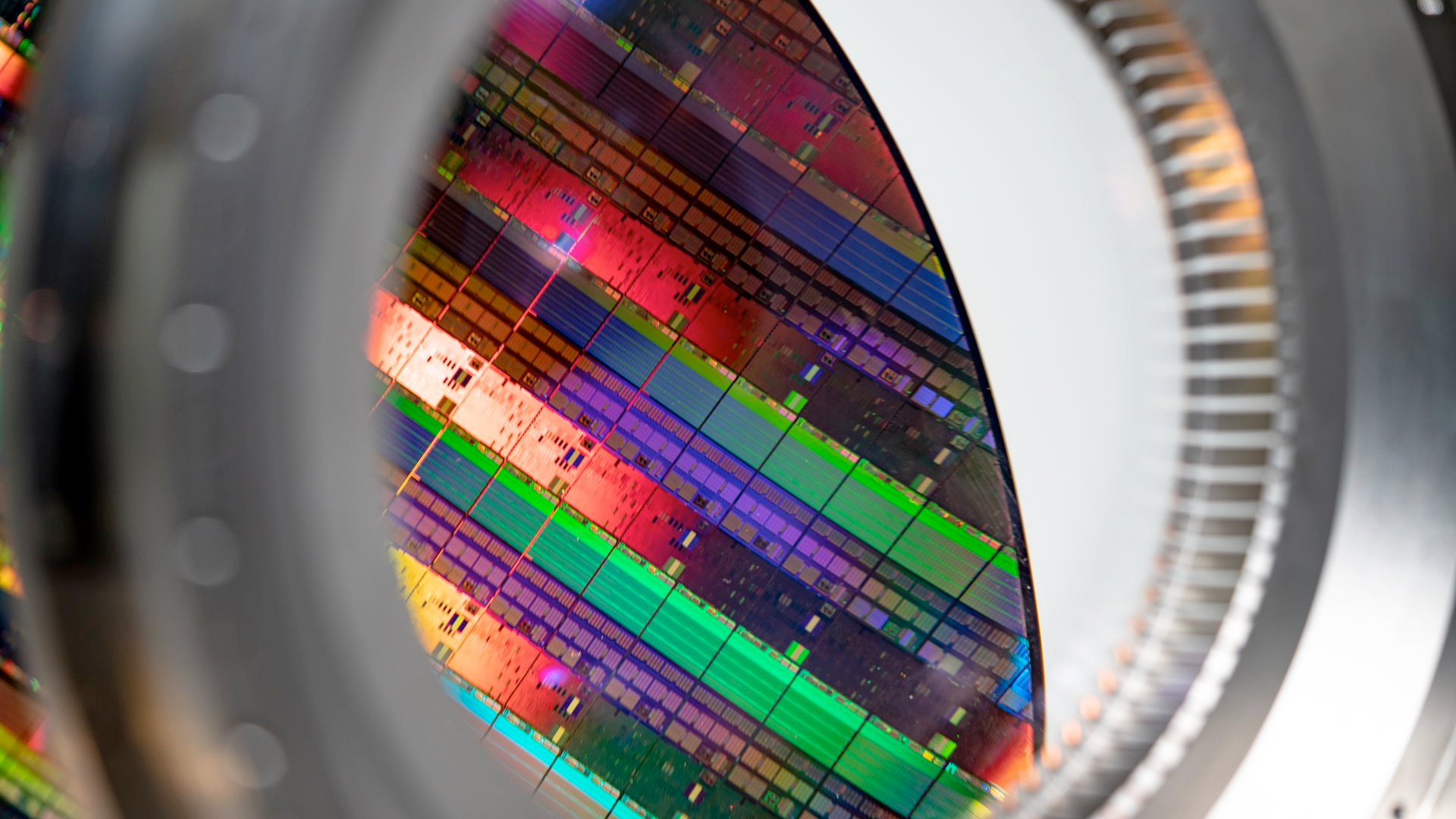
The process involves using a laboratory tool known as a vector network analyzer or VNA, which generates a microwave signal "with a known frequency and phase." A VNA frequency extender converts the microwave signal into a terahertz wave, which then gets beamed onto a microchip using a focusing lens.
Testing requires the chip to be turned on and to be doing work. As the transistors inside switch on and off, the terahertz signal reflects these changes and returns to a receiver in the VNA extender. Afterward, the signal is "down-converted" to microwave and compared to the original signal by detecting tiny differences in amplitude and phase using a homodyne quadrature receiver.
You may like Researchers build atom-thin 2D thermometers that can be embedded directly in processors Bill Gates-backed silicon photonics startup develops optical transistors 10,000x smaller than current tech Shanghai scientists create computer chip in fiber thinner than a human hair, yet can withstand crushing force of 15.6 tons One of the researchers, Withawat Withayachumnankul, revealed his team had to hack the receiver to make it work in the terahertz domain. The device was only designed to compare microwave frequencies. The use of a homodyne detector was critical, as it is allegedly the only device that can detect the small differences between the two frequencies. Terahertz signals are physically larger than the transistors being probed by the signal, making any adjustments in the returning signal difficult to detect without a homodyne detector. Additionally, noise from the oscillator in the VNA can reportedly easily obscure any changes in signal difference as well.
The most intriguing part of this new technology is its ability to peer into a processor's internals while it is working. This is something that is reportedly not possible with any other tooling and opens up new possibilities for technicians to diagnose and test processors.
However, there are issues that need to be ironed out before this technology goes mainstream. Measuring CPUs with terahertz radiation can reportedly be problematic with complex chips that have multitudes of layers of components stacked on top of one another, such as CPUs equipped with 3D stacked chiplets, potentially. Specifically, the radiation can't detect which layer of a chip it is reading from if the "over-layers are opaque". To get around this, techniques are being discussed to increase the VNA's sensitivity to accurately test densely packed chips.
Another issue with this technology is the potential for attackers to probe into a CPU as it is running to steal data. Likely, this will only happen once the technology matures, but it is something that the security industry will likely need to start countermeasuring eventually. What makes this attack so dangerous is that outgoing encryption standards can't counter it, since CPUs have to decrypt data before processing it.
Get Tom's Hardware's best news and in-depth reviews, straight to your inbox.
Key considerations
- Investor positioning can change fast
- Volatility remains possible near catalysts
- Macro rates and liquidity can dominate flows
Reference reading
- https://www.tomshardware.com/pc-components/cpus/SPONSORED_LINK_URL
- https://www.tomshardware.com/pc-components/cpus/new-tech-can-see-a-cpus-transistors-in-action-terahertz-radiation-can-potentially-steal-data-as-a-chip-is-running#main
- https://www.tomshardware.com
- Nvidia releases open AI models for quantum computing tasks — 'Ising' said to be 2.5x faster and 3x more accurate than existing tools for decoding
- Iran's forced nationwide internet blackout becomes second-longest on record as it passes 1,000 hours offline — possessing Starlink terminals punishable by death
- New tech can see a CPU's transistors in action — terahertz radiation can potentially steal data as a chip is running
- Intel's Nova Lake CPUs gear up to seize AMD’s 3D V-Cache gaming throne — early leak points to up to 52 cores, blazing DDR5-8000 support, and massive 175W TDP
- Snap Decisions: How Open Libraries for Accelerated Data Processing Boost A/B Testing for Snapchat
Informational only. No financial advice. Do your own research.