
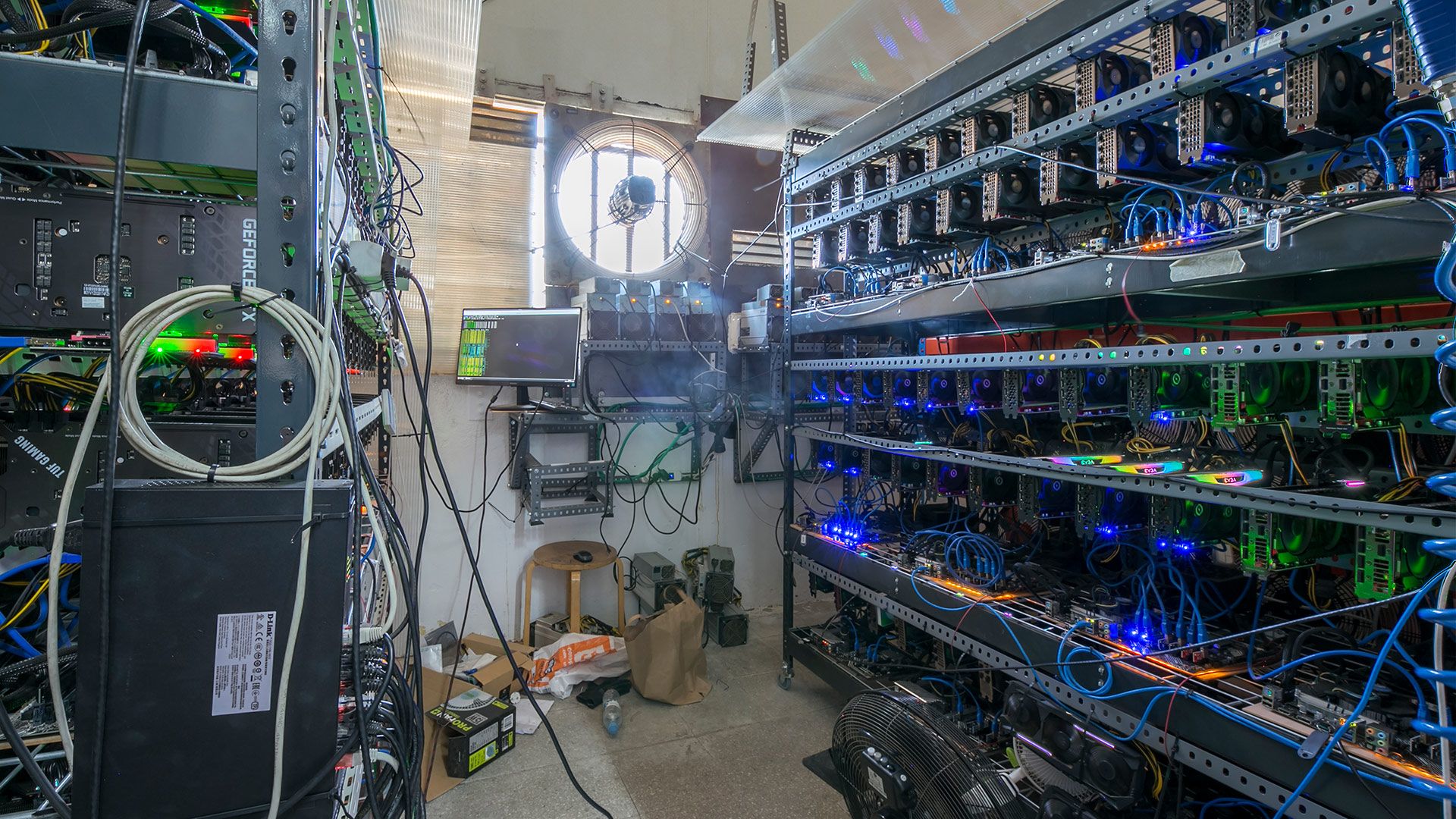
It's hard for Nvidia to track who bought retail gaming GPUs and for what purpose, but in 2017, it was clear that many were used to mine cryptocurrency.
a]:text-inherit [&>a]:underline">
When you purchase through links on our site, we may earn an affiliate commission. Here’s how it works .
2017-2018 were some of the most rampant years for cryptocurrency mining, with plenty of scalpers buying up the Pascal GTX 1000-Series GPUs released in early 2017. Nvidia also sold the P106-100 that year, a dedicated cryptocurrency mining GPU with similar hardware to the GTX 1060, and it was attributed to OEM sales. Many gamers remember how scarce retail gaming GPUs were in those years, yet Huang stated in November 2017 that what cryptocurrency contributes is “small but not zero,” as highlighted in the Summary of Alleged False and Misleading Statements section of the March court filing .
When the 2018 crypto crash hit, Nvidia’s revenue felt it too, with a sharp decline in gaming sales. The plaintiffs saw this strong correlation, seeing how cryptocurrency demand closely followed gaming GPU sales. The litigation states that Nvidia was “forced to partially reveal the truth on August 16, 2018, when it lowered their revenue guidance and acknowledged that ‘a great deal’ of cryptocurrency miners had bought GeForce Gaming GPUs.” Following the admissions, Nvidia’s stock price also fell 28.5% over two trading sessions.
After the crash, Nvidia struggled with excess inventory, with CFO Colette Kress stating that “Gaming was short of expectations as post-crypto channel inventory took longer than expected to sell through,” painting a clearer picture of how much crypto impacted Nvidia’s sales, which were allegedly attributed to gaming sales. It’s unclear how much of those gaming sales were from cryptocurrency mining, but considering that an overwhelming amount of retail gaming GPUs were bought out by cryptocurrency miners, it’s reasonable to say it’s difficult to keep track of who purchased and for what purpose.
In 2021, the district court dismissed the lawsuit, but part of the dismissal was reversed by the US Court of Appeals for the Ninth Circuit, reviving the lawsuit and allowing the securities fraud claims against Nvidia to proceed. Nvidia still denies wrongdoing, but has decided to settle, agreeing with the plaintiffs to pay $290 million in September, according to the Tuesday court filing .
Early Nvidia advisor says he's owed $1 billion in stock due to a 1993 vesting error, but Nvidia rejected settlement
Law firm files class-action lawsuit against Nvidia after CEO Jensen Huang confirms affair with alleged Chinese spy
Nvidia board director cashed out $1 billion in stock before Jensen Huang scandal
Download the Tom's Hardware app for up-to-the-minute updates on iOS and Android . Also follow Tom's Hardware on Google News , or add us as a preferred source , to get our latest news, analysis, & reviews in your feeds.
Get Tom's Hardware's best news and in-depth reviews, straight to your inbox.
Key considerations
- Investor positioning can change fast
- Volatility remains possible near catalysts
- Macro rates and liquidity can dominate flows
Reference reading
- https://www.tomshardware.com/tech-industry/big-tech/SPONSORED_LINK_URL
- https://www.tomshardware.com/tech-industry/big-tech/nvidia-agrees-to-usd290-million-settlement-over-2018-crypto-mining-gpu-sales-ends-eight-year-investor-lawsuit-without-admitting-wrongdoing#main
- https://futureplc.com/terms-conditions/
- Ian Buck Kicks Off NVIDIA’s Week at SC26 as Science Enters the Age of Agents
- Two Californian Nvidia AI chip customers are really Chinese-owned
- Ukrainian 11th-grader builds AI-powered, GPS-free drone autopilot to beat frontline jamming
- Lambda Boosts AI Factory Resiliency and Efficiency With NVIDIA Photonics
- Best Black Friday RAM deals 2026
Informational only. No financial advice. Do your own research.