
When you purchase through links on our site, we may earn an affiliate commission. Here’s how it works .
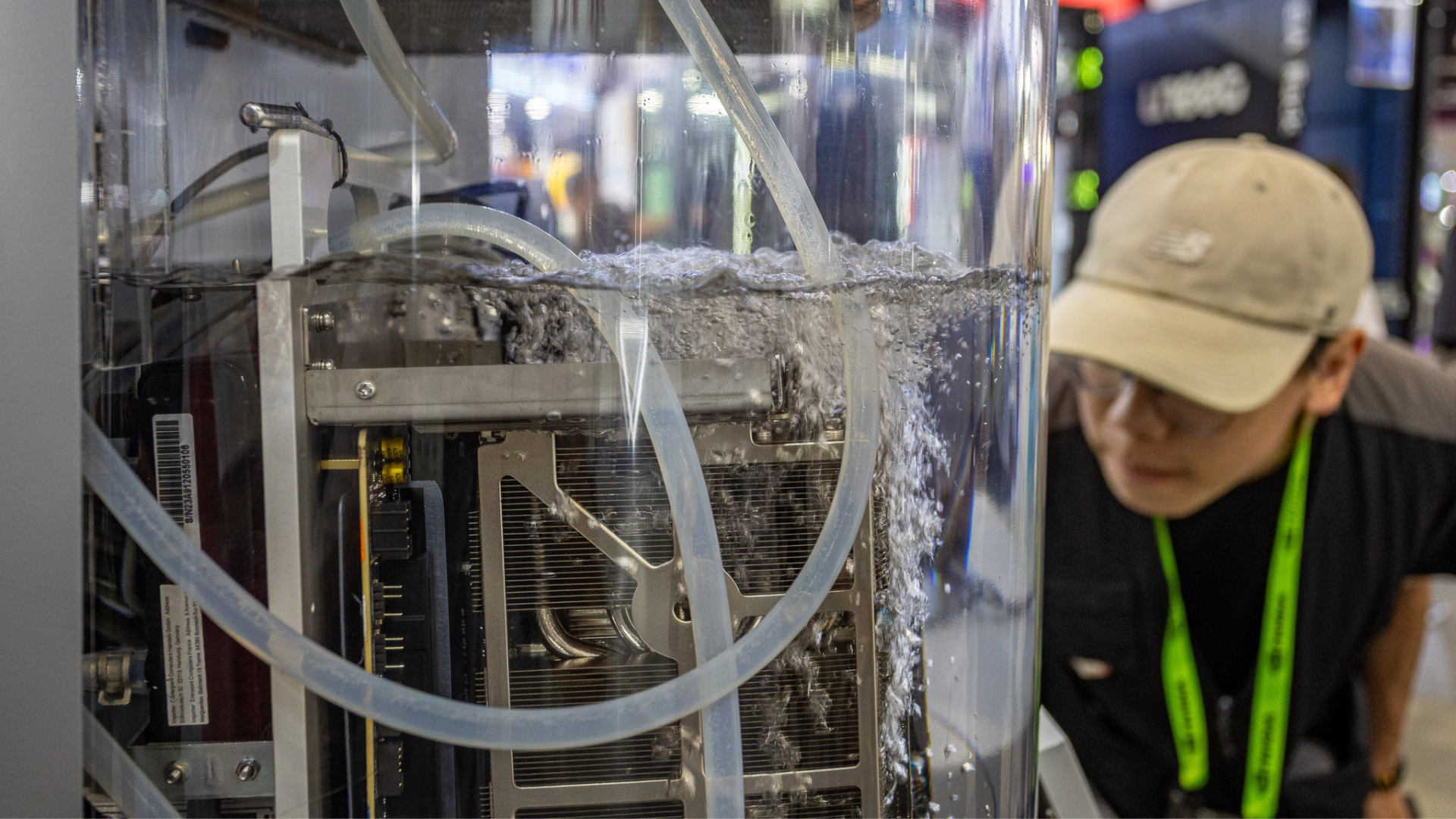
Traditional water-cooling methods, especially those that use chillers, often account for nearly 40% of a data center’s power consumption. Aside from that, these systems must often deal with water loss through evaporation. On the other hand, air-cooled facilities also use a considerable amount of electricity, plus they also generate noise pollution . On the other hand, Nvidia says that this new solution uses a lot fewer resources because of its higher base temperature.
Since 113 degrees F is often higher than ambient temperature, data centers can simply rely on outdoor dry coolers to expel the heat to the environment. This is also a closed-loop system; Nvidia claims an up to 100% reduction in water consumption — it’s “filled once and runs closed for the life of the facility.” This solution is most effective in regions with cooler climates, but it should still be effective in warmer areas as long as the ambient temperature is below 113 degrees F.
Data centers that face occasional temperature swings that exceed this limit may still be required to turn on their chillers. Nevertheless, this should still reduce resource consumption, as it only needs to run them a few times per year. Aside from that, this should also allow these systems to run more efficiently, as the chillers don’t have to work as hard to hit the target temperature. It’s estimated that increasing a chiller plant’s target temperature by 1.8 degrees F (1 degree C) would reduce electricity costs by 4%. This means that data centers would save significantly on power consumption if they set their chiller units to the 70 to 75 degrees F (21 to 24 degrees C) that traditional chillers run, according to Vertiv , to the 113 degrees F (45 degrees C) that Nvidia recommends for its Rubin chips.
This solution addresses several of the issues that many local governments raised that led to the delay of more than 75 data centers earlier this year. However, it will likely take time for this cooling system to roll out to new and existing projects, so we expect the delays and resistance to continue until Nvidia’s liquid cooling system gains wider adoption. Furthermore, this only addresses the water use of the data center itself — the GPU servers themselves still require massive amounts of electricity.
Microsoft CEO says new AI data centers use as little water as a restaurant
Key considerations
- Investor positioning can change fast
- Volatility remains possible near catalysts
- Macro rates and liquidity can dominate flows
Reference reading
- https://www.tomshardware.com/tech-industry/data-centers/SPONSORED_LINK_URL
- https://www.tomshardware.com/tech-industry/data-centers/nvidia-announces-liquid-cooling-system-that-runs-hotter-than-a-hot-tub-promises-to-reduce-electricity-consumption-and-cut-water-use-by-up-to-100-percent-but-sustainability-challenges-remain#main
- https://www.tomshardware.com/membership
- Get a 4TB Samsung 9100 Pro SSD for just $459 in blockbuster Prime Day sale — remarkable deal shaves $900 off PCIe 5.0 NVMe drive to bring it below MSRP [Updated
- The best Prime Day soldering iron deals for hobbyists and makers right now — take advantage of these limited-time sale discounts on digital irons, premium solde
- NVIDIA and AWS Collaborate to Bring AI to Production at Scale
- These are the best Prime Day deals I've found on tools I use to maintain my PC — from screwdrivers to air blowers, these tools will keep your PC in tip-top shap
- SK hynix passes Samsung as South Korea's most valuable company — memory company surpasses valuation milestone on the back of HBM
Informational only. No financial advice. Do your own research.