
In addition, see how NVIDIA partners are adapting open models for sovereign AI use cases by attending these sessions at GTC Taipei.
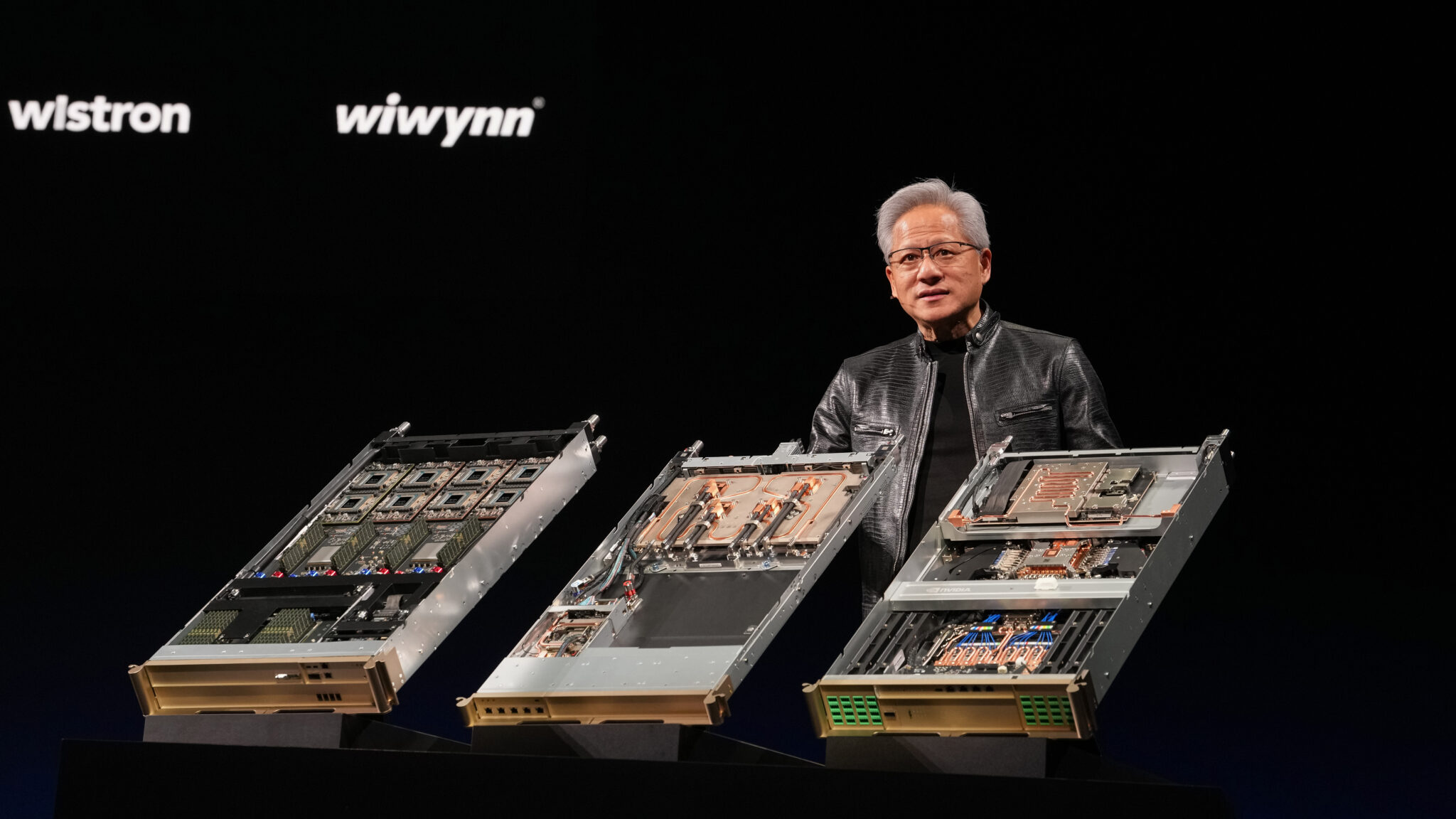
At GTC Taipei, NVIDIA and more than 80 NVIDIA MGX partners are advancing modular, MGX-ready AI factory infrastructure spanning systems, power and cooling.
AI factories are becoming the engines of agentic AI, where reasoning models, long-context inference and AI-to-AI workflows demand more performance, efficiency and resiliency at production scale.
To help builders meet that demand, NVIDIA is expanding NVIDIA MGX , the open modular reference architecture for AI factories, with the third-generation MGX rack design for the NVIDIA Vera Rubin platform, MGX-compatible 800 volts direct current (VDC) power infrastructure and a global ecosystem.
MGX spans single-node servers, rack-scale systems, POD-scale deployments and full data center infrastructure, giving manufacturers a common foundation for building accelerated systems faster and with less engineering effort.
The architecture supports Arm- and x86-based systems, uses open standards such as PCIe, and is designed to remain compatible across current and future generations of GPUs, CPUs, DPUs and networking technologies. NVIDIA has also contributed the MGX rack-scale design to the Open Compute Project , helping broaden adoption across the data center industry.
Announced today, NVIDIA Vera Rubin is in production , with MGX delivering five purpose-built rack-scale systems designed for modern agentic AI workloads.
The third-generation MGX rack architecture combines modular, cable-free, hose-free and fanless compute and NVIDIA NVLink switch trays with dynamic power steering, intelligent power smoothing and 100% liquid cooling engineered for 45-degrees-Celsius warm-water inlet temperatures.
Those rack-level advances also align with NVIDIA DSX, the AI factory-scale platform for design, simulation and operations. MGX provides a common physical foundation for scale-up rack domains and disaggregated inference designs, while DSX reference designs, simulation technologies and operations software help builders plan, validate and operate complete AI factories across compute, networking, storage, power, cooling and controls.
As AI factories scale, operators need more compute performance from the same physical and power footprint.
NVIDIA 800 VDC power architecture helps address that shift by reducing conversion stages, moving direct-current power closer to the rack and supporting higher-density accelerated computing.
For existing and in-progress facilities built around alternating current (AC) distribution, MGX-compatible 800 VDC power racks provide a practical bridge to hybrid AC and 800 VDC designs. That upgrade path helps protect current land, power and shell investments while preparing AI factories for future rack-scale compute capability.
In NVIDIA Vera Rubin NVL72 systems, the Intelligent Power Smoothing feature helps cushion the steep load swings created by large, synchronized AI workloads. This capability addresses a growing challenge in power delivery as AI factories scale. Learn more about the power-stabilization principles behind this work in this paper .
At GTC Taipei at COMPUTEX, the NVIDIA partner ecosystem is visible across the full AI factory stack. From global system manufacturers and platform builders to power density and cooling partners, the ecosystem is building MGX-compatible systems that help customers deploy full-stack AI factory solutions at global scale.
Fresh off his GTC Taipei keynote , Huang and more than 80 partners from NVIDIA’s Korea partner ecosystem gathered at the restaurant for a casual evening in advance of Huang’s next stop — Korea — where Huang said he’s excited to meet with more partners and leaders from the companies and organizations helping to build the future of AI with NVIDIA.
After the dinner gathering Huang handed out the delicious Taiwanese chicken and signed black bowls from the restaurant for the growing crowd of fans and media.
Check back here for the latest from NVIDIA GTC Taipei at COMPUTEX and Huang’s travels in Korea.
Hear from NVIDIA founder and CEO Jensen Huang live on stage at Taipei Music Center.
NVIDIA founder and CEO Jensen Huang touched down in Taipei and hasn’t stopped moving.
Night markets with the partners building the world’s AI infrastructure. Dinner with the CEOs whose companies run on NVIDIA’s platform. A new campus unveiled in the region that manufactures the chips powering the AI economy.
Everywhere Huang went this week, the ecosystem was there — and today, they all came together at Taipei Music Center for the keynote. Huang thanked them all, from the CEOs filling the room to the fruit vendor he met at a night market, as a wall of partner logos filled the screen.
“AI is now a profit generator. AI is now a GDP generator,” Huang told an audience gathered in person and across more than 70 watch parties throughout Taiwan.
For three years, the question was whether AI would be useful. Generative AI answered yes. Reasoning models made it capable. Agents are making it work — autonomously, continuously, at scale.
“Useful AI has arrived,” Huang reported, with platforms like GitHub already seeing developer commits nearly triple in the first few months of 2026.
And that’s made those at the center of that surge more valuable than ever, Huang said.
Tokens are now profitable units of revenue, Huang said — and AI companies are racing to build more AI factories, driving compute demand in Taiwan to new highs.
“Ultimately, our customers don’t want to buy computers, they want to build AI factories,” he said.
NVIDIA DSX is NVIDIA’s AI factory framework for infrastructure builders: DSX MaxLPS delivers 40% more GPUs within the same power budget, and DSX OS is open source and extensible.
“The world is racing to build AI factories, the largest infrastructure build out in human history … because compute is revenues,” Huang said, ticking through work with partners including CoreWeave, Nebius, Nscale, NAVER Cloud, Yotta, Firmus, Indosat, GMI and more. “Each one of these companies are serving regional as well as global customers,” Huang said. “Incredible companies, incredible opportunities.”
Huang argued that in the age of AI factories, compute is revenue — every token produced is profitable — making performance per watt, reliability and the long lifetime of these systems the core financial levers, not just technical specs: “If you have 1 gigawatt of power, then throughput per watt is revenue … Choosing the wrong architecture just because the chips are cheaper doesn’t make sense — compute is revenue.” “The more you buy, the more you make,” Huang said.
Huang then announced NVIDIA Vera Rubin is ramping into full production .
Key considerations
- Investor positioning can change fast
- Volatility remains possible near catalysts
- Macro rates and liquidity can dominate flows
Reference reading
- https://blogs.nvidia.com/blog/nvidia-gtc-taipei-computex-2026-news/#primary
- https://blogs.nvidia.com/blog/author/nvidiawriters/
- https://blogs.nvidia.com/blog/nvidia-gtc-taipei-computex-2026-news/#disqus_thread
- Computex 2026 Day Zero Wrap-Up: Nvidia launches RTX Spark Superchip assault on laptop and desktop markets, Intel readies Xeon 6+
- We went hands-on with Qualcomm's new '$300 and up' ARM laptop platform with mystery eight-core CPU — active-cooled Snapdragon C laptop surfaces in Acer Aspire G
- NVIDIA Factory Operations Blueprint Gives Factories a New AI Brain
- Windows Server vulnerability can grant system privileges with just a malformed packet — domain controllers are being exploited in the wild
- NVIDIA Research Advances Robotics From Simulation to the Real World
Informational only. No financial advice. Do your own research.