
ASML struggling to keep up with demand for chipmaking equipment as AI spending continues to boom
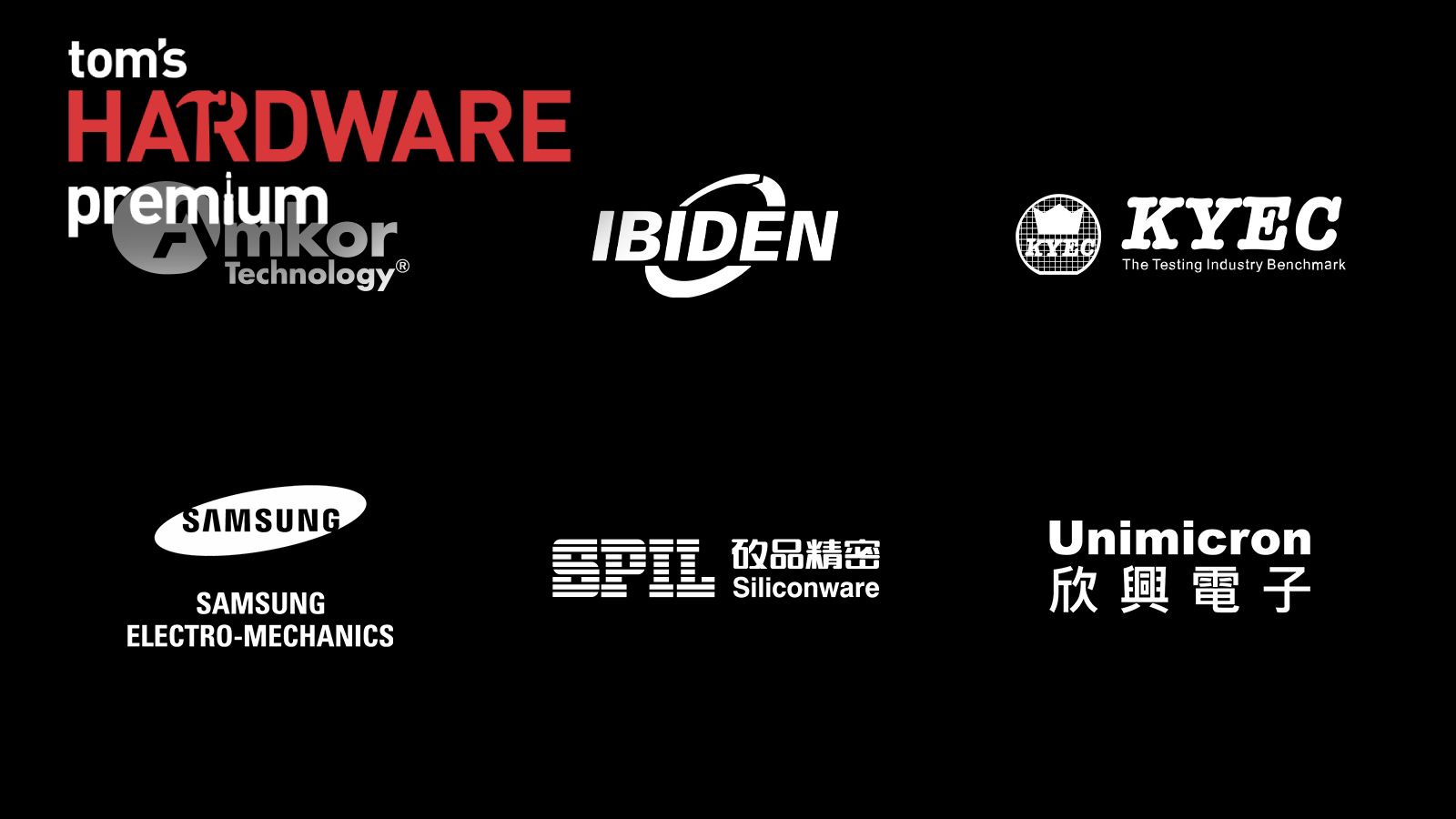
Fubon Research estimates that Nvidia would supply around 12.4 million data-center AI GPUs in 2028, up from a projected 8.2 million in 2026. Each one would feature a substrate layer. Nvidia is staying ahead of the curve, with a planned 2.5x capacity expansion over the next three years, led by Ibiden. Earlier this year, the company signed a deal to provide a multibillion-dollar capacity reservation advance to support Ibiden's Ono Plant in Japan, targeting 3x the plant’s current individual capacity.
To reach its 2.5x target, Nvidia has also brought on Samsung Electro-Mechanics, Samsung's substrate-manufacturing subsidiary, as a supplier. Beyond the immediate capacity from Samsung Electro-Mechanics’ existing operations, the deal will support facility upgrades and new plants in Busan and Sejong. Nvidia is projected to account for a significant portion of the substrate manufacturer’s output by 2028. To build even more redundancy, Nvidia also signed a capacity reservation agreement with Unimicron, supporting the latter's substrate manufacturing expansion in Taiwan. The expansion will reach full capacity by mid-2028 but is expected to start providing capacity by Q2 2027.
Next on Nvidia's to-expand-capacity list announced on October 21 is co-packaged optics. As next-generation speeds surpass 224 Gbps per lane, traditional copper traces on the board consume considerable power to move data even a few inches from the processor to the edge of the board. To address this, the industry is moving the optical engine into the accelerator package itself via co-packaged optics . Nvidia had long detailed its plans for silicon photonics and co-packaged optics as the standard for future AI accelerator packages. The company has signed a deal with Taiwanese optical engine manufacturer SPIL to expand production capacity by 1,400% by mid-2027, with plans to double again by the end of 2028.
Interestingly, the world's biggest semiconductor company, Nvidia, doesn't own a single Fab. After TSMC manufactures the logic chip and binds it with memory chips on a silicon interposer, final-assembly companies such as Amkor package that integrated module with the substrate and protective casing into the final accelerator package. These final steps are increasingly incorporating co-packaged photonics chips. Nvidia’s deal with Amkor aims to expand the latter's interposer wafer capacity by more than 300% by the end of 2028, through advanced packaging capacity expansions in South Korea. Amkor confirmed the deal is worth $1.3 billion, bringing Nvidia's total investment in Amkor across its Arizona and South Korea facilities to $3 billion.
After final assembly, finished Nvidia AI accelerator packages are shipped to KYEC for extreme testing. KYEC currently handles nearly all of Nvidia's chip testing. It therefore comes as no surprise that Nvidia expects semiconductor testing capacity to double from calendar 2026 to 2027 through buildouts across KYEC’s facilities in the U.S., Taiwan, and Singapore. On October 13, Nvidia signed a deal to pay KYEC $1.1 billion to reserve testing capacity at KYEC's new $1.4 billion U.S. facility, where high-volume production is slated to begin in April 2027. The funds will build domestic testing capacity and bolster the domestic supply chain. At the same time, KYEC is aggressively expanding operations in Singapore, where it expects high-volume production to begin in February 2027.
ASML and other critical semiconductor equipment suppliers expedite shipments to Musk's Terafab
Nvidia teams up with financial giants to create $500 billion AI infrastructure funds
Nvidia has been aggressively securing production capacity and long-term supply commitments to meet anticipated demand for its next-generation AI accelerators. According to its August 2026 financial disclosures, the company had accumulated $279 billion in outstanding supply and manufacturing-capacity commitments by July 2026. The company has since signed several additional deals. These commitments cover future component purchases and manufacturing capacity reservations, particularly for memory and chip production. Combined with its more recent agreements, Nvidia is securing nearly every stage of its AI accelerator supply chain, from semiconductor fabrication and HBM memory to substrates, advanced packaging, optical interconnects, final assembly, and testing.
Of course, the rest of the industry isn't standing by. On May 21, 2026, AMD announced over $10 billion in investments across Taiwan's semiconductor ecosystem, specifically targeting advanced packaging and manufacturing partnerships. On October 6, CEO Lisa Su confirmed that AMD intends to increase those investments further. The company is working with TSMC, packaging partners, substrate manufacturers, and memory suppliers to increase production substantially in 2027. Google and Amazon are also aggressively expanding their custom TPU and Trainium accelerator programs.
Intel, meanwhile, is positioning its foundry and advanced packaging operations as alternatives to TSMC's increasingly constrained production capacity. The company is expanding its EMIB-T packaging technology , with reports indicating that Google has already reserved Intel capacity to package more than three million TPUs in 2028. Intel is also advancing its 18A and 14A manufacturing processes as it attempts to attract major external customers.
Samsung is expanding its semiconductor operations as well. The Korean company, which held approximately 5.9% of the global foundry market by revenue in Q2 2026, is ramping up its 2nm manufacturing technology and preparing its Taylor, Texas, facility for volume production in 2027. As detailed in our comprehensive Samsung foundry roadmap, the company is investing heavily in its manufacturing operations as it attempts to close the considerable gap with TSMC.
Perhaps the most ambitious player is new entrant Elon Musk's Terafab, a joint semiconductor manufacturing project involving Tesla, SpaceX, and xAI. The project aims to eventually manufacture the equivalent of one terawatt of AI computing capacity annually, an extraordinarily ambitious target given the industry's current scale. Intel joined the project in April, and Musk later confirmed plans to use the company's 14A fabrication technology. The project aims to deliver its first experimental chips in 2027 and begin high-volume production by the third or fourth quarter of 2028 .
Nvidia and other semiconductor firms are continuously fighting against emerging bottlenecks, but compute doesn't come online overnight, and fabs aren't built in a day. So, while almost every inch of the semiconductor supply chain remains constrained, it remains likely that big-name players will continue to invest heavily to ensure that products continue to flow into neoclouds and data centers alike.
Etiido Uko Social Links Navigation News Contributor Etiido Uko is a news contributor for Tom's Hardware covering the latest updates in big tech and the PC industry. He is a mechanical engineer and senior technical writer with over nine years of experience in documentation and reporting. He is deeply passionate about all things engineering and technology, and is an expert in gadgets, manufacturing, robotics, automotive, and aerospace.
Key considerations
- Investor positioning can change fast
- Volatility remains possible near catalysts
- Macro rates and liquidity can dominate flows
Reference reading
- https://www.tomshardware.com/tech-industry/semiconductors/SPONSORED_LINK_URL
- https://www.tomshardware.com/tech-industry/semiconductors/nvidia-is-bankrolling-ai-accelerator-supply-chain-buildout-to-reserve-production-capacity-announces-billion-dollar-deals-with-six-major-suppliers-across-substrates-advanced-packaging-semiconductor-testing-and-optical-engines#main
- https://www.tomshardware.com/my-account
- Kazakhstan Expands Compute for Its AI Future
- Leading European Financial Services Organizations Embrace Open Models to Build Proprietary Intelligence
- Ukrainian drone attacks hammer Russia's finance ministry data center, damaged facility reportedly holds tax databases
- How Companies Are Using NVIDIA DSX to Break the Power Bottleneck
- Grab 32GB of DDR5 RAM for just $151 in this 4-in-1 Newegg bundle with the 9800X3D and a 2TB SSD
Informational only. No financial advice. Do your own research.