
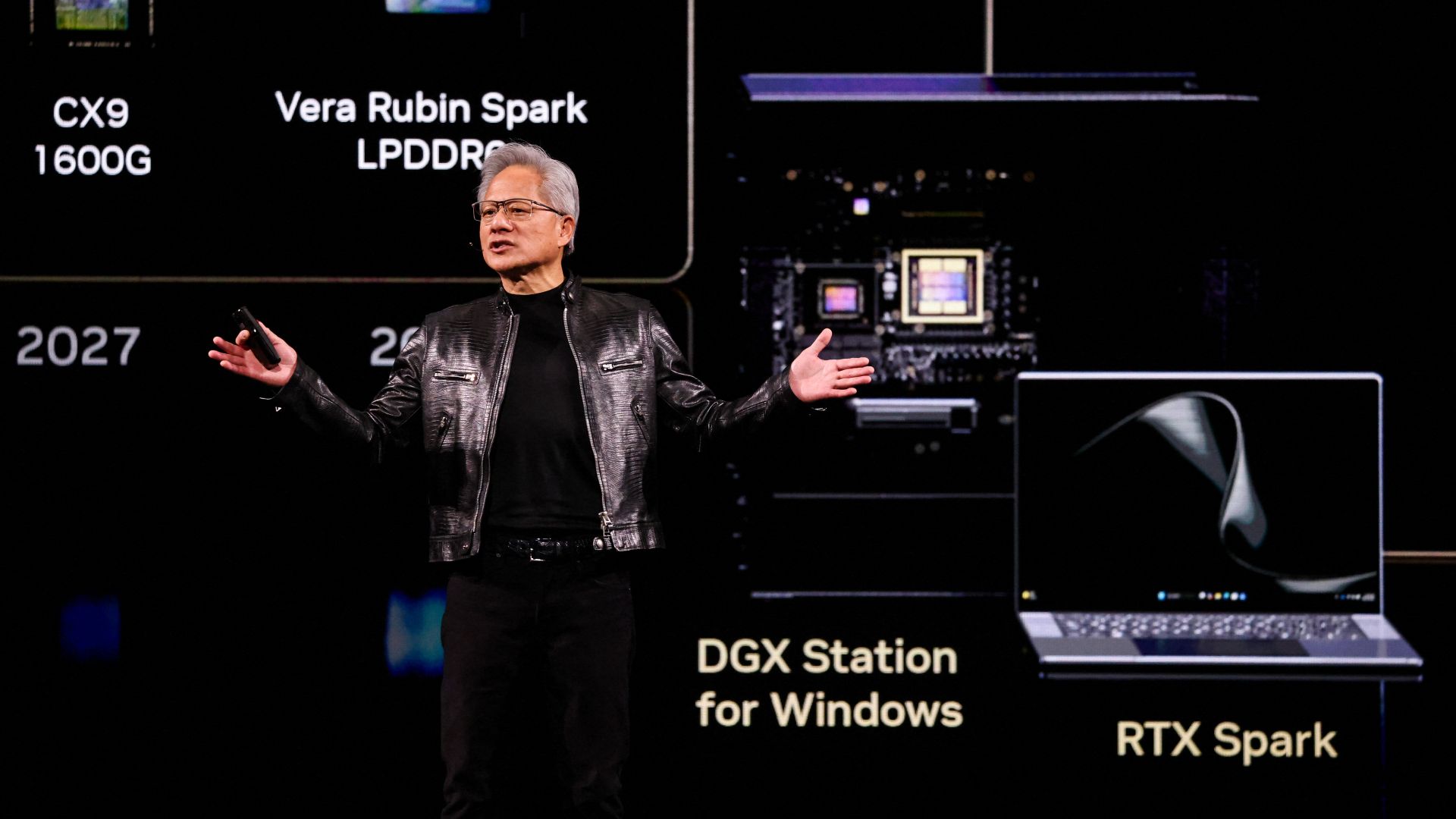
Nvidia and Microsoft tease "a new era of PC" — rumored N1X laptops could be Windows on Arm systems
Microsoft Surface Laptop Ultra weilds Nvidia's RTX Spark superchip with 128GB of RAM, 20 Arm CPU cores, and a Blackwell GPU
RTX Spark hasn’t come out of nowhere; it’s the consumer-oriented sibling of the GB10 Grace Blackwell superchip already shipping inside the Linux-based DGX Spark mini-PC , which carries a price tag currently approaching $5,000 due to memory shortage-related pricing pressure. The GB10 pairs a MediaTek-produced Arm CPU complex with a Blackwell GPU on a TSMC 3nm-class node, joined by Nvidia's coherent NVLink-C2C interconnect and fed by a shared 128GB pool of LPDDR5X. RTX Spark takes that architecture and repurposes it for Windows.
We first began to hear about the RTX Spark under its N1X codename back in 2023 , when it was reported that Nvidia was developing Arm CPUs capable of running Windows. The chip appeared repeatedly through 2024 and 2025 via the rumor mill , with various delays attributed to factors including Microsoft’s slow next-gen work on Arm and soft notebook demand, pushing a planned second-half-2025 debut into this year.
For eight years, Microsoft's Windows on Arm program ran exclusively on Qualcomm silicon under a partnership that locked out every other chipmaker. Microsoft chose Qualcomm in 2016, and until the deal lapsed, no rival could ship an Arm chip in a Windows PC. Arm CEO Rene Haas confirmed in an interview in January 2024 that Qualcomm's exclusivity with Microsoft would lapse that year, the first on-record acknowledgment from a principal after years of the deal being treated as an open secret. Reuters had reported in 2024 that MediaTek, Nvidia, and AMD were all building Arm Windows chips to enter once the window opened.
Qualcomm spent its eight years of exclusivity demonstrating that Windows on Arm could work, but failing to make it sell. Snapdragon X laptops moved roughly 720,000 units in the third quarter of 2024, their first full quarter on sale, which Canalys data put at about 0.8% of PC shipments that quarter. ABI Research projected Arm wouldn’t clear 13% of the PC market in 2025 . Qualcomm's own counter-figures were heavily conditioned: CEO Cristiano Amon's "more than 10%" share claim, made on the company's Q1 2025 earnings call, covered only U.S. retail Windows laptops priced above $800 in a single quarter.
A big factor behind this lacklustre performance was software issues. Microsoft’s Prism runs x86 apps on Arm, but in our own analysis of Snapdragon X2 Elite Extreme , we found that professional tools like AutoCAD were unsupported, and games crashed or rendered incorrectly under emulation. The original Snapdragon X pitch leaned heavily on battery life as a huge differentiator, but then Intel's Lunar Lake matched that efficiency, giving buyers long battery life on x86 chips that run every Windows app natively, with no emulation and none of the slowdowns or crashes that came with it. Ultimately, Arm's share of Windows never reached the 50% within five years that Arm and Qualcomm had floated back in 2024.
Nvidia lays out RTX Spark roadmap for laptops and desktop PCs at Computex 2026
Key considerations
- Investor positioning can change fast
- Volatility remains possible near catalysts
- Macro rates and liquidity can dominate flows
Reference reading
- https://www.tomshardware.com/laptops/SPONSORED_LINK_URL
- https://www.tomshardware.com/laptops/nvidia-enters-the-windows-pc-market-with-rtx-spark#main
- https://www.tomshardware.com
- Acer’s PM131QT portable monitor is a 12.3-inch touchscreen with magnetic mounting, a built-in kickstand, and 5-point touch – 1920 x 720 IPS screen has pogo pins
- AMD’s formerly China-exclusive Radeon RX 9070 GRE goes global for $549 on June 2 — RDNA 4 GPU will bridge the gap between RX 9060 XT and RX 9070
- California Assembly passes 3D printer bill that would criminalize bypassing mandated gun-blocking software
- We went hands-on with Qualcomm's new '$300 and up' ARM laptop platform with mystery eight-core CPU — active-cooled Snapdragon C laptop surfaces in Acer Aspire G
- Core i7-14700F gaming PC with RTX 5060, 32GB of RAM, and 1TB of storage gets $470 discount — Newegg's ABS Cyclone Aqua prebuilt is $1,329 with code
Informational only. No financial advice. Do your own research.