
A dozen hybrid compressors can beat its score, but none relies on a neural network alone.
a]:text-inherit [&>a]:underline">
When you purchase through links on our site, we may earn an affiliate commission. Here’s how it works .
We shrank 1 GB of Wikipedia to 105.39 MB, losslessly. Introducing tufazip: the best entry on the Large Text Compression Benchmark using a neural network as its sole predictor. Everything above it mixes a transformer with hand-built models. November 19, 2026
Researcher Tommy He built tufazip, and the full package, at 105.39MB after optimization, includes a small, 4.33MB pre-trained starter model — stored at low precision, or quantized, to save space — that’s needed to unpack the file. The full model is a 12-layer Transformer, which means there are 12 stages for each guess to go through. The starter stores just two already-trained stages, copying them back and forth to fill all 12 once the full model spins up in memory; each copy keeps learning on its own.
This doesn’t work like a traditional chatbot or cloud AI but is, rather, a self-contained language model that learns on the fly. Notable here is that this compression is lossless, which means there’s no risk of any data being lost in the process. This means that predictor updates must be “fully deterministic.”
Training happens in two stages. The starter, a 34-million-parameter model, is trained offline, before any compression begins. Then, the full model begins to learn online, by predicting each token and training on it, with the unpacking side repeating the same steps, with the model itself being rebuilt alongside the text. For this reason, the total size must include, besides the compressed text, only the unpacking program and the files it needs, including the starter, but not the full trained model.
There is no traditional, hand-built compression model that assists, setting it apart, Tufa Labs says, from all 12 entries that now rank above it on the benchmark, which mix a Transformer with hand-built models. Its first, online-only version ranked second when submitted in early September; the 105.39MB version was 13th as of the benchmark’s Nov. 19 update. Emphasis should be placed on this being a text-only benchmark, for those imagining media files.
Alibaba claims new Qwen Image 2.1 AI model beats Google Nano Banana 2.0 with minuscule 7B parameter model
Dev squeezes an AI language model onto a floppy for 486DX and Pentium PC stalwarts
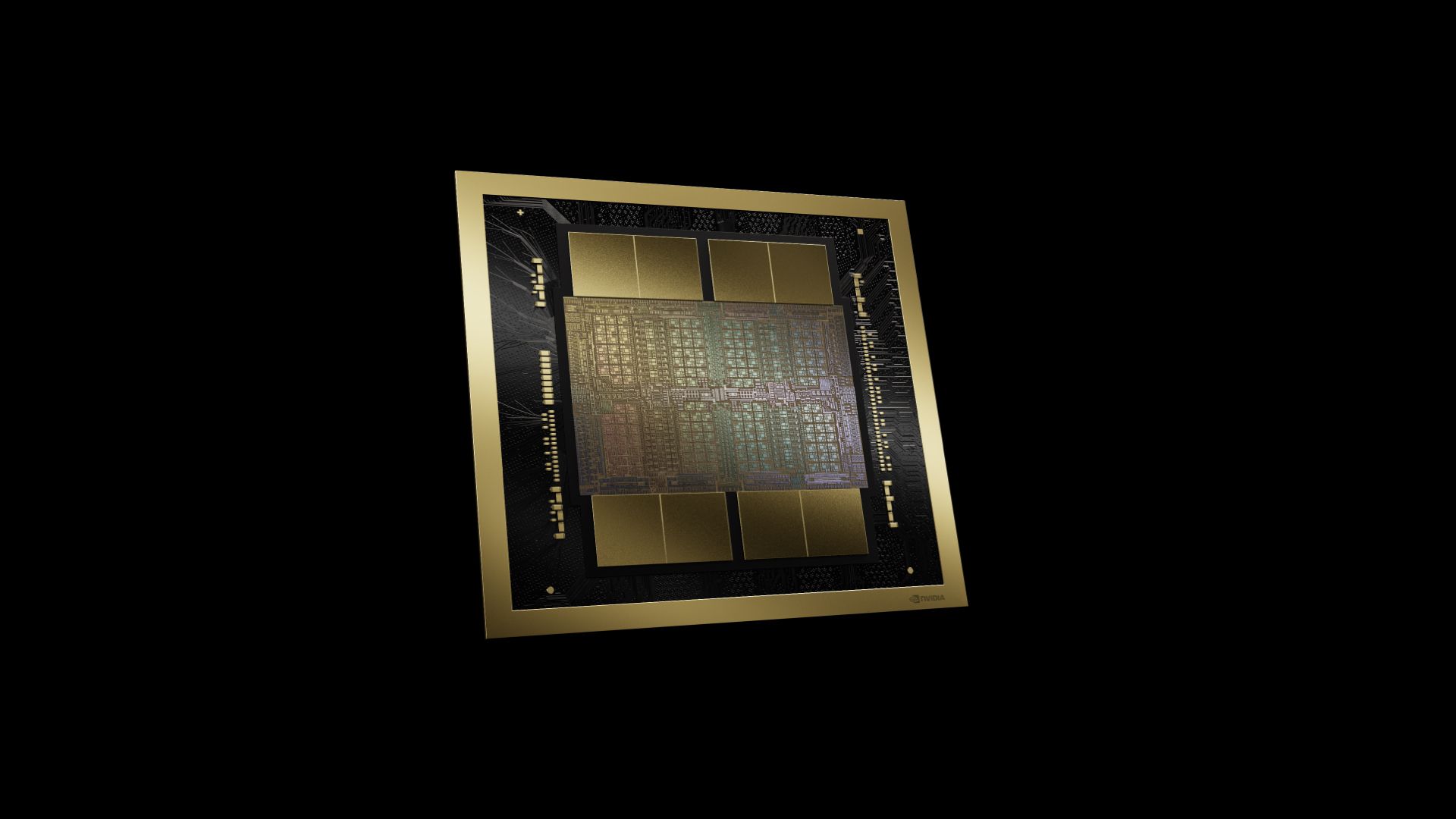
While this sounds more exciting than, say, WinRAR, it’s for research purposes and not a product, and that’s underlined by what you’d need to actually run it. Currently, two Nvidia B200 GPUs — plus two Intel Xeon Platinum 8570 CPUs in the test machine — would need 631,548 seconds to compress and 645,748 seconds to decompress the 105.39MB version, or about 7.3 and 7.5 days, respectively, not counting the starter’s offline training.
The first version, which learned entirely online and came in at 105.98MB, took 647,595 and 630,136 seconds. Its GPUs peaked at 43.37 GiB of VRAM between them, and total memory use, GPUs included, peaked at roughly 68,525 MiB during compression and 73,748 MiB during decompression.
Get Tom's Hardware's best news and in-depth reviews, straight to your inbox.
Key considerations
- Investor positioning can change fast
- Volatility remains possible near catalysts
- Macro rates and liquidity can dominate flows
Reference reading
- https://www.tomshardware.com/tech-industry/artificial-intelligence/SPONSORED_LINK_URL
- https://www.tomshardware.com/tech-industry/artificial-intelligence/one-gigabyte-of-wikipedia-losslessly-compressed-to-105-39mb-with-self-learning-ai-transformer-model-tufazip-needs-two-nvidia-b200-gpus-and-about-a-week-to-compress-or-decompress#main
- https://futureplc.com/terms-conditions/
- NVIDIA DGX Spark Developer Kit Turns a Desk Into a Supercomputing Lab
- One of the best gaming headsets plummets to just $78 at Amazon in unmissable Black Friday deal
- This week on Tom's Hardware Premium: 21 November 2026
- This week on Tom's Hardware Premium: 21 November 2026
- NVIDIA RTX Spark Compact Desktops Out Now
Informational only. No financial advice. Do your own research.