
When you purchase through links on our site, we may earn an affiliate commission. Here’s how it works .
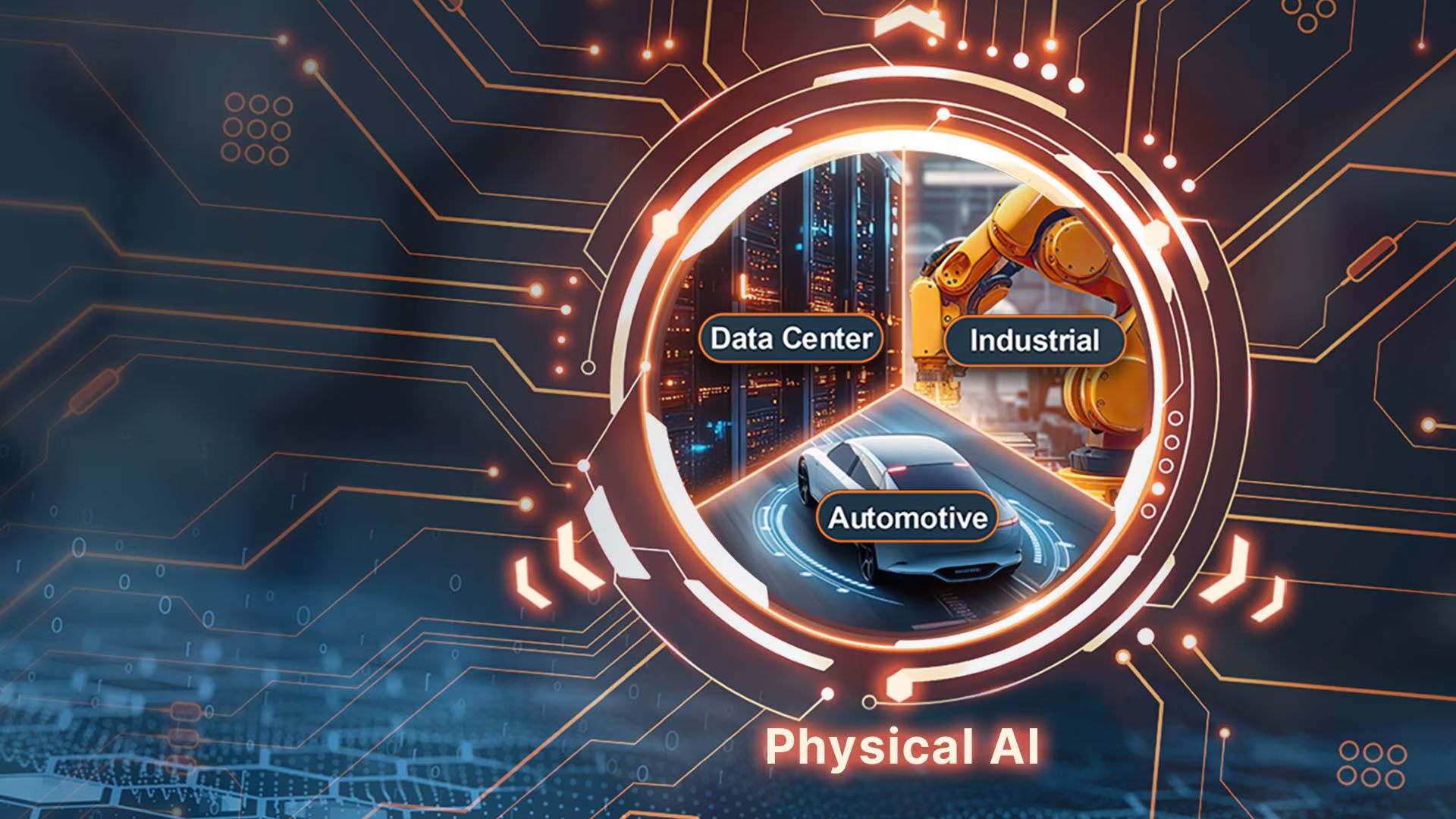
Onsemi's acquisition of Synaptics is highly strategic. Synaptics has a highly diversified product portfolio that spans from compute and processing solutions to touch and biometric sensors and from display solutions to wireless connectivity. By contrast, Onsemi is mostly focused on power management devices and sensors. While the company has other businesses too, they are by far not as significant as power and sensors. The two companies say that by merging their product portfolios, they will have key building blocks — power, sense, connectivity, compute, and control — to address the physical AI market.
In fact, with its Edge AI platform, which combines dedicated AI processors, neural processing units (NPUs), wireless connectivity technologies including Wi-Fi, Bluetooth, and GPS, as well as an open-source software stack, Synaptics arguably has a much more comprehensive product portfolio to address Physical AI than Onsemi does. Yet, Synaptics has been bleeding money in 2025 – 2026 as its revenue dropped sharply from the levels demonstrated in 2022. By contrast, while Onsemi's sales have been declining since 2022 and did not show any signs of rebound, the company remained profitable. This is perhaps why Synaptics agreed to be acquired in an all-stock transaction.
"Together with onsemi, we will combine Synaptics' strengths in AI-native compute, connectivity, and human-machine interface with onsemi’s leadership in intelligent power and sensing to offer customers integrated solutions and development platforms across every layer of the Edge AI stack, deepening customer engagement and expanding across a greater total addressable market," said Rahul Patel, chief executive of Synaptics.
Developing a comprehensive platform for robotics, or physical AI, applications may make the combined Onsemi + Synaptics company bigger than the sum of all parts. Today, many developers in automotive, industrial, and robotics prefer integrated platforms that combine compute, connectivity, sensing, power management, and software from a single supplier. Given how fast technologies are evolving these days, many developers simply do not have time to build their own platform from building blocks obtained from various suppliers, so the combined company may have better chances with an integrated platform than vendors without one. Back in the day, AMD acquired ATI to get chipsets and graphics, while Qualcomm acquired a dozen companies expanding its product portfolio and building all-new solutions.
Qualcomm mulls taking over Jim Keller's Tenstorrent, report claims
Key considerations
- Investor positioning can change fast
- Volatility remains possible near catalysts
- Macro rates and liquidity can dominate flows
Reference reading
- https://www.tomshardware.com/tech-industry/artificial-intelligence/SPONSORED_LINK_URL
- https://www.tomshardware.com/tech-industry/artificial-intelligence/onsemi-buying-cash-strapped-synaptics-in-usd7-billion-all-stock-deal-smart-power-meets-edge-ai-hardware#main
- https://www.tomshardware.com/membership
- France Advances Europe’s AI Future With NVIDIA Technologies
- Valve threatens legal action against Dbrand over its unsanctioned Portal 2-inspired Companion Cube — edgy accessories manufacturer kills product after asking fo
- Sony WH-1000XM5 active noise-canceling headphones for an all-time low $198 at Amazon — audiophile-grade audio and ANC for an affordable price
- Save $250 on this AMD AM5 bundle, get Samsung 990 Pro SSD for basically free — grab the AMD Ryzen 5 9600X, Gigabyte B850 Aorus Elite motherboard, and 990 Pro 1T
- How Businesses Are Building Specialized AI They Can Trust
Informational only. No financial advice. Do your own research.