
When you purchase through links on our site, we may earn an affiliate commission. Here’s how it works .
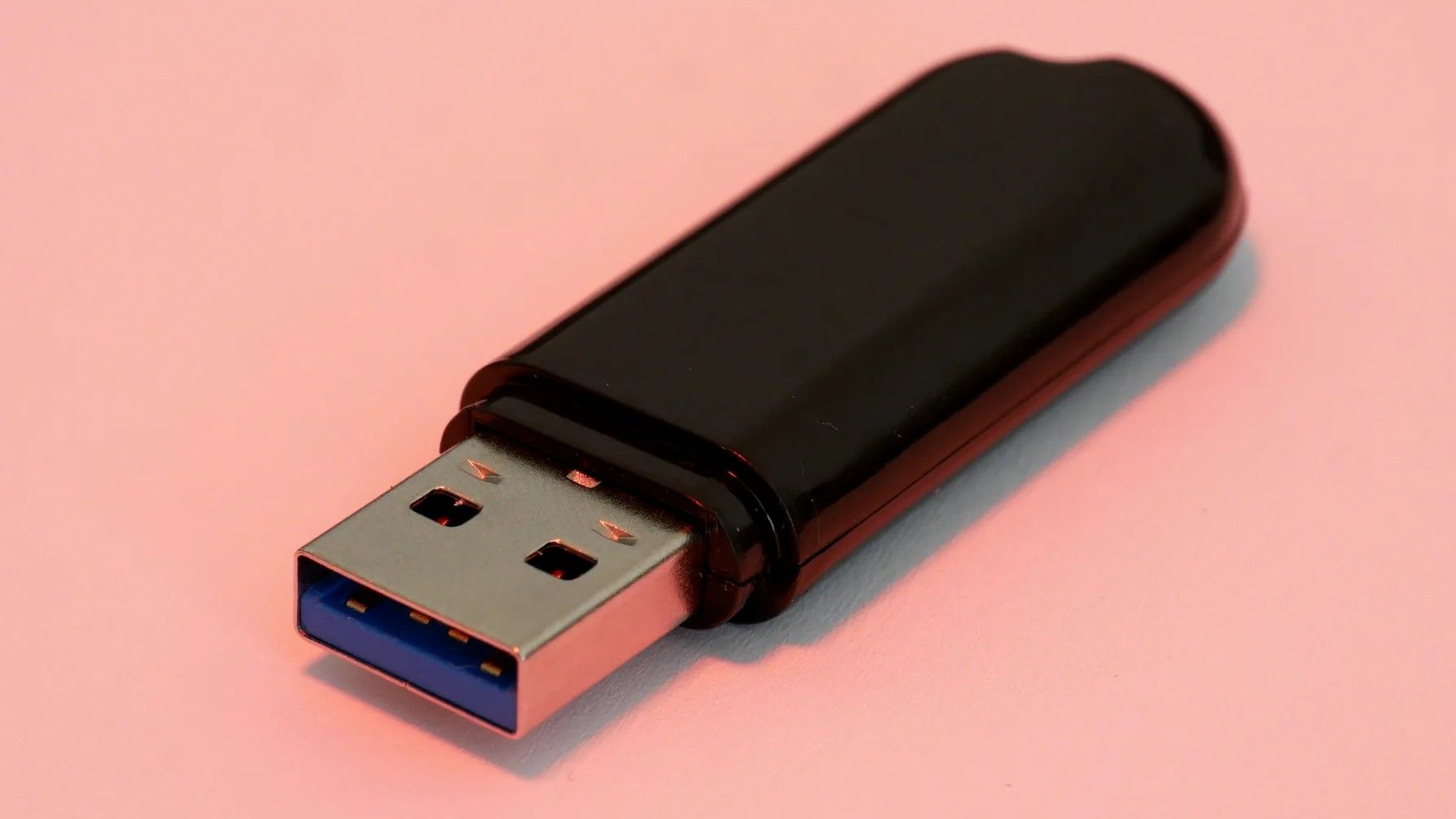
Watch On The Phantomdrive is built using the CH569 microcontroller that has a bunch of different hardware blocks — this project uses the USB3, SD/eMMC, and the AES block. There are no NAND chips directly onboard the custom PCB because of the ongoing component crisis. Instead, the Phantomdrive relies on a simple microSD card (that you provide; it doesn't come with one) for both its 8GB decoy partition and the hidden partition. The creator does say they'll make a version with eMMC modules once prices come down.
Of course, if someone were to open up the drive, they'd be able to physically rip the SD card out. However, it still wouldn't be a dead giveaway since many cheap USBs are powered by microSD cards, and SD card adapters are also a thing. Anyhow, the finished drive looks pretty simple from the inside; it comprises a USB port, two buck supplies, a button for firmware update, the microSD card, UART test points, and some support components. The custom firmware now comes into play.
(Image credit: Rootkit Labs) (Image credit: Rootkit Labs) Image 1 of 2 View Original
The name of the game is interception. The firmware doesn't know it's being used to handle file transfers; it just reads raw packets of data being sent over the USB bus as is. It's coded to always look for a "password" string, so as soon as you create the unlock.txt file with "password:xyz" inside, it detects the "xyz" bit and copies it over to SRAM, while overwriting the raw data with a bunch of zeroes before it's written to the SD card. The operating system thinks it's created the new file, but the firmware intercepted it midway and sent essentially nothing to the physical storage cells.
The firmware uses the unique internal hardware ID of the microcontroller as the salt, combines it with the password you just typed, and runs the pair through PBKDF2-HMAC-SHA-256 hashes 100,000 times (you can also select 600,000 times) to create a key. Each run induces an intentional 2-3 second delay to deter brute-force attacks that would try to crack the password. The key is used to unlock and lock the hidden partition, and since it's tied to the silicon itself, putting the SD card into another Phantom Drive will not unlock it.
Microsoft BitLocker-protected drives can now be opened with just some files on a USB stick
Wi-Fi controlled hacking USB cable stealthily packs in a microcontroller, microSD storage, and more
TeamGroup shows off external SSD with wireless ‘self-destruct’ function
Key considerations
- Investor positioning can change fast
- Volatility remains possible near catalysts
- Macro rates and liquidity can dominate flows
Reference reading
- https://www.tomshardware.com/pc-components/usb-flash-drives/SPONSORED_LINK_URL
- https://www.tomshardware.com/pc-components/usb-flash-drives/open-source-stealth-usb-hides-an-encrypted-partition-behind-an-8gb-decoy-drive-phantom-drive-appears-as-a-regular-usb-stick-until-you-create-a-text-file-to-unlock-the-hidden-data#main
- https://www.tomshardware.com/membership
- Two variants of Nvidia's RTX Spark show up on Geekbench, revealing a cut-down 18-core model — Full 20-core beats most x86 mobile chips across multi-core and sin
- Grab an entire RTX 5090 PC for just $380 more than the standalone graphics card — save $1,550 off Alienware's Area-51 gaming rig
- Kansas town silences public comment on gigawatt AI data center after receiving death threats, moves to virtual meetings — shift follows physics teacher's arrest
- We tested the impact of SSD speed on gaming performance in 11 titles — we analyzed from SATA to PCIe 5.0 to see whether upgrading to a faster NVMe SSD would hav
- Sandisk Optimus GX 7100M 2TB SSD review: The best 2230 drive you can buy for the Steam Deck
Informational only. No financial advice. Do your own research.