
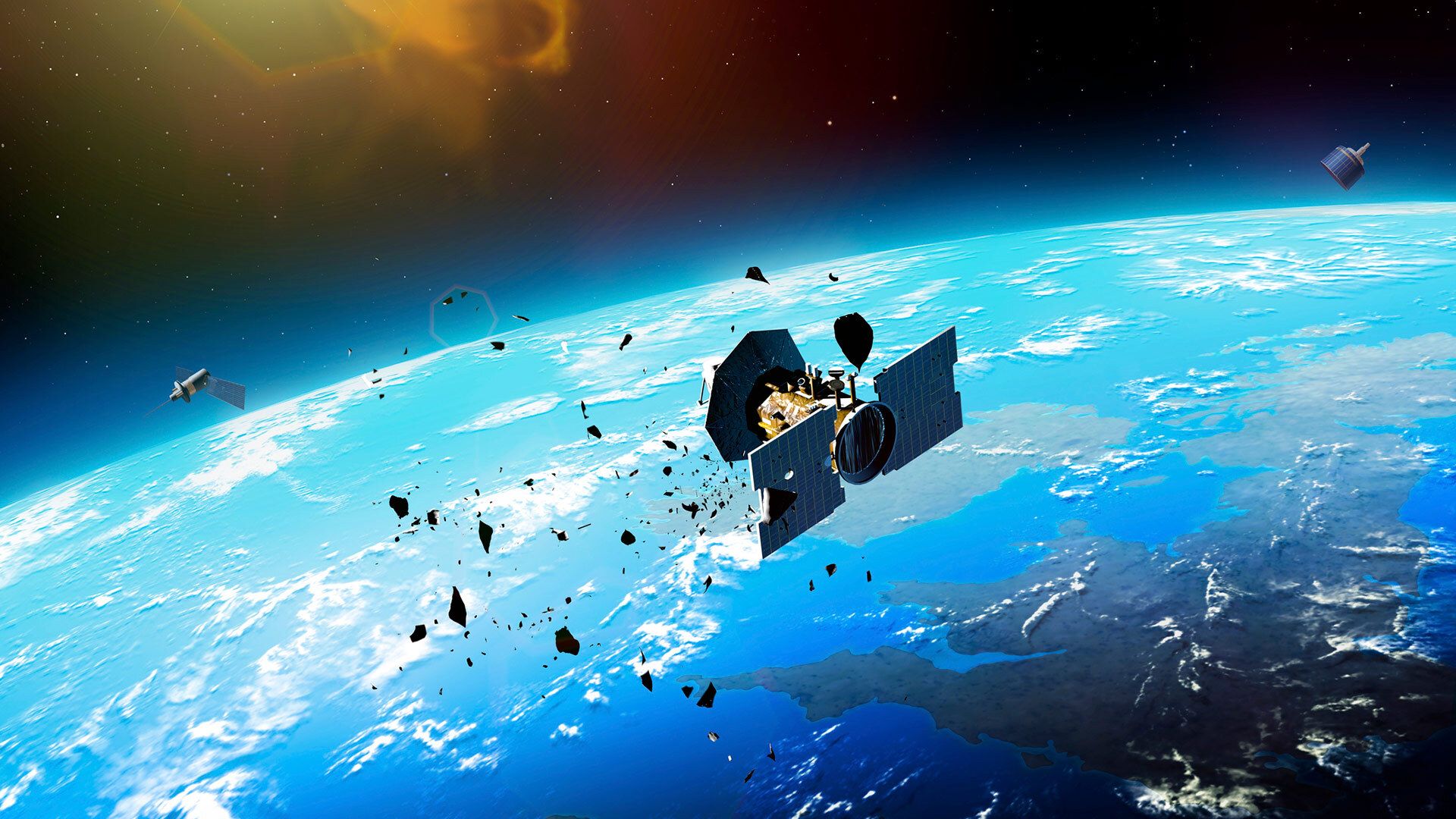
Western intelligence agencies believe that a launch of Sputnik-S could take place before the end of the year.
a]:text-inherit [&>a]:underline">
When you purchase through links on our site, we may earn an affiliate commission. Here’s how it works .
The report notes that information about Sputnik-S has been exchanged between several NATO member countries, with intelligence agencies having already warned that a launch could happen within 60 days. That report was made in early November, suggesting that Sputnik-S could be in orbit and operational in early December. The Russian embassy in Germany rejected the "unfounded allegations," saying that they are nothing more than "part of a propaganda campaign" against the country.
Perhaps worryingly, the United States Defense Intelligence Agency (DIA) published its own report in which it warned that "Russia is developing a satellite designed to carry a nuclear weapon." Such a move would be a violation of the 1967 Outer Space Treaty. The treaty prohibits any country from launching anything carrying nuclear weapons or, indeed, any weapon of mass destruction into Earth orbit. While there has been no suggestion that Russia could turn the nuclear weapons towards the planet, Sputnik-S would still clearly be in breach of the longstanding treaty. One expert cited by the report says that a nuclear explosion in space would knock out one-third of low Earth orbit satellites instantly, with the remaining satellites gradually failing in the following months. The EMP generated could even cause widespread technical carnage on Earth.
As for which satellites could be a potential target for Sputnik-S, there is no shortage of options. SpaceX Starlink satellites are relied upon around the globe for their ability to provide fast, reliable networking to parts of the world not served by traditional connectivity options. Notably, Starlink has been used by Ukraine as it defends itself amid Russian aggression. But amid SpaceX's limiting of performance, Ukrainian officials have chosen to use their own "flying modems" to avoid relying on Elon Musk's company. Russia has been trying to launch its own Starlink rival , with limited success. September saw it lose a batch of 16 satellites during launch .
Download the Tom's Hardware app for up-to-the-minute updates on iOS and Android . Also follow Tom's Hardware on Google News , or add us as a preferred source , to get our latest news, analysis, & reviews in your feeds.
Russian military satellite closes from 200 miles to 3 miles of US radar craft aiding Ukraine
Russian Starlink rival flounders after entire batch of satellites fails to reach operational altitude
Russian plot to sabotage undersea cables with 'secret weapon' foiled by NATO
Key considerations
- Investor positioning can change fast
- Volatility remains possible near catalysts
- Macro rates and liquidity can dominate flows
Reference reading
- https://www.tomshardware.com/tech-industry/space/SPONSORED_LINK_URL
- https://www.tomshardware.com/tech-industry/space/russia-readying-nuclear-armed-satellite-that-could-destroy-every-low-earth-orbit-satellite-report-claims-kremlin-blasts-sputnik-s-claims-as-unfounded-allegations-and-propaganda#main
- https://futureplc.com/terms-conditions/
- Homelabber's $3,500 build straps four 32GB Nvidia V100s to a Lenovo mini PC for 128GB of VRAM
- Gamer hijacks plane in GTA 6 using just mind control and eye tracking
- President Trump says Nvidia board rehiring Jensen Huang would be best for the company and US
- Grab this $1199 Asus Prime RTX 5070 Ti for a 1440p or 4K gaming upgrade
- Nvidia engineer who quit over Jensen Huang's exit says he 'may have moved too quickly'
Informational only. No financial advice. Do your own research.