
Luke James is a freelance writer and journalist.\u00a0 Although his background is in legal, he has a personal interest in all things tech, especially hardware and microelectronics, and anything regulatory.\u00a0 ","collapsible":{"enabled":true,"maxHeight":250,"readMoreText":"Read more","readLessText":"Read less"}}), "https://slice.vanilla.futurecdn.net/13-4-24/js/authorBio.js"); } else { console.error('%c FTE ','background: #9306F9; color: #ffffff','no lazy slice hydration function available'); } Luke James Social Links Navigation Contributor Luke James is a freelance writer and journalist. Although his background is in legal, he has a personal interest in all things tech, especially hardware and microelectronics, and anything regulatory.
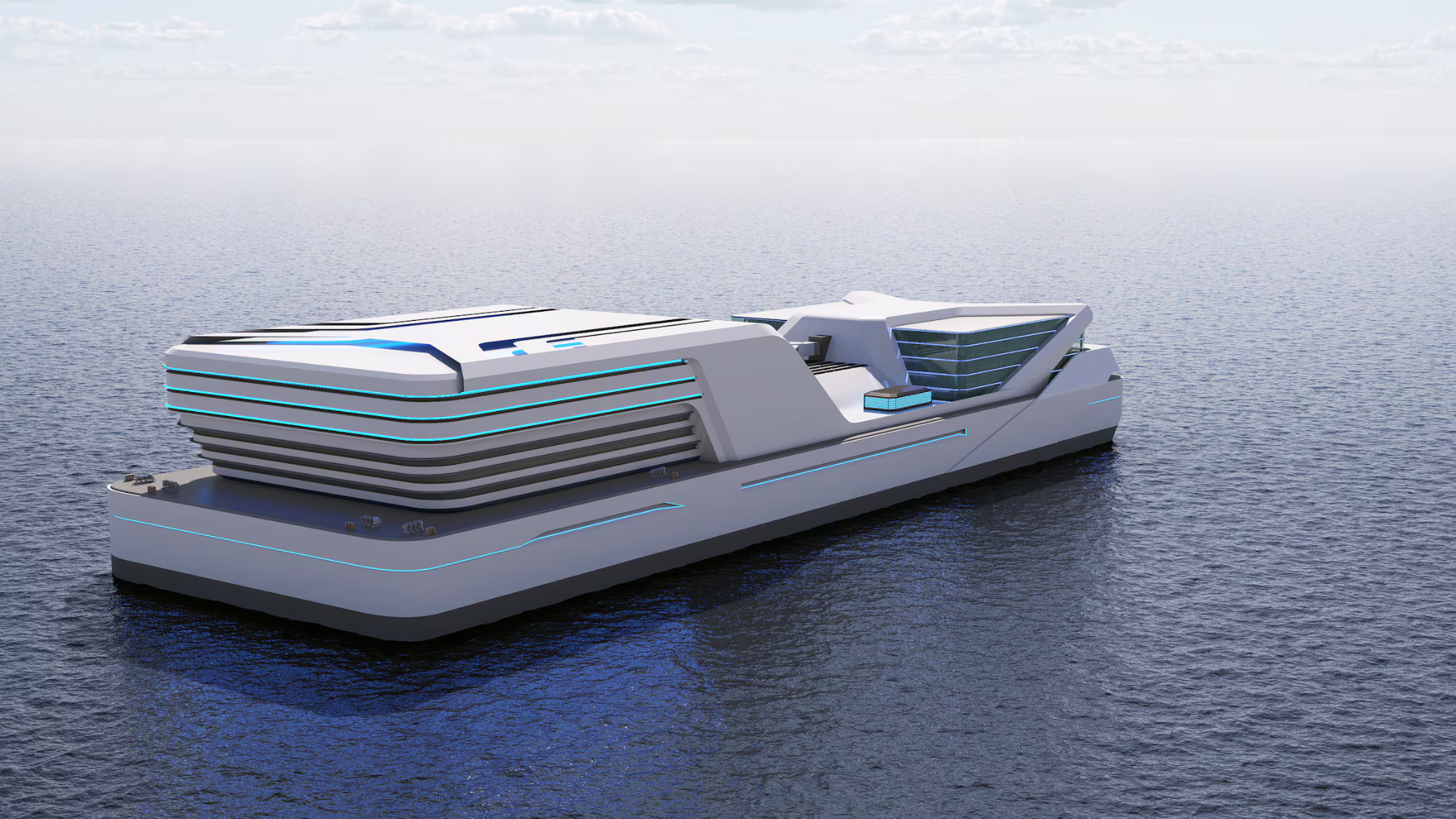
drea.drechsler Definitely intriguing. A way to side-step a lot of permits and red-tape to get it into operation depending on location chosen. And it allows just floating the barge to a new one if the locals decide it's too ugly for their horizon and want a couple million a year to put up with it or something. Or just keep it in international waters and ignore all those details. But why not re-purpose some of the many decommissioned oil platforms they've not yet scrapped out? Those that can be relocated share a lot of the same benefits. Reply
Hooda Thunkett I'm not convinced this is a good idea overall. In fact, I'm not sure if this is a sign that building AI data centers is going to finally collapse as an industry, or a sign of even weirder things to come. It just seems impractical compared to putting them in on land. That, or maybe the cruise lines are going to figure out they can make more money by throwing out the tourists and stocking up on servers… It just feels like a major sign that this is a bubble. A massive bubble, and a whole lot of capital is going to vanish overnight when it pops. Interesting times indeed. Reply
drea.drechsler Hooda Thunkett said: …. It just feels like a major sign that this is a bubble. A massive bubble, and a whole lot of capital is going to vanish overnight when it pops. …. No argument it might be a sign this is a bubble… how long the bubble lasts and what comes after might be in question still. But that's also what makes it a good idea and so darned intriguing since it's probably the ideal solution given the concerns about all these huge mega- AI data center projects sprouting up. When the bubble collapses, there's no huge, empty building left to litter the landscape in the desert (or wherever) with massive tons of suddenly worthless e-waste inside to dispose of. All you have to do is drive it into one of the scrap yards in India and let them salvage out the scrap… like they do with cruise ships and super tankers now. It can also be a snap to locate wherever you want in international waters. With sufficient satellite bandwidth, so long as you can keep the LNG fuel cells supplied all you have to do is avoid pirates. But no permits to worry about and it's non-polluting clean (except for CO2). Maybe some wacko environmentalists who think it's shadow is killing the whales or something to worry about, but no large nearby populations for them to get riled up against you for it. But if they do annoy too much… just hire a couple tugs and drag it somewhere else. Reply
Notton drea.drechsler said: But why not re-purpose some of the many decommissioned oil platforms they've not yet scrapped out? Those that can be relocated share a lot of the same benefits. If I had to guess, it's because those oil rigs have outlived their useful life and are rusted out enough that it's cheaper to build new. Unlike a ship shaped thing with compartments, oil rigs don't have any buoyancy redundancy when one of the floats fails. i.e. Alexander Kielland disaster Reply
drea.drechsler Notton said: If I had to guess, it's because those oil rigs have outlived their useful life and are rusted out enough that it's cheaper to build new. Unlike a ship shaped thing with compartments, oil rigs don't have any buoyancy redundancy when one of the floats fails. i.e. Alexander Kielland disaster A ship (or barge as is the case with this thing from the looks of it) is only as safe as the design and manufacture. In particular the Alexander Keilland (not really an oil platform, but a floating hotel for the oil workers) had inadequate welding on a structure that failed and suffered from insufficient redundancy in the design. It's properly a case study in design failure and there's nothing to say this project by Samsung mightn't end up as one too considering its somewhat first-of-kind nature. Most off-shore rigs' primary structures are massively over-built, to withstand storms even with the weight and constant pounding of the heavy equipment operating on them. You only need one that's appropriate for purpose but I'm sure they could find several if more are needed. Reply
bit_user drea.drechsler said: But why not re-purpose some of the many decommissioned oil platforms they've not yet scrapped out? Those that can be relocated share a lot of the same benefits. I had the same question. Good discussion! Reply
jp7189 Im kinda surprised they didnt go nuclear with the power source. Reply
Key considerations
- Investor positioning can change fast
- Volatility remains possible near catalysts
- Macro rates and liquidity can dominate flows
Reference reading
- https://www.tomshardware.com/tech-industry/SPONSORED_LINK_URL
- https://www.tomshardware.com/tech-industry/samsung-heavy-industries-recruits-greek-shipowner-and-supermicro-to-bring-50mw-floating-ai-data-centers-to-market#main
- https://www.tomshardware.com/subscription
- NVIDIA Research Unlocks Advanced Grasping, Smarter Autonomous Driving and Agent Training at Scale
- Demand for data center CPUs has surged, and AI agents are responsible – why the CPU to GPU ratio is more important than ever for hyperscalers
- AI is set to consume up to 600 billion gallons of water by 2030 — rising energy consumption primarily to blame as data center power demands rise
- 3D-printed nozzles could revolutionize drug and self-healing material manufacturing — MIT-developed triaxial electrospray design makes cleanroom fabrication opt
- Seoul Purpose: How NVIDIA and South Korea Are Building the Future of AI
Informational only. No financial advice. Do your own research.