
Chip scarcity assaults auto industry amid the worsening Nexperia and DRAM crisis
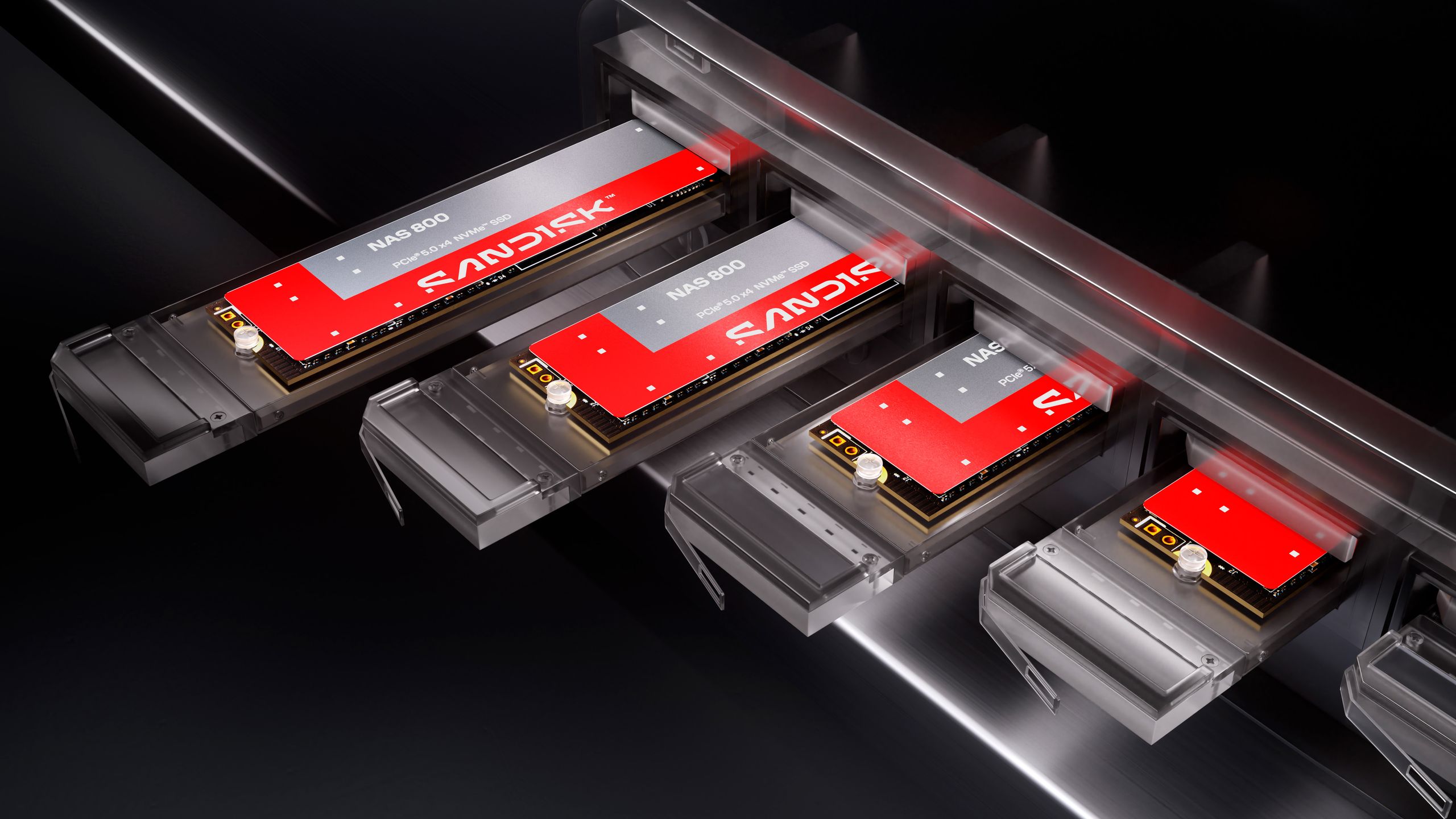
Despite the fact that we are in the middle of a global storage shortage, Sandisk has remained one of the busiest companies in the storage industry. Having previously released the Sandisk 320 and 520 SATA SSDs , the company is back again with two new SSD lineups. The NAS 600, which sticks to the conventional 2.5-inch form factor, and the NAS 800, which uses the M.2 2280 form factor, target prosumers, professionals, and businesses that need an SSD for their NAS devices.
NAS users typically rely on hard drives because of their affordability and high storage capacity. However, SSDs are a valid alternative to traditional mechanical drives, offering higher transfer throughput. Sometimes, users deploy SSDs as performance accelerators alongside hard drives. But since NAS devices operate 24/7 and are constantly writing lots of data to the drives, you need SSDs with high endurance, and that is where the Sandisk NAS 600 and NAS 800 come in.
The Sandisk NAS 800 boasts some of the highest endurance ratings ever seen on a NAS SSD. According to Sandisk, the drive is officially rated for 14 petabytes written (PBW) over its lifespan. Under a five-year warranty, users can write up to 7.67TB of data to the drive each day. It translates to an impressive 1 Drive Write Per Day (DWPD), meaning users can fill and rewrite the drive’s entire capacity daily for five consecutive years.
To put these endurance numbers into perspective, consumer SSDs typically top out around 2,500 TBW, while NAS SSDs sometimes hit 5,000 TBW. The Sandisk NAS 800's impressive endurance numbers put the drive in the same category as enterprise SSDs with crazy endurance ratings over 10,000 TBW. For comparison, the Seagate IronWolf 525 , which may be a bit outdated, tops out at 2,800 TBW for its 2TB capacity. In contrast, the comparable Sandisk NAS 800 1.92TB SKU boasts a remarkable 3,500 TBW, representing a 25% higher endurance.
Sandisk brings back affordable storage to rescue buyers from the SSD crisis — new 320 and 520 SATA SSDs are ready to launch
SanDisk Optimus GX Pro 8100 8TB SSD Review — the undisputed king of high-capacity PCIe 5.0 SSDs
Sandisk Optimus GX 7100M 2TB SSD review: The best 2230 drive you can buy for the Steam Deck
We reached out to Sandisk to inquire about the SSD controller and NAND used in the new NAS 600 and NAS 800 SSDs. While Sandisk has not gotten back to us, we have a fairly good idea of how the company achieved the impressive endurance figures.
Assuming the standard 8TiB of physical NAND behind the 7.68TB user capacity, effective Over-Provisioning (OP) works out to roughly 14.5%, significantly higher than roughly 7% to 10% inherent in consumer drives. Assuming the SSDs use Sandisk 3D TLC NAND with ratings around 1,800 to 2,000 Program/Erase (P/E) cycles, the math implies a Write Amplification Factor (WAF) near 1.16X. However, if the NAND is closer to 3,000 PEC, the rating carries proportionally more margin.
Get Tom's Hardware's best news and in-depth reviews, straight to your inbox.
Key considerations
- Investor positioning can change fast
- Volatility remains possible near catalysts
- Macro rates and liquidity can dominate flows
Reference reading
- https://www.tomshardware.com/pc-components/ssds/SPONSORED_LINK_URL
- https://www.tomshardware.com/pc-components/ssds/sandisks-new-nas-ssd-lets-you-fill-the-drive-every-day-for-five-years-7-68tb-m-2-flaunts-eye-popping-14-000-tbw-rating#main
- https://www.tomshardware.com/membership
- Firebird Launches CIS Region’s Largest AI Factory in Armenia
- Best in Class: Stream PC Games and Study on the Same Laptop With GeForce NOW
- Supermicro fires several employees following investigation into $2.5 billion China AI chip smuggling — claims that senior management had no knowledge of illicit
- Nvidia denies report it will ship Groq-based LPUs to China by year-end — says there is 'no China-specific LPU product in our roadmap'
- NVIDIA AI Factory Compute Is Becoming an Investable Asset Class
Informational only. No financial advice. Do your own research.