
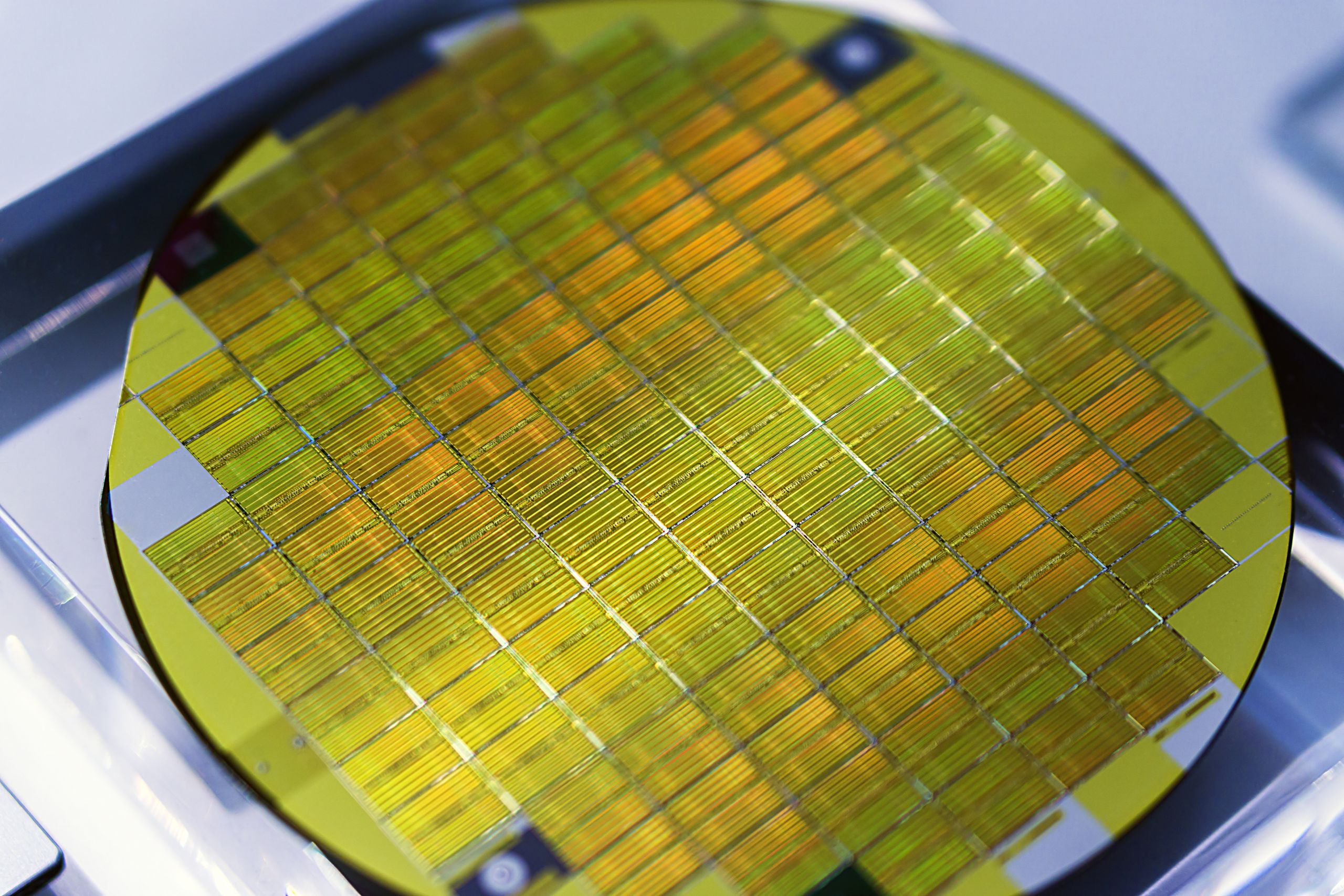
To overcome the carrier freeze-out effects that normally cripple semiconductors at cryogenic temperatures, the researchers heavily doped Beta-gallium oxide with silicon atoms. In semiconductor engineering, doping is the process of intentionally introducing impurity atoms — in this case, silicon — into a material to alter its electrical behavior and provide free charge carriers.
New tech can see a CPU's transistors in action — terahertz radiation can potentially steal data as a chip is running
Chinese researchers discover new salty cooling solution that can drop temperatures by more than 50 degrees Celsius in seconds
Australian researchers develop quantum battery proof-of-concept which uses lasers to charge near-instantly
By introducing a high concentration of silicon dopants, the team created conditions in which electrons could move by hopping between closely spaced silicon-related states rather than relying solely on thermal energy to reach the conduction band. This allowed the material to maintain electrical conduction even under extreme cryogenic conditions where conventional semiconductors would suffer severe carrier freeze-out.
The researchers then built two devices based on silicon-seeded beta-gallium: a fin field-effect transistor (FinFET), featuring fin-shaped channels that make it stronger and more stable than conventional field-effect transistors, and a logic component called an inverter (also known as a NOT gate), a fundamental building block of computer circuits.
According to the researchers, both devices performed reliably at temperatures as low as 2K (-271.1°C/-456.1°F).
“At that temperature, there is almost no thermal energy to help electrons jump into gallium oxide’s conduction band. “Instead, the electrons hop through an ‘impurity band’ created by the silicon atoms, enabling the device to carry a current,” Li explained.
While these are not the first electronic devices to operate at ultra-low temperatures, they are the first demonstration of an ultrawide-bandgap semiconductor used in transistors and logic inverters capable of operating at such low temperatures.
According to the press release, the researchers’ goal is to build a portfolio of temperature-resistant devices from beta-gallium oxide, including radio-frequency transistors, photodetectors, and memory cells. “We have demonstrated the basic building blocks; now the work is to scale this up into complex cryogenic chips and to push the limits of performance in this ultracold regime,” said Li.
If they succeed, the devices would be perfect for space probes, satellites, and other technologies that face the extreme temperature swings — from absolute zero to hundreds of degrees — in space.
Follow Tom's Hardware on Google News , or add us as a preferred source , to get our latest news, analysis, & reviews in your feeds.
Etiido Uko is an engineer and technical writer with over nine years of experience in documentation and reporting. He is deeply passionate about all things gadgets, technology, and engineering. ","collapsible":{"enabled":true,"maxHeight":250,"readMoreText":"Read more","readLessText":"Read less"}}), "https://slice.vanilla.futurecdn.net/13-4-22/js/authorBio.js"); } else { console.error('%c FTE ','background: #9306F9; color: #ffffff','no lazy slice hydration function available'); } Etiido Uko Social Links Navigation News Contributor Etiido Uko is an engineer and technical writer with over nine years of experience in documentation and reporting. He is deeply passionate about all things gadgets, technology, and engineering.
S58_is_the_goat Finally we can go back to venus. Reply
Key considerations
- Investor positioning can change fast
- Volatility remains possible near catalysts
- Macro rates and liquidity can dominate flows
Reference reading
- https://www.tomshardware.com/tech-industry/SPONSORED_LINK_URL
- https://www.tomshardware.com/tech-industry/scientists-create-electronic-devices-that-function-reliably-at-extreme-temperatures-using-advanced-silicon-doped-beta-gallium-oxide-semiconductor-material#main
- https://www.tomshardware.com/subscription
- OpenAI’s New GPT-5.5 Powers Codex on NVIDIA Infrastructure — and NVIDIA Is Already Putting It to Work
- Meta's multi-billion-dollar Graviton deal highlights intensifying CPU shortages in AI infrastructure — the industry signals a shift to Agentic inference workloa
- OpenAI and Microsoft's alliance fractures as cloud exclusivity deal ends — Azure's single-provider monopoly for ChatGPT is officially over
- Nemotron Labs: What OpenClaw Agents Mean for Every Organization
- National Robotics Week — Latest Physical AI Research, Breakthroughs and Resources
Informational only. No financial advice. Do your own research.