
Analyst says Nvidia poised to capture two-thirds of the x86 server CPU market from Intel and AMD with expected $20 billion in revenue
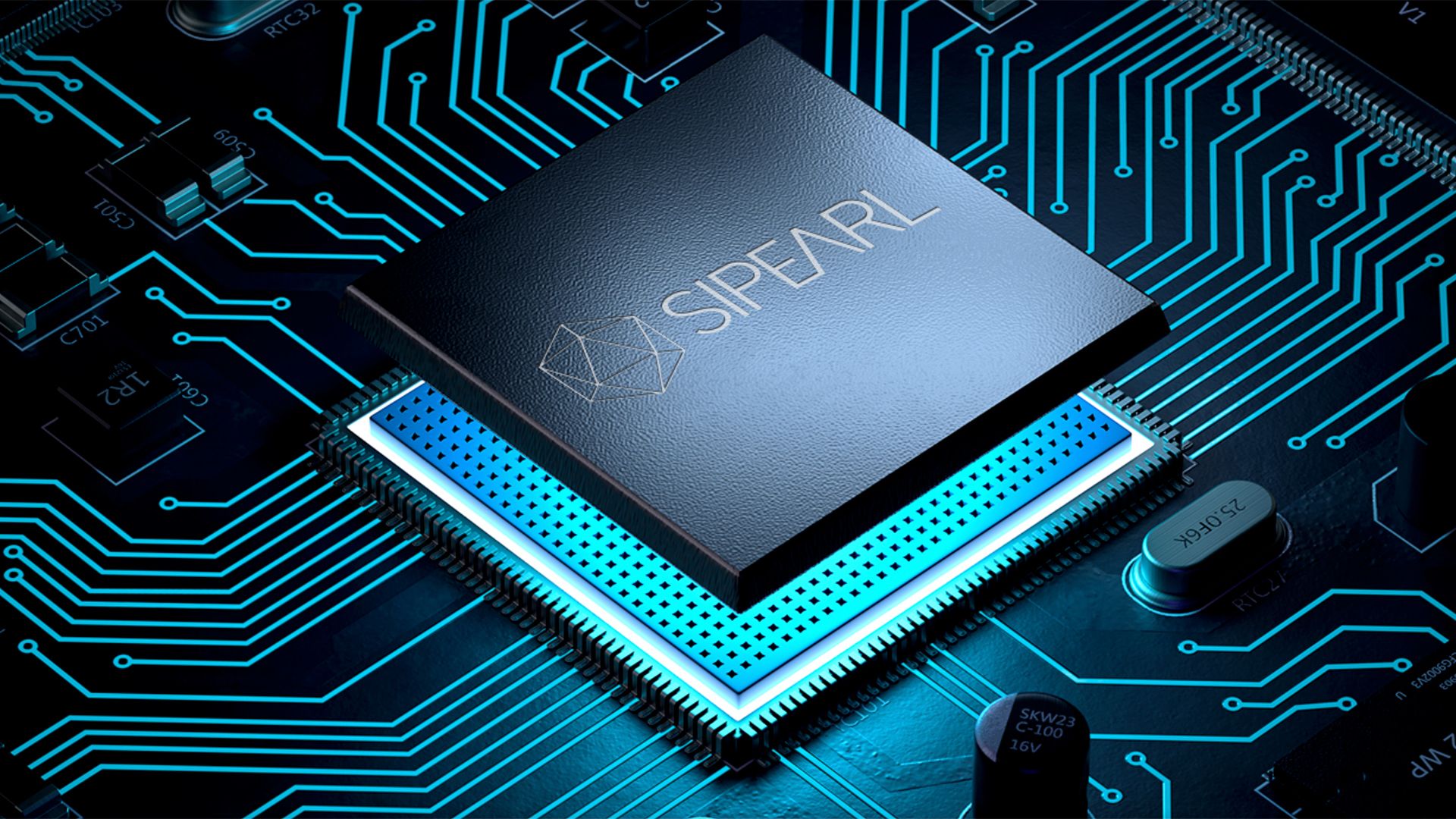
While the CPU is the industry's third processor to use a hybrid memory subsystem comprising HBM2E and DDR5 (for which SiPearl deserves accolades), it is very late to market, so while it is natural that various sovereign AI and HPC deployments and Europe-funded supercomputers will deploy it, expecting commercial companies to deploy Neoverse V1-based machines in 2027 is pretty naïve. However, commercial companies will validate and test the platform, possibly do some software porting, and ensure that it works as intended. Some companies might even deploy Rhea1 in their data centers. As Craig Punty puts it, Rhea1 could open rather unexpected doors for SiPearl.
As it turns out, geopolitical tensions and export controls force big players to look for alternatives to American hardware, which is where SiPearl's processors could fit rather well. SiPearl is based in France, it has R&D centers around Europe, it licenses technologies from Arm, and produces its CPUs in Taiwan. The company cannot ship its CPUs to China due to export restrictions, but it can sell them to clients in Europe and the Middle East without restraint, which is its indisputable trump card. Assuming that SiPearl offers competitive performance, its CPUs are almost guaranteed to be adopted by sovereign AI and HPC deployments in Europe, which means guaranteed revenue.
One might argue that since SiPearl uses Arm's cores, it will inevitably compete against Arm's AGI processors eventually. Indeed, it will, once its CPUs address large CSPs. Which is why the company must stay ahead of Arm's own offerings in terms of performance and features, or at least be on par with them.
For now, SiPearl is bringing up its Rhea1 processor in its labs. The company already has its Seine reference server design that is primarily designed for validation, testing, evaluation, and software porting. For AI and HPC deployments, Seine can be configured for one Rhea CPU and two accelerators; for more traditional supercomputer needs, two Seine motherboard can be installed into one chassis, though the nodes will work independently.
Speaking of the Seine motherboard, it should be noted that since SiPearl uses it for bringing up the CPU, it had to be made perfect so to exclude any possible problems on its side. To that end, it uses costly components and an ultra-expensive 26-layer printed circuit board to ensure signal integrity, reduce crosstalk, provide the best quality power possible, and ensure maximum mechanical stability.
The Seine server reference design will be used by Bull to build servers for the Jupiter supercomputer, according to Prunty. Other server suppliers may follow and adopt the same design to offer their servers based on Rhea1.
"We had also a partnership agreement signed with HPE to work together on European supercomputers tender offers," Prunty said. "Our CPUs will also equip other servers as part of European AI gigafactory project."
Developing a supercomputer-grade processor in Europe is already quite an achievement, but developing a CPU that works fine from the first silicon could indeed be considered a breakthrough for a startup. In addition, SiPearl tapes out its Rhea in a good time when potential customers may adopt it despite the fact that Neoverse V1 technology that powers the chip is outdated. As it turns out, export controls made not only sovereign AI and HPC deployments look in SiPearl's direction, but private CSPs in Europe and the Middle East also plan to evaluate its processors.
SiPearl admits that a five-year development cycle is too long for a modern CPU, though it remains to be seen whether it can indeed shrink it to 18 months. The company already has five development sites and is building another one, so it looks like it the company is on the right path. Yet, SiPearl must prove that it can develop Arm-based processors that are competitive against Arm's own AGI as well as other Arm-powered data center CPUs, something that will not be easy to do given the fact that SiPearl is a startup, whereas its potential rivals are billion-dollar companies.
Of course, SiPearl will always have a couple of trumps up its sleeve: the European Processor Initiative (EPI) as well as sovereign AI and HPC deployments that will always prefer locally developed CPUs no matter what. Whether such businesses are enough to build a world-class processor developer is something that remains to be seen, but at the very least, SiPearl will not vanish into oblivion like many other European CPUs makers.
Anton Shilov is a contributing writer at Tom\u2019s Hardware. Over the past couple of decades, he has covered everything from CPUs and GPUs to supercomputers and from modern process technologies and latest fab tools to high-tech industry trends. ","collapsible":{"enabled":true,"maxHeight":250,"readMoreText":"Read more","readLessText":"Read less"}}), "https://slice.vanilla.futurecdn.net/13-4-25/js/authorBio.js"); } else { console.error('%c FTE ','background: #9306F9; color: #ffffff','no lazy slice hydration function available'); } Anton Shilov Social Links Navigation Contributing Writer Anton Shilov is a contributing writer at Tom’s Hardware. Over the past couple of decades, he has covered everything from CPUs and GPUs to supercomputers and from modern process technologies and latest fab tools to high-tech industry trends.
Key considerations
- Investor positioning can change fast
- Volatility remains possible near catalysts
- Macro rates and liquidity can dominate flows
Reference reading
- https://www.tomshardware.com/pc-components/cpus/SPONSORED_LINK_URL
- https://www.tomshardware.com/pc-components/cpus/sipearls-long-awaited-rhea-cpu-finally-gets-in-the-lab-opening-the-door-for-europes-first-sovereign-hpc-cpu-availability-of-rhea1-is-scheduled-for-end-of-2026-sipearl-vp-says-following-long-development-process#main
- https://www.tomshardware.com/my-account
- Into the Omniverse: Three Workflows for Improving Vision AI Agent Accuracy With Synthetic Data and Fine-Tuning
- Rapidus fab roadmap examined — first new leading-edge chipmaker in decades has one Hokkaido fab, a 2027 deadline, and 60 potential customers
- You can now use your Sony headphones as a free real-time head tracker for race and flight simulators on PC, several hundred games already supported — enthusiast
- Electric drone breaks world air speed record at 434 mph, designed for anti-aircraft interceptor roles — German firm convincingly smashed the official 409 mph re
- 'Slopfix' software team charges $10,000 a week to delete AI-generated code bloat — ironically, the team uses AI agents to trim messy repositories by up to 65%
Informational only. No financial advice. Do your own research.