
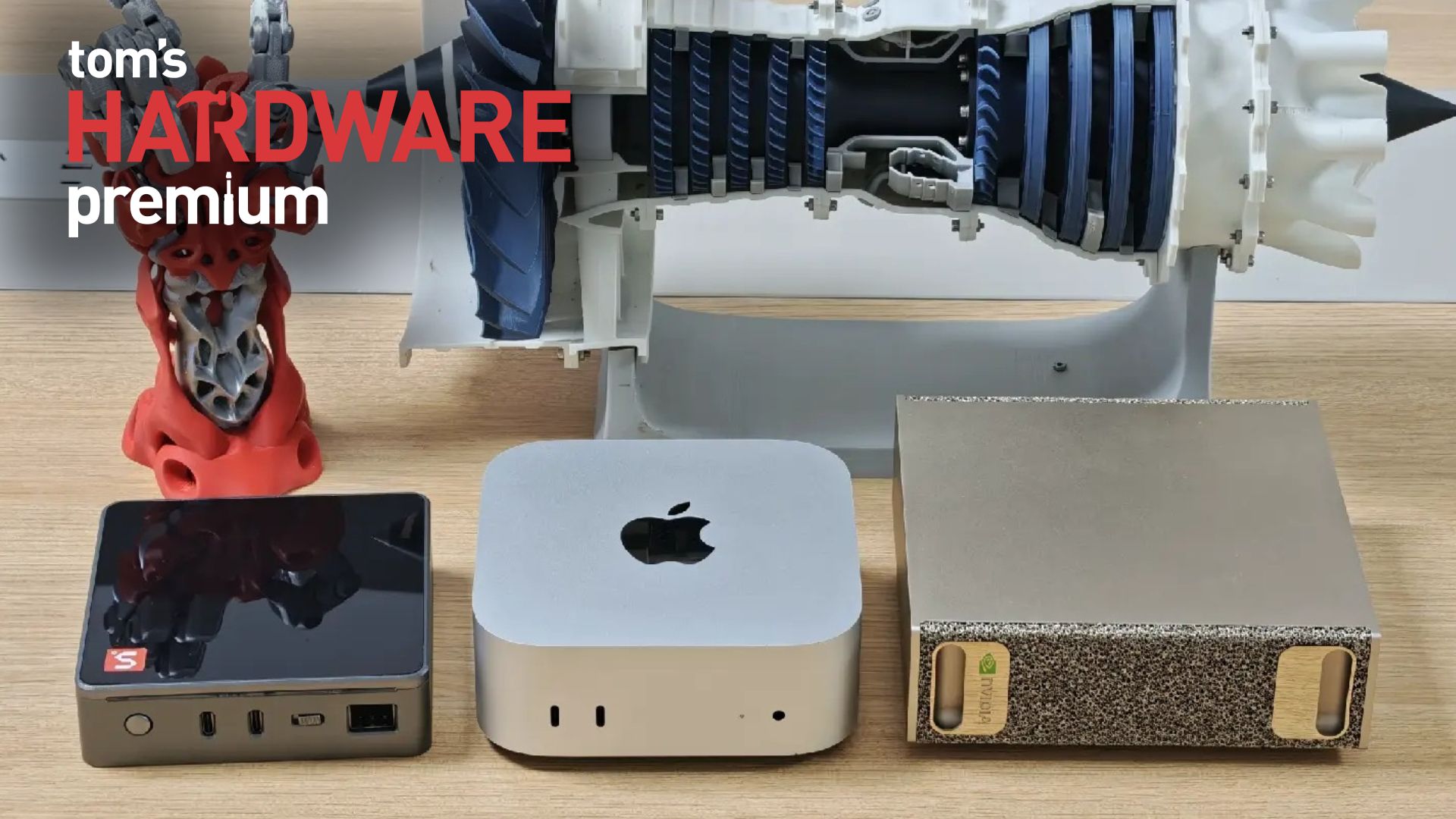
The contrast is with the Spark’s QSFP ports, and Nvidia’s datasheet says linking four Sparks “requires [an] external switch.” The math, at 32 Gbps per lane, works out to 256 Gbps with the default eight lanes and 384 Gbps with the maximum of twelve. Remote-access test units and a few review units will follow during the Kickstarter campaign, the company told us.
Sipeed also commented on the openness of the platform, saying, “Yes, bsp sdk is open, you can use AI to port any distribution on it!” Sipeed has previously sold Axera boards, with products dating back to 2022 using the AX620A, AX650N, and AX630C.
The claims of the MaixStation being faster in some workloads are coupled with Sipeed saying “In fact you need [to] ask why DGX is so slow…” with potential financial implications, as Nvidia “just [wants to make] more money from users.” When an X user argued that Sipeed must be using extreme quantization at that bandwidth, the company suggested that the Spark’s specs may be overstated.
By our math, the decode claim is plausible with a 4-bit 27B model, which sits at about 13.5GB. Performance on comparable machines tops out near 20 tokens per second, which means around 270 GB/s. Prefill, which is compute-bound, is a harder sell, but Sipeed stated that “DGX Spark 1000TOPS is fake ‘sparse.’” That 1 PFLOP figure does rely on sparsity, but the DGX Spark’s dense rate of about 500 TFLOPS is still around double the AX8860P’s 256 TOPS.
Axera’s current stack has Pulsar2 as the NPU compiler and toolchain, with version 8.0 on HuggingFace last week, and the V7.0 docs already list the chip as the AX8860. There’s no operator support list for the chip yet, and the docs’ LLM chapter for older chips lists weights down to 4-bit integers but no FP4. Neither the ax-llm runtime nor AXCL, the host-side PCIe driver and runtime for Axera’s cards, lists the chip yet. Sipeed says the end-of-month release is AXDSL, a kernel-programming language, plus the Pulsar2 source code, and that SGLang and vLLM run on a custom backend built on it, so Hugging Face models run without a conversion step.
Enthusiasts are already eager to know the final specifications and pricing for the different models. On paper, as far as local LLM machines go, the MaixStation matches the Spark on memory size and claimed bandwidth, and the Max+ PRO 495 Halo on bandwidth alone. Testing performance claims will also have to wait for the toolchain and sample machines land, hopefully before the end of the year.
Shane Downing Social Links Navigation Contributing Writer Shane Downing is a Contributing Writer for Tom’s Hardware, covering consumer storage, PC hardware, and AI.
Key considerations
- Investor positioning can change fast
- Volatility remains possible near catalysts
- Macro rates and liquidity can dominate flows
Reference reading
- https://www.tomshardware.com/desktops/mini-pcs/SPONSORED_LINK_URL
- https://www.tomshardware.com/desktops/mini-pcs/sipeed-reveals-chinese-made-dgx-spark-and-ryzen-ai-halo-rival-expected-to-cost-usd3-999-maixstation-pairs-axeras-ax8860p-with-128gb-of-lpddr5x-at-273-gb-s-with-promising-local-ai-performance-claims#main
- https://www.tomshardware.com/my-account
- Elon Musk calls out memory makers over 'extortionate' chip pricing, says Micron is playing smart for long-term loyalty
- Gigabyte X870 Aorus Infinity Motherboard Review: limited-edition, designed for extreme overclocking, but pricey for X870
- Sandisk’s 512GB Switch 2-ready microSD Express card is a steal for $98 during sale
- Unsupervised AI agent deletes TV show’s entire edit weeks before release; program can't air
- NVIDIA Expands Advanced Technology Access for Europe’s Scientific Community Through Open Learning Resources, Collaborations and Compute
Informational only. No financial advice. Do your own research.