
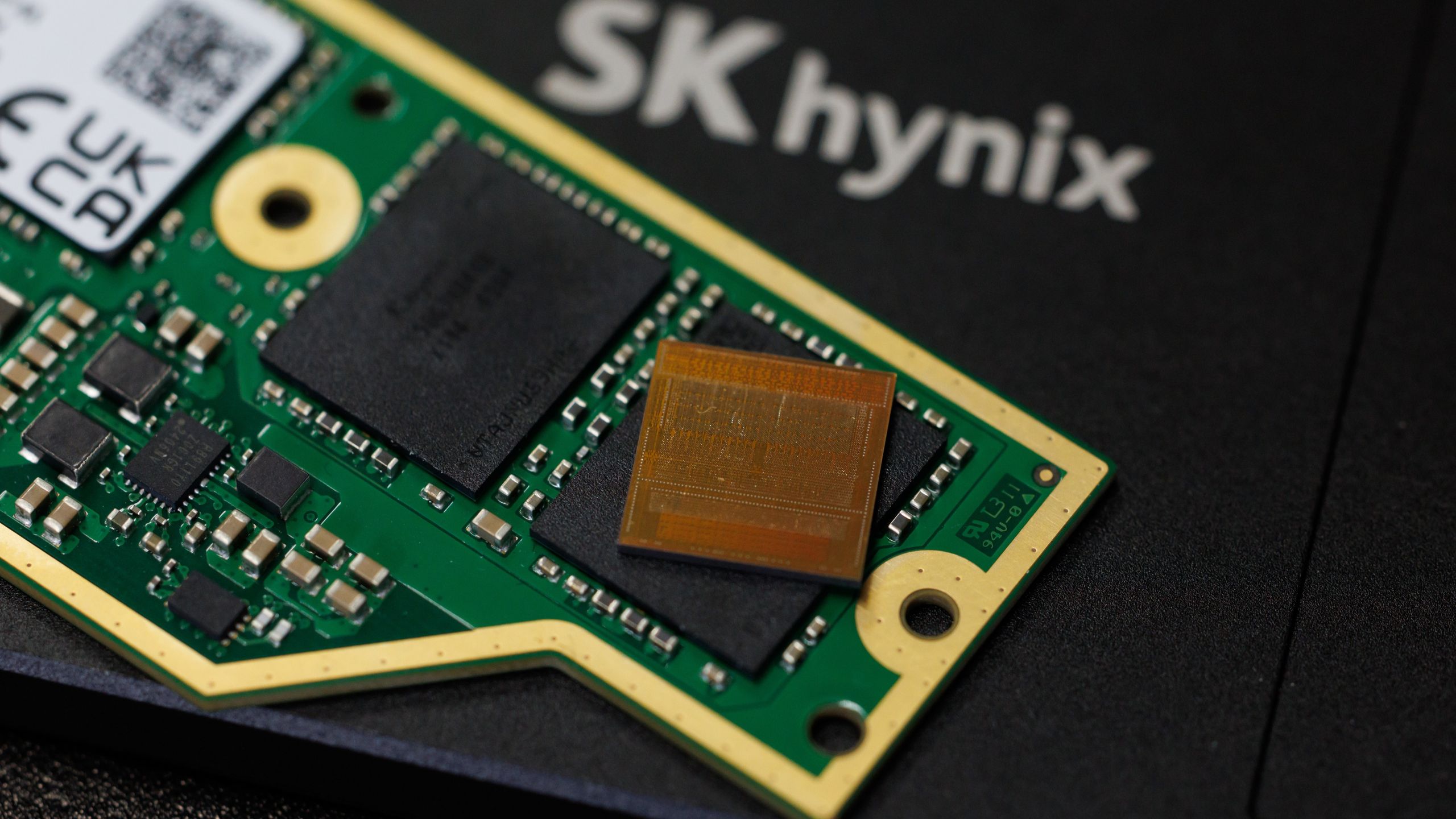
The Die-to-Die Physical Layer (D2D PHY) — the ultra-high-speed interface linking the processor and HBM stacks — continuously moves terabytes of data per second. As thousands of signaling lanes and billions of transistors switch at extremely high frequencies, switching losses, leakage current, and electrical resistance generate substantial heat.
The problem is compounded by the processor itself, which already produces enormous amounts of heat. With the HBM stacks packed tightly around the processor, heat accumulates rapidly in a very small area. When temperatures exceed safe limits, the system automatically reduces clock speeds and voltages through thermal throttling to prevent physical damage, lowering overall performance.
SK hynix's new iHBM approach attempts to tackle the problem at the structural level. Unlike conventional HBM cooling designs that primarily dissipate heat indirectly through the core die and surrounding package structures, the company's iHBM architecture instead places Integrated Cooling Elements (ICEs) directly around the D2D PHY region — the exact zone where thermal concentration is most severe. This approach creates a dedicated dissipation path at the source, reducing overall thermal resistance by 30% and allowing the chip to maintain stable operation under the high-temperature, high-pressure conditions that dense AI workloads demand.
SK hynix says the technology can be manufactured at scale using its existing Wafer Level Packaging (WLP) process, which is built on its Mass Reflow Molded Underfill (MR-MUF) packaging technology already used in commercial HBM products. The design is also architecturally compatible with existing System-in-Package configurations, meaning customers can integrate the new thermal capability without major redesigns.
Follow Tom's Hardware on Google News , or add us as a preferred source , to get our latest news, analysis, & reviews in your feeds.
Etiido Uko is a news contributor for Tom's Hardware covering the latest updates in big tech and the PC industry. He is a mechanical engineer and senior technical writer with over nine years of experience in documentation and reporting. He is deeply passionate about all things engineering and technology, and is an expert in gadgets, manufacturing, robotics, automotive, and aerospace. ","collapsible":{"enabled":true,"maxHeight":250,"readMoreText":"Read more","readLessText":"Read less"}}), "https://slice.vanilla.futurecdn.net/13-4-24/js/authorBio.js"); } else { console.error('%c FTE ','background: #9306F9; color: #ffffff','no lazy slice hydration function available'); } Etiido Uko Social Links Navigation News Contributor Etiido Uko is a news contributor for Tom's Hardware covering the latest updates in big tech and the PC industry. He is a mechanical engineer and senior technical writer with over nine years of experience in documentation and reporting. He is deeply passionate about all things engineering and technology, and is an expert in gadgets, manufacturing, robotics, automotive, and aerospace.
Pierce2623 Personally I’m a big fan of the Mr. Muff technology. Reply
Key considerations
- Investor positioning can change fast
- Volatility remains possible near catalysts
- Macro rates and liquidity can dominate flows
Reference reading
- https://www.tomshardware.com/tech-industry/semiconductors/SPONSORED_LINK_URL
- https://www.tomshardware.com/tech-industry/semiconductors/sk-hynix-unveils-ihbm-thermal-architecture-that-cools-ai-memory-at-the-source-integrated-cooling-elements-inside-hbm-interface-cut-thermal-resistance-by-30-percent-target-next-gen-hbm5-accelerators-and-dense-ai-data-centers#main
- https://www.tomshardware.com/subscription
- Acer and Qualcomm take on MacBook Neo with first Snapdragon C laptop – Aspire Go 15 delivers 512GB SSD and 8GB of RAM at ‘entry-tier price’
- NVIDIA GTC Taipei at COMPUTEX: Live Updates on What’s Next in AI
- Hermes Unlocks Self-Improving AI Agents, Powered by NVIDIA RTX PCs and DGX Spark
- Sandisk brings back affordable storage to rescue buyers from the SSD crisis — new 320 and 520 SATA SSDs are ready to launch
- Valve hikes Steam Deck OLED prices — 512GB is now $789, while 1TB climbs to $949
Informational only. No financial advice. Do your own research.