
Meta cited the same pressure, raising its spending forecast by $10 billion. Google Cloud grew 63%.
When you purchase through links on our site, we may earn an affiliate commission. Here’s how it works .
Google led with 63% cloud revenue growth and an 81% jump in net income to $62.6 billion, while Meta's stock dropped 6% after hours despite a 33% revenue increase, punished by investors for adding $10 billion to its spending forecast and offering no firm timeline on new AI models.
But in the earnings calls, at least two of the four companies explicitly blamed rising memory chip prices for pushing budgets higher, confirming what market data and industry executives have been warning about for months.
You may like Google, Microsoft, Meta, and Amazon capex spending to hit $725 billion in 2026, up 77% from last year Alphabet is doubling its capital expenditure to a staggering $180 billion in 2026 Big Tech stocks take a $1 trillion tumble as projected AI spending continues to outweigh revenue Memory costs inside the capex Microsoft’s CFO, Amy Hood, told investors that rising prices for memory chips and other components accounted for $25 billion of the company's record capex budget. Microsoft set its 2026 spending at $190 billion, far above the $152 billion average analyst forecast. Hood warned that even with the additional investment, Microsoft expects to remain capacity-constrained on GPUs, CPUs, and storage through at least 2026.
Meta cited the same, with the company raising its full-year capex range to $125 billion to $145 billion, up from a prior ceiling of $135 billion. In its earnings release, Meta attributed the increase to "higher component pricing this year, particularly memory," alongside rising costs for land, power, and skilled workers needed to build data centers that now consume 70% of the world's memory output .
The timing of all this is hardly coincidental, with TrendForce having reported DRAM contract prices rising roughly 95% quarter over quarter in Q1 2026, with a further 58% to 63% increase projected for Q2. NAND is following a similar trajectory, with Q2 contract prices expected to climb 70% to 75%. Server DRAM and high-density DDR5 RDIMMs are absorbing the bulk of production capacity, and all NAND output for 2026 is already committed , according to Phison CEO Khein-Seng Pua.
Hood's $25 billion, therefore, helps to put a dollar value on what has previously been an abstract concern: If one company's memory cost inflation alone exceeds the entire annual capex of most semiconductor firms, the pressure on consumer DRAM and NAND supply becomes much easier to quantify.
Meta and Microsoft aside, Google’s Cloud revenue hit $20 billion in the same quarter, growing 63% year over year, outpacing both Amazon Web Services ($37.6 billion, up $8.3 billion) and Microsoft's Azure-driven cloud segment ($34.7 billion, up $7.9 billion).
Google's cloud contract backlog reached $460 billion, roughly double the $240 billion reported at the end of Q4 2025 . Amazon reported $364 billion in its own pipeline, which will expand further after a recent $100 billion computing contract with Anthropic over the next decade. Microsoft's commercial remaining performance obligations hit $625 billion, up 110% year over year.
Cloud boss Thomas Kurian attributed Google's growth to its strategy of building custom AI chips, foundation models, and products in-house, telling the Financial Times that this gives the company a cost and research advantage over competitors that have struggled to develop their own chips and frontier models. Google's 7th-gen Ironwood TPU , which packs 192 GB of HBM3E per chip with 7.37 TB/s bandwidth in pods of up to 9,216 chips, is central to that strategy, and Anthropic has committed to access up to one million of them. Google recently unveiled its 8th-gen TPUs , which are split into two distinct variants for training and inference.
Meta's multi-billion-dollar Graviton deal highlights intensifying CPU shortages in AI infrastructure
Memory will consume 30% of hyperscaler data center spending this year, a 4X increase over 2023
Inside Meta and AMD's $100 billion deal, and why AMD is giving up a slice of the company in return for GPU orders
Alphabet raised its capex guidance to between $180 billion and $190 billion, up $5 billion from its previous guidance of $175 billion. CFO Anat Ashkenazi said he expects capex to “significantly increase” in 2027, causing shares to rise by some 7% after hours. It’s worth noting that $37.7 billion of Alphabet’s net income of $62.6 billion came from unrealized gains on non-marketable equity securities, primarily the company's Anthropic stake, according to the earnings release filed with the SEC. Strip that out, and operating performance was still strong, with a 36.1% operating margin, but the total net income number overstates recurring profitability.
These capex figures reflect more than GPU purchases, because each hyperscaler is now deploying or developing custom accelerators to reduce dependence on Nvidia for inference-based workloads.
This pattern is likely to extend beyond accelerators as CPU demand for agentic AI workloads drives a parallel supply crunch with CPU lead times currently stretching to six months. Intel has reported billions in unmet Xeon demand, and Arm CEO Rene Haas has stated that agentic workloads require roughly 120 million CPU cores per gigawatt of data center capacity, four times what traditional AI training clusters need. Per Intel CFO David Zinsner, data center CPU-to-GPU ratios have already moved from 1:8 to 1:4, with further convergence expected to reach or go beyond parity.
Power infrastructure is another bottleneck , with large power transformer lead times extending to roughly 128 weeks, and the IEA estimating that approximately 20% of planned global data center projects could be at risk of grid-related delays. TrendForce recently downgraded its full-year server shipment growth forecast from 20% to 13% because power management ICs and baseboard management controllers needed to assemble complete servers are stretching to 35- to 40-week lead times . Samsung's planned closure of its S7 eight-inch wafer fab in Korea will tighten PMIC supply further.
Meta's stock slipped by 6% after-hours following the earnings, erasing roughly $113 billion in market value. That drop reflected both the $10 billion capex increase and CEO Mark Zuckerberg's lack of a firm schedule for releasing improved AI models to follow the recently launched Muse Spark. Dec Mullarkey, managing director of SLC Management, told the FT that investors are concerned about whether Meta's historically capital-light business is becoming far more capital-intensive.
"The bear thesis is garbage," countered Brent Thill, an analyst at Jefferies, arguing that revenue growth across the sector justifies the spending. Zuckerberg offered little to settle the debate. Asked about Meta's AI agent development, he told investors he cared more about quality than deadlines, adding that most AI agents available today are not good enough for everyday users.
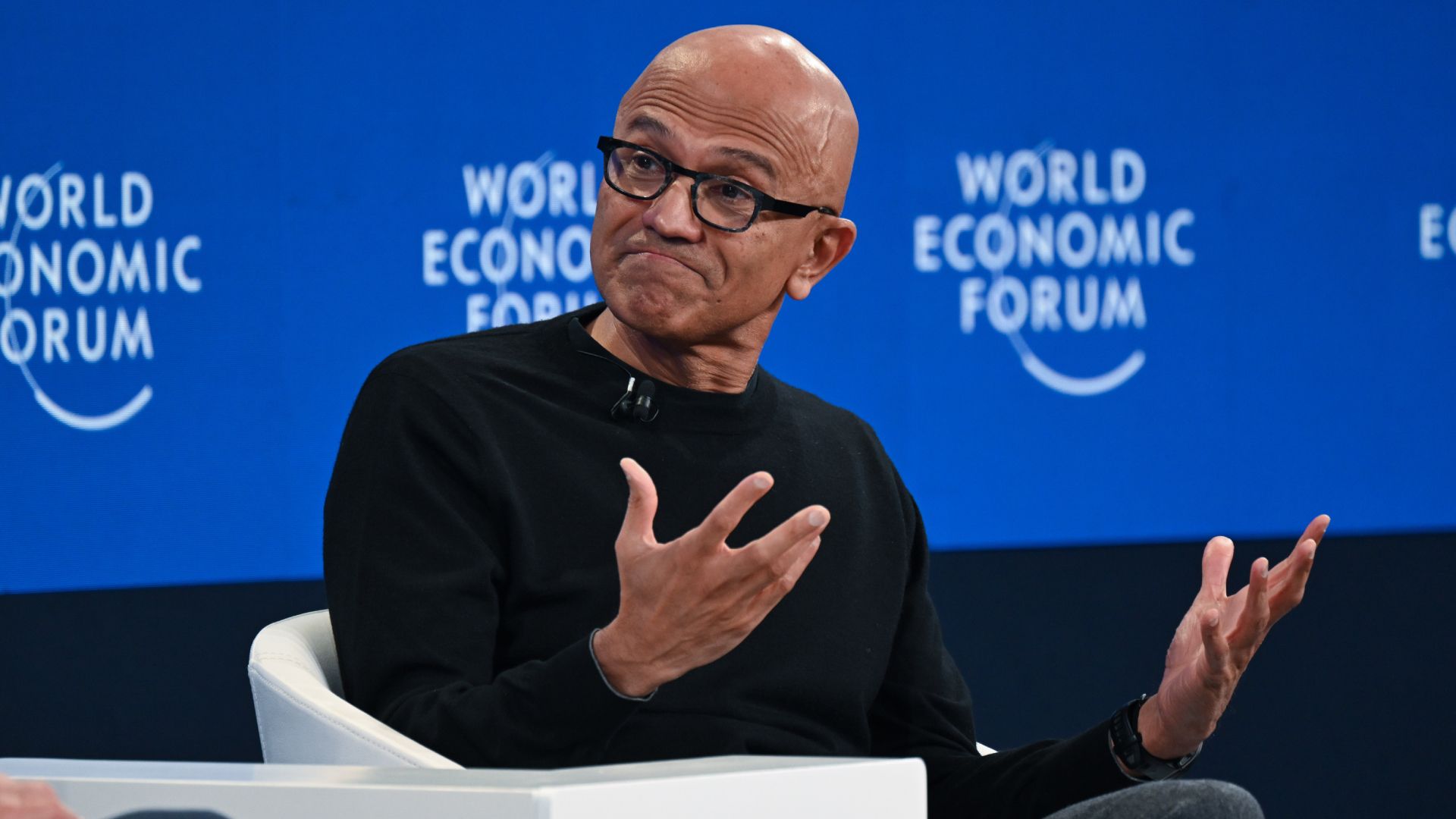
Amazon kept its $200 billion capex plan unchanged, and Microsoft CEO Satya Nadella said ending his company's exclusive contract with OpenAI was beneficial, claiming royalty-free access to OpenAI's frontier models and IP through 2032.
Luke James is a freelance writer and journalist.\u00a0 Although his background is in legal, he has a personal interest in all things tech, especially hardware and microelectronics, and anything regulatory.\u00a0 ","collapsible":{"enabled":true,"maxHeight":250,"readMoreText":"Read more","readLessText":"Read less"}}), "https://slice.vanilla.futurecdn.net/13-4-22/js/authorBio.js"); } else { console.error('%c FTE ','background: #9306F9; color: #ffffff','no lazy slice hydration function available'); } Luke James Social Links Navigation Contributor Luke James is a freelance writer and journalist. Although his background is in legal, he has a personal interest in all things tech, especially hardware and microelectronics, and anything regulatory.
Key considerations
- Investor positioning can change fast
- Volatility remains possible near catalysts
- Macro rates and liquidity can dominate flows
Reference reading
- https://www.tomshardware.com/tech-industry/big-tech/SPONSORED_LINK_URL
- https://www.tomshardware.com/tech-industry/big-tech/microsoft-attributed-25-billion-of-its-record-ai-budget-to-memory-chip-costs#main
- https://www.tomshardware.com
- Samsung and SK hynix warn AI-driven memory shortages could last until 2027 and beyond, as HBM demand explodes — customers already reserving supply years ahead,
- NVIDIA Launches Nemotron 3 Nano Omni Model, Unifying Vision, Audio and Language for up to 9x More Efficient AI Agents
- ASML's roadmap for chipmaking lithography tools examined — from DUV to Low-NA, High-NA, Hyper-NA, and beyond
- Dell's exceptional 34-inch Alienware QD-OLED gaming monitor returns to Black Friday pricing — $649 all time low for awesome color accuracy and 240Hz refresh rat
- The Pentagon announces AI deals with OpenAI, Google, Microsoft, Amazon, Nvidia, and more — LLMs to be deployed on classified Department of War networks ‘for law
Informational only. No financial advice. Do your own research.