
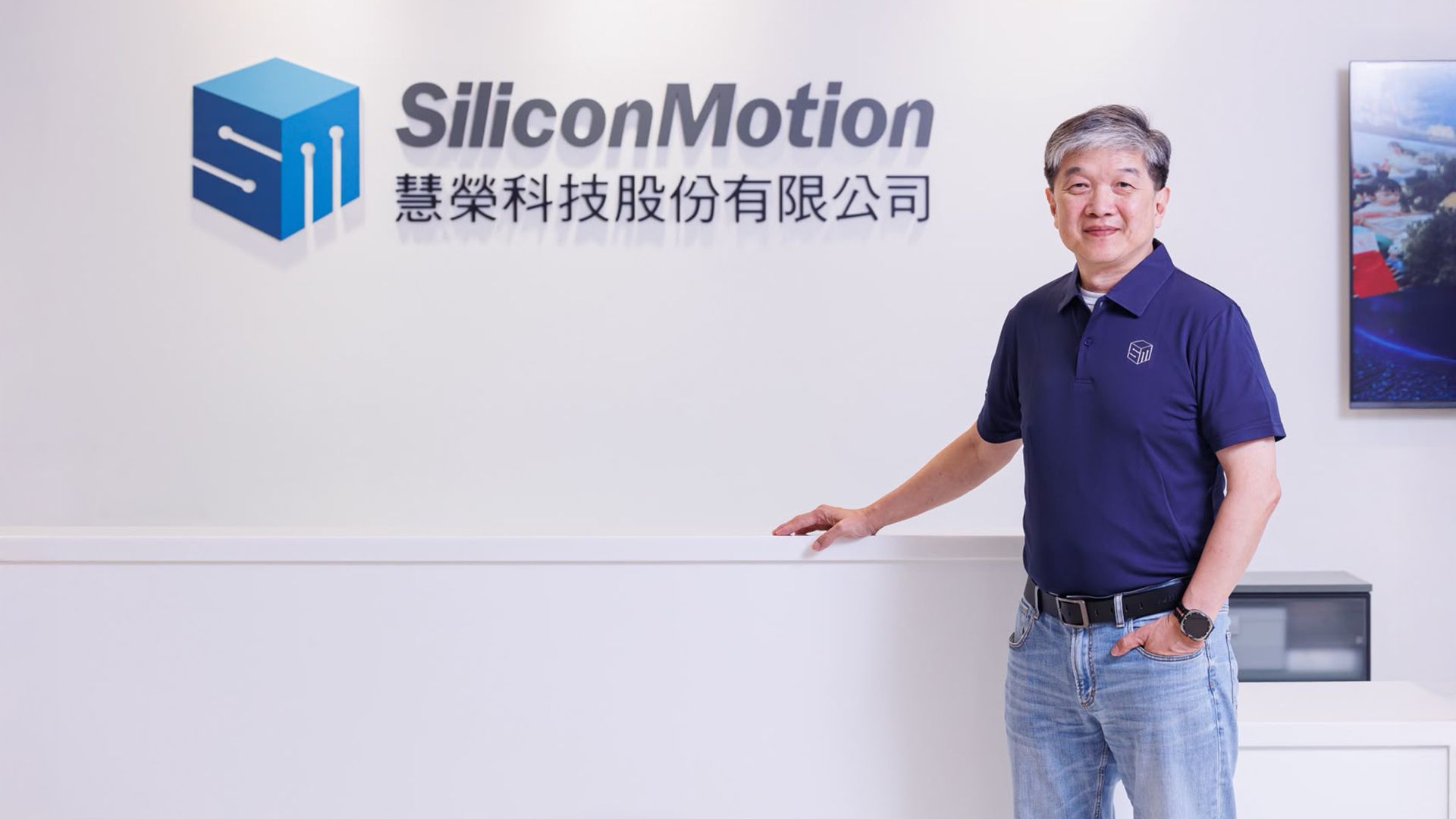
Nelson Duann: I think supply will remain very tight. In fact, we met with NAND suppliers this morning, and they told us that the current shortage is only the beginning. They believe 2027 will be even worse.
For the second half of this year, I expect conditions to remain largely unchanged. Supply will stay constrained. You will hear analysts talk about declining PC demand and lower PC shipments, but demand itself has not disappeared. Apple continues to gain share in both PCs and smartphones, which shows that people are still buying devices. The problem is not demand; the problem is supply.
Many PC and smartphone makers cannot obtain enough components to ship the volumes they want. Because NAND and DRAM have become such valuable resources, suppliers are prioritizing higher-end products with higher ASPs and better margins.
I expect this situation to continue through the second half of the year. Looking into next year, NAND makers are quite pessimistic. They believe supply constraints will worsen because cloud service providers and data center operators continue to increase their demand. As a result, NAND suppliers are directing more of their output toward the data center market.
They still want to support consumer devices and automotive applications, but those allocations are relatively small and do not materially change the overall supply picture.
Anton Shilov: So the additional SSD controllers you sold in the first quarter were mostly sold to module makers rather than directly to OEMs.
Nelson Duann: Let me explain that in more detail. The retail SSD market has almost disappeared. The controllers we sell to module makers are now largely ending up in SSDs that are shipped to PC OEMs. The reason is that OEMs cannot obtain enough NAND directly from memory manufacturers, so they are increasingly sourcing SSDs from module makers instead.
In the past, most module makers focused on the retail market. Since late last year and into this year, that has changed. OEM demand has become much stronger, and module makers are now supplying a significant portion of their production directly to PC manufacturers.
As a result, most of the controllers we sell to module makers ultimately end up in systems built by PC OEMs.
Anton Shilov: One advantage Silicon Motion has is that you work with all six NAND manufacturers and also supply controllers to some of them. Given the current shortages, have shipments of controllers to NAND makers declined?
Nelson Duann: Unit shipments to NAND makers have declined. However, those companies are increasingly focused on higher-end products, so the mix has shifted toward premium controllers with higher ASPs. As a result, while controller volumes are lower, the higher ASPs have largely offset the decline in unit shipments. Consequently, our controller revenue has continued to grow.
Anton Shilov: One quick question. When you ship controllers to NAND makers, are they standard Silicon Motion products, or are they customized for specific SSDs?
Nelson Duann: NAND makers are no longer very active in the retail SSD market because NAND supply is limited. Most of the SSDs they build today are shipped to PC OEMs, and many of those drives use our controllers.
The controller hardware itself is generally not customized. What changes from customer to customer is the firmware. Every PC maker has different requirements, so NAND suppliers or SSD makers may ask us for firmware modifications tailored to a particular OEM. The controller ASIC remains the same; the customization is primarily done at the firmware level.
Anton Shilov: So the differentiation happens mostly through firmware tuning rather than hardware changes?
Anton Shilov: Since you mentioned that the retail market has weakened considerably, can you provide a breakdown of your SSD, UFS, and eMMC controller business?
Nelson Duann: We group UFS and eMMC together and treat SSD controllers as a separate category. In the first quarter, the split was almost even. UFS and eMMC combined accounted for roughly 52%, while SSD controllers represented about 48%.
The reason is simple: smartphone volumes are still higher than notebook volumes. On a unit basis, mobile storage controllers ship in larger quantities than SSD controllers. We expect a similar mix going forward.
Anton Shilov: What is the split between UFS and eMMC today?
Key considerations
- Investor positioning can change fast
- Volatility remains possible near catalysts
- Macro rates and liquidity can dominate flows
Reference reading
- https://www.tomshardware.com/pc-components/ssds/SPONSORED_LINK_URL
- https://www.tomshardware.com/pc-components/ssds/smis-pcie-6-0-ssd-controller-for-consumer-ssds-coming-next-year-but-severe-nand-shortages-will-get-even-worse-in-2027-as-ai-data-centers-swallow-supply-an-interview-with-silicon-motions-svp-nelson-duann#main
- https://www.tomshardware.com/subscription
- Project Jupiter AI data center build raises concerns about water usage in rural New Mexico desert — Oracle calls water usage 'negligible' for 11 million gallon
- Bambu Lab's big anniversary sale is live with up to 52% off — score huge discounts on their most popular 3D printers and accessories
- NVIDIA and Doosan Group Collaborate to Advance Physical AI and AI Factory Infrastructure
- Multiple small Tennessee counties pass temporary data center bans — Nashville also passed near-unanimous moratorium on first reading
- NVIDIA Confidential Computing to Help Expand Apple’s Private Cloud Compute
Informational only. No financial advice. Do your own research.