
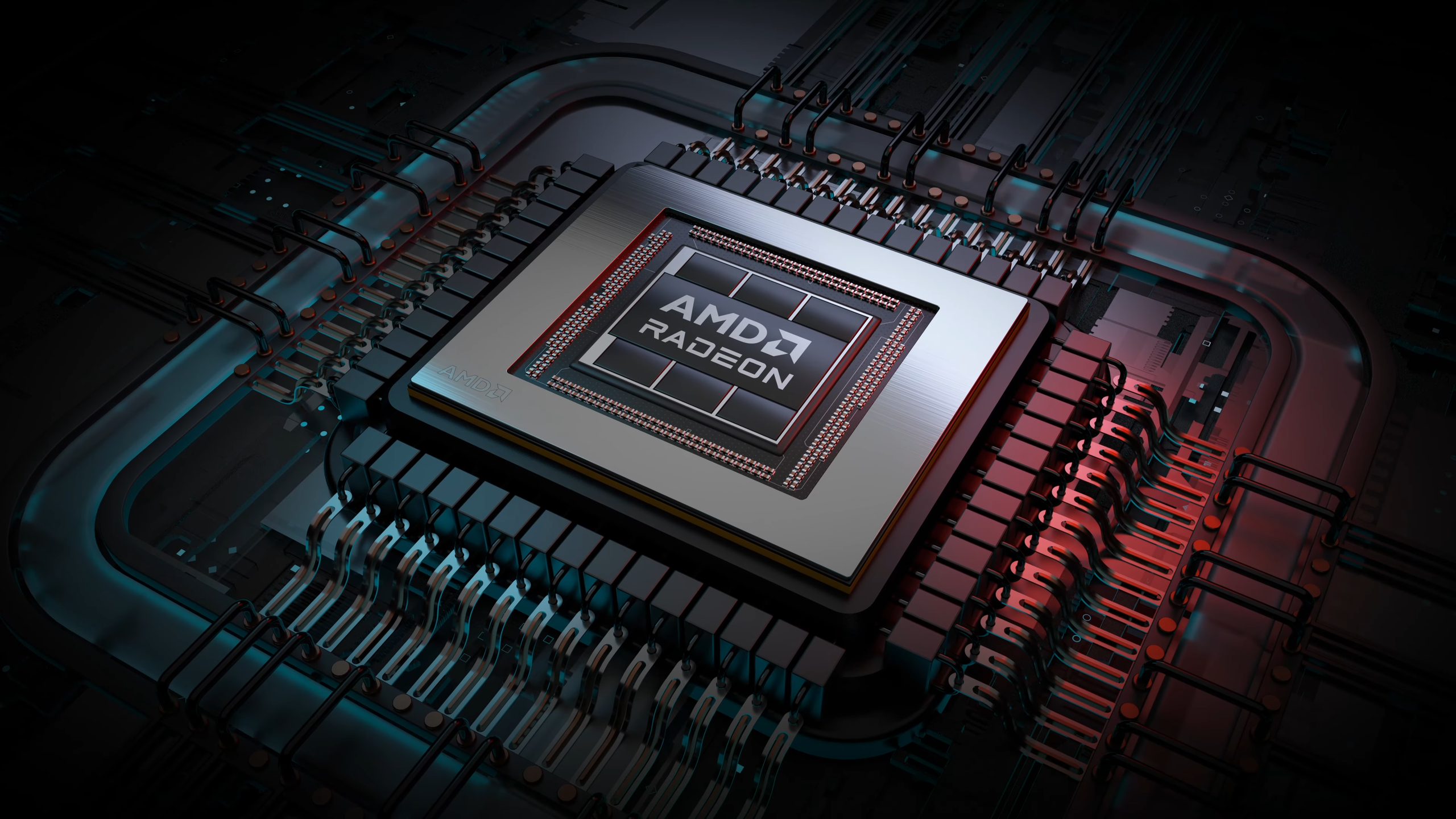
It's too early to consider the CUDA moat officially drained, but this is definitely a yank on the plug.
When you purchase through links on our site, we may earn an affiliate commission. Here’s how it works .
To be clear, this project is not a brand-new runtime. Instead, it is a highly automated and reproducible PowerShell setup that bridges the gap between ZLUDA, the well-known, formerly AMD-funded translation layer , and AMD's native HIP/ROCm SDK for Windows. Through a series of clever scripts, the toolkit automatically detects the user's GPU architecture, grabs a specifically pinned version of ZLUDA (v6-preview.69), and, at least in theory, seamlessly maps it to the ROCm math libraries already present in Windows.
The result is that the developer successfully intercepted and mapped the CUDA driver API as well as the cuBLAS, cuSPARSE, and cuFFT libraries directly over to their AMD equivalents. As a proof-of-concept, the author even trained a 2.2-million-parameter PPO reinforcement-learning network end-to-end using unmodified CUDA libraries on an AMD Radeon RX 9060 XT , which happens to be the only officially supported GPU at this time.
Even with AMD's official ROCm support on Windows, the local developer community frequently runs into dependency hell when trying out experimental GitHub repos or specialized AI tools that hardcode CUDA as a requirement. For developers who want to experiment with these CUDA-only tools natively on their Windows daily driver machines without dealing with WSL2 passthrough issues or waiting for the original author to write a HIP port, this project offers a highly desirable translation pipeline. It acts as a sort of hacky adapter for software that stubbornly demands an NVIDIA card.
Benchmark testing included in the project's documentation offers some interesting findings. In a controlled A/B test running a 2.2M-parameter reinforcement learning workload on a Radeon RX 9060 XT, the "public upstream path," which relies purely on official ZLUDA releases and AMD's stock HIP SDK 6.4 , achieved a median throughput of 13,278 steps per second (SPS). By contrast, an optional "recovered custom overlay" apparently built from salvaged legacy ZLUDA binaries ran slightly worse at 12,876 SPS, making it roughly 3% slower. While the clean official setup is faster, the author notes that "a later rewrite removed LibTorch/ZLUDA from PPO and achieved substantially higher throughput," indicating that there is still a performance hit for this stack of translators.
CUDA emulator for AMD GPUs Zluda loses funding with v6 release, adds 32-bit PhysX
Chinese modder gets GeForce RTX 4060 working in Windows 11 on Huawei Arm workstation
Valve funding port of Linux RADV Radeon Vulkan driver to Windows
Key considerations
- Investor positioning can change fast
- Volatility remains possible near catalysts
- Macro rates and liquidity can dominate flows
Reference reading
- https://www.tomshardware.com/pc-components/gpu-drivers/SPONSORED_LINK_URL
- https://www.tomshardware.com/pc-components/gpu-drivers/solo-developer-wires-zluda-to-amds-hip-getting-multiple-cuda-libraries-running-on-a-radeon-rx-9060-xt-in-windows-cuda-exclusive-workloads-on-amd-hardware-in-windows-is-possible-without-virtualization-or-dual-booting#main
- https://www.tomshardware.com/membership
- NVIDIA to Acquire Hugging Face
- Perplexity Portable Computer Is Now Available on Windows, Powered by NVIDIA RTX
- Anthropic says AI can boost U.S. GDP by 32%, up to $44.4 trillion in four years — economics model predicts that displaced employees 'may have to switch to jobs
- US AI data centers projected to become the fifth-largest natural gas consumer in the world by 2035 — consumption to grow by 15 billion cubic feet per day as dem
- Dell Pro 5 Webcam 2K Review: So you can look good in office
Informational only. No financial advice. Do your own research.