
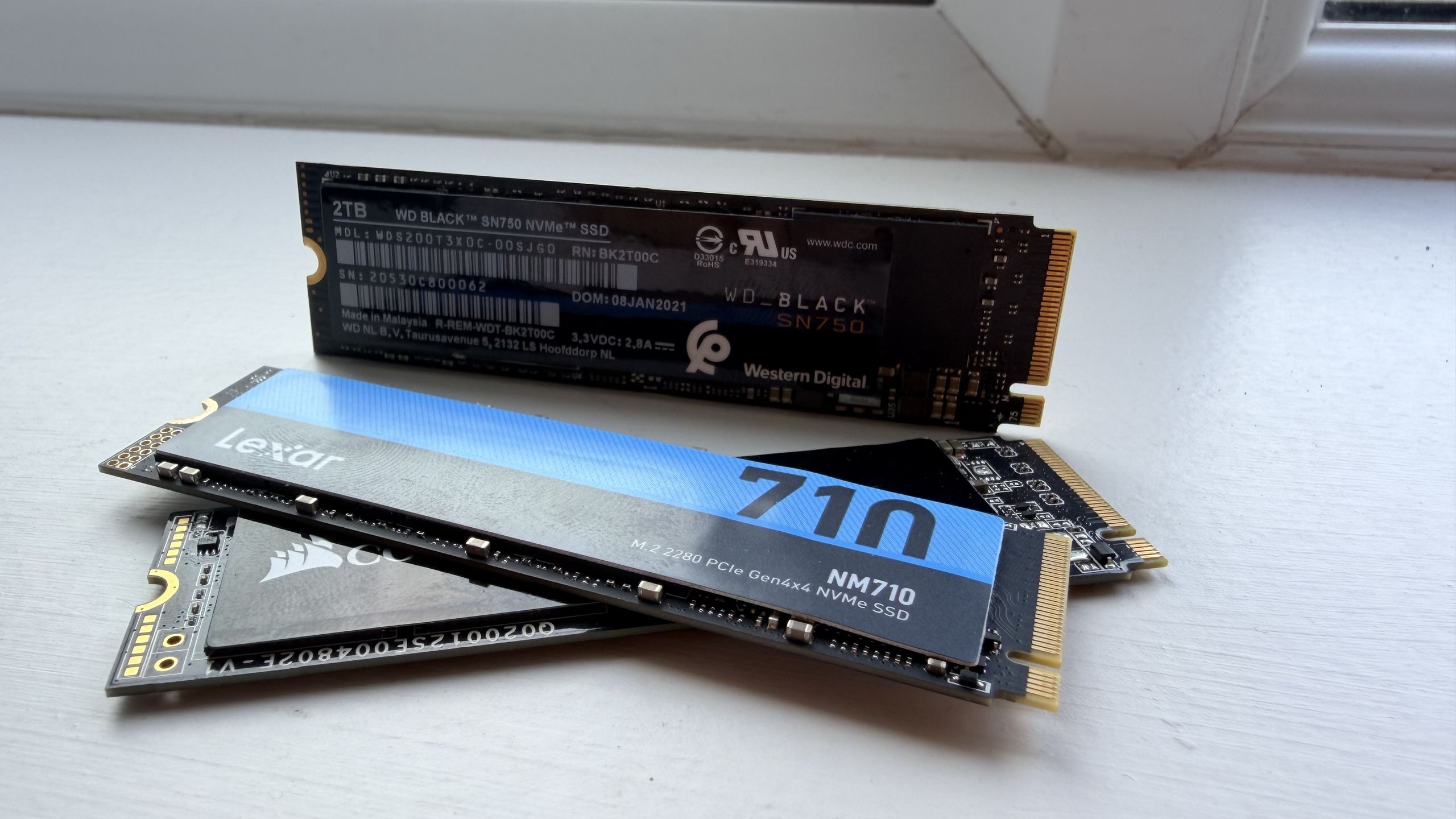
Micron announced in December that it was shuttering its consumer outfit Crucial in favor of enterprise. With so many SSD vendors and solutions, it’s arguable that Crucial’s absence in the SSD sector will be a little less keenly felt than it will in the RAM industry — after all, Micron is one of only three memory makers in the industry. Still, Crucial’s T-series and P-series drives are capable and performant offerings that will be missed once they disappear from the market completely. Of course, any reduction in competition is going to have an impact on pricing, but Crucial’s loss certainly seems like it will be more felt when it comes to RAM, rather than SSDs.
If we discount Gen 3 drives, which you shouldn’t be settling for in 2026, the cheapest you can grab an M.2 SSD these days is 11 cents per GB; specifically, this Silicon Power UD90 is one of the best value drives right now, at $439 . SP’s UD90 is also one of the cheapest 1TB options on the market at around $150, and its 2TB option is $244. Of course, the larger the drive, generally, the less you’ll pay per GB when it comes to storage. Simply put, these are the baseline prices for 1TB, 2TB, and 4TB SSDs, respectively, in 2026.
If you want a snappier Gen 5 option, Crucial’s 1TB P510 is $180 dollars right now, while the 2TB version is $340.The popular Samsung 9100 Pro’s 1TB, 2TB, and 4TB drives will set you back $250, $400, and $900, respectively, a truly tragic state of affairs.
As with RAM, a pre-built PC is one of the best ways to secure a decent amount of SSD storage. However, unlike RAM, the vendors can more easily obfuscate SSD performance. I’ve been covering PC sales and deals for months since the crisis hit, and it’s clear that vendors find it much easier to hide poor SSD storage inside a pre-built than RAM. The reasons are obvious: it’s very difficult to sugarcoat a PC having 16GB of DDR5 RAM, as opposed to 32GB; however, you can quite easily bury a slower Gen 4 SSD or a less spacious drive inside a pre-built spec sheet.
Generally, I’d recommend pushing towards a build with 32GB of RAM, even if it means compromising on storage. You can always add more SSD space down the line, and while you’d obviously rather have a blistering Gen 5 drive with those 14,000MB/s speeds, Gen 4 will do you just fine for gaming, and likely will for years to come.
Stephen is Tom's Hardware's News Editor with almost a decade of industry experience covering technology, having worked at TechRadar, iMore, and even Apple over the years. He has covered the world of consumer tech from nearly every angle, including supply chain rumors, patents, and litigation, and more. When he's not at work, he loves reading about history and playing video games. ","collapsible":{"enabled":true,"maxHeight":250,"readMoreText":"Read more","readLessText":"Read less"}}), "https://slice.vanilla.futurecdn.net/13-4-25/js/authorBio.js"); } else { console.error('%c FTE ','background: #9306F9; color: #ffffff','no lazy slice hydration function available'); } Stephen Warwick Social Links Navigation News Editor Stephen is Tom's Hardware's News Editor with almost a decade of industry experience covering technology, having worked at TechRadar, iMore, and even Apple over the years. He has covered the world of consumer tech from nearly every angle, including supply chain rumors, patents, and litigation, and more. When he's not at work, he loves reading about history and playing video games.
hotaru251 If we discount Gen 3 drives, which you shouldn’t be settling for in 2026 this is a weird statement… Gen 3 is still fast for gaming (especially for capacity vs price) only ones who shouldnt settle for gen 3 in 2026 are server and the like that are actually going to read/write near 24/7. if you just game or lightly do work a gen3 drive is 100% fine even in 2026. Reply
thestryker As long as the discount for a PCIe 3.0 drive is enough there's not much of a reason to not get one. The biggest issue is the controllers and NAND aren't as good so you probably wouldn't want one as a boot drive for a new system. When DRAM prices first spiked last year I bought a few enterprise PCIe 3.1 QLC U.2 drives because I figured NAND was next. They cost a little less per GB than the cheapest consumer drives and I trust they'll last longer as well. The only real negatives are that they are "slow" but since they reside in a server box and I only have 10Gb networking that's completely irrelevant. This year I got some old enterprise 1.2TB Intel MLC SATA drives for ~$100 each. The only new drives which were cheaper at the time were 4TB QLC drives. Unless you're playing games that really leverage direct storage or are doing video editing quality SATA drives are fine for the vast majority of uses. Of course those drives are all now sold out since even used they were the best priced, but these types of deals are available if you're patient. Reply
Key considerations
- Investor positioning can change fast
- Volatility remains possible near catalysts
- Macro rates and liquidity can dominate flows
Reference reading
- https://www.tomshardware.com/pc-components/ssds/SPONSORED_LINK_URL
- https://www.tomshardware.com/pc-components/ssds/state-of-play-ssd-pricing-one-year-into-the-ai-component-crisis-220-percent-price-increases-are-crippling-the-diy-market#main
- https://www.tomshardware.com/subscription
- Legendary Windows developer codes Task Manager for the Mac, says Apple’s ‘Activity Monitor blows’ — Microsoft gave original Windows Task Manager dev permission
- Teacher arrested for clapping in support of opposition at an AI data center meeting — gigawatt-scale project gets approved anyway despite community resistance
- Powerful Compute So Compact, It’s Clutch — Build AI Anywhere With NVIDIA Jetson
- NVIDIA AI Supercomputer Comes Online at Naval Postgraduate School
- How to look better on webcam — tips for the average person to look better and more professional
Informational only. No financial advice. Do your own research.