
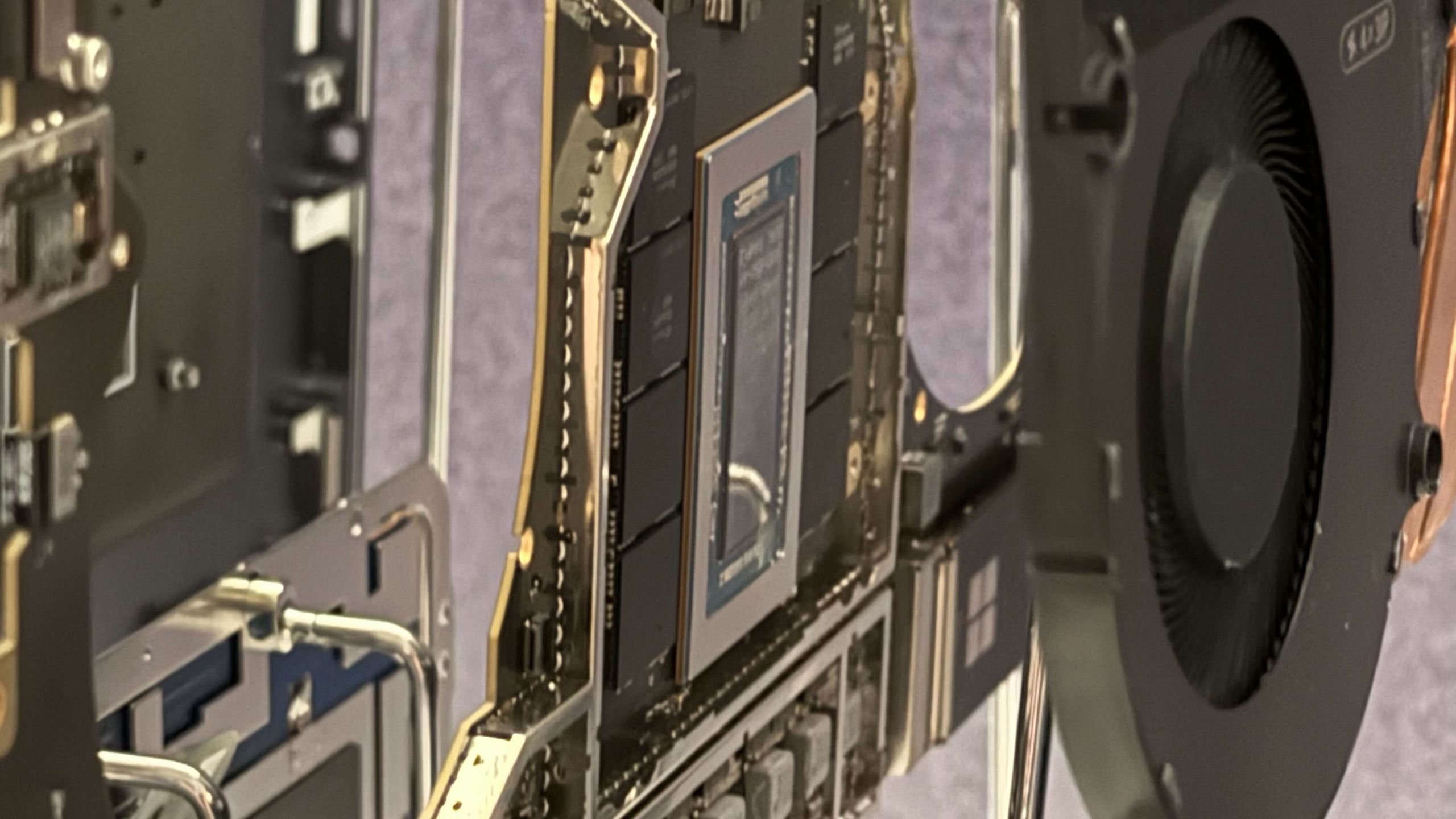
And in a mobile device that has to share power between the CPU and GPU, performance is also going to be highly dependent on the character of the workload. A game, for example, is going to heavily stress the GPU but might not fully occupy the CPU at the same time, while a highly parallel CPU-dependent task like code compilation might fully load the CPU cores without involving the GPU much at all. If you have a (rare) workload that loads down both of those functional units at once, overall performance is likely to fall further than with one that only demands one type of processing resource or the other.
It's also worth remembering that every laptop is different, and power envelopes are carefully tuned for each chassis to best balance design constraints between SoC temperatures, skin temperatures, and noise, among other factors.
All that said, from what we've seen, Microsoft's 110W target seems likely to be typical of the 15"-16" laptops that other OEMs plan to introduce. Logically, it's also likely that we might see lower power budgets for thinner or smaller systems.
But the short version of all this is that there's a lot we still don't know about the RTX Spark platform, and we're still a long way from the launch of the laptops with this chip inside. We expect to learn more about this platform, its design targets, and its behavior in the coming months as we lead up to Nvidia's projected fall launch. Stay tuned.
Follow Tom's Hardware on Google News , or add us as a preferred source , to get our latest news, analysis, & reviews in your feeds.
As the Senior Analyst, Graphics at Tom's Hardware, Jeff Kampman covers everything that has to do with graphics cards, gaming performance, and more. From integrated graphics processors to discrete graphics cards to the hyperscale installations powering our AI future, if it's got a GPU in it, Jeff is on it.\u00a0 ","collapsible":{"enabled":true,"maxHeight":250,"readMoreText":"Read more","readLessText":"Read less"}}), "https://slice.vanilla.futurecdn.net/13-4-24/js/authorBio.js"); } else { console.error('%c FTE ','background: #9306F9; color: #ffffff','no lazy slice hydration function available'); } Jeffrey Kampman Senior Analyst, Graphics As the Senior Analyst, Graphics at Tom's Hardware, Jeff Kampman covers everything that has to do with graphics cards, gaming performance, and more. From integrated graphics processors to discrete graphics cards to the hyperscale installations powering our AI future, if it's got a GPU in it, Jeff is on it.
abufrejoval Five minutes of fun on a full charge: I'm sure that will sell like hotcakes! I wonder how many cycles they'll do… Perhaps their view on physics was LLM based? Reply
Notton If it's like most other gaming/productivity windows based laptops, it'll have a built-in max power budget based on if it's plugged in or on battery. Though, if it's razer, they won't allow you to use the high power mode unless you have synapse installed and logged into, as well as being plugged into the wall with a razer proprietary power adapter. Knowing Microsoft's current vibe coding escapades, I'd give it a 50:50 chance it properly recognizes if it's plugged in or not. So, fair warning, choose your laptop maker wisely. Reply
Key considerations
- Investor positioning can change fast
- Volatility remains possible near catalysts
- Macro rates and liquidity can dominate flows
Reference reading
- https://www.tomshardware.com/laptops/SPONSORED_LINK_URL
- https://www.tomshardware.com/laptops/surface-laptop-ultra-targets-110w-tdp-for-rtx-spark-superchip-microsoft-reveals-power-budget-of-its-high-end-15-system-in-hands-on-session#main
- https://www.tomshardware.com/subscription
- OpenAI CEO Sam Altman admits AI token costs are becoming 'a huge issue' — company seeks improved value as overspending becomes a meme
- OpenAI CEO Sam Altman admits AI token costs are becoming 'a huge issue' — company seeks improved value as overspending becomes a meme
- Best of Computex 2026: Innovating despite disruptions
- 32GB of DDR5 now costs $375 minimum — AI shortage continues to squeeze PC building
- Counterfeit G.Skill and V-Color DDR5 modules hit Chinese marketplaces, impacting company sales — cheap contraband memory using identical PCBs and heat spreaders
Informational only. No financial advice. Do your own research.