
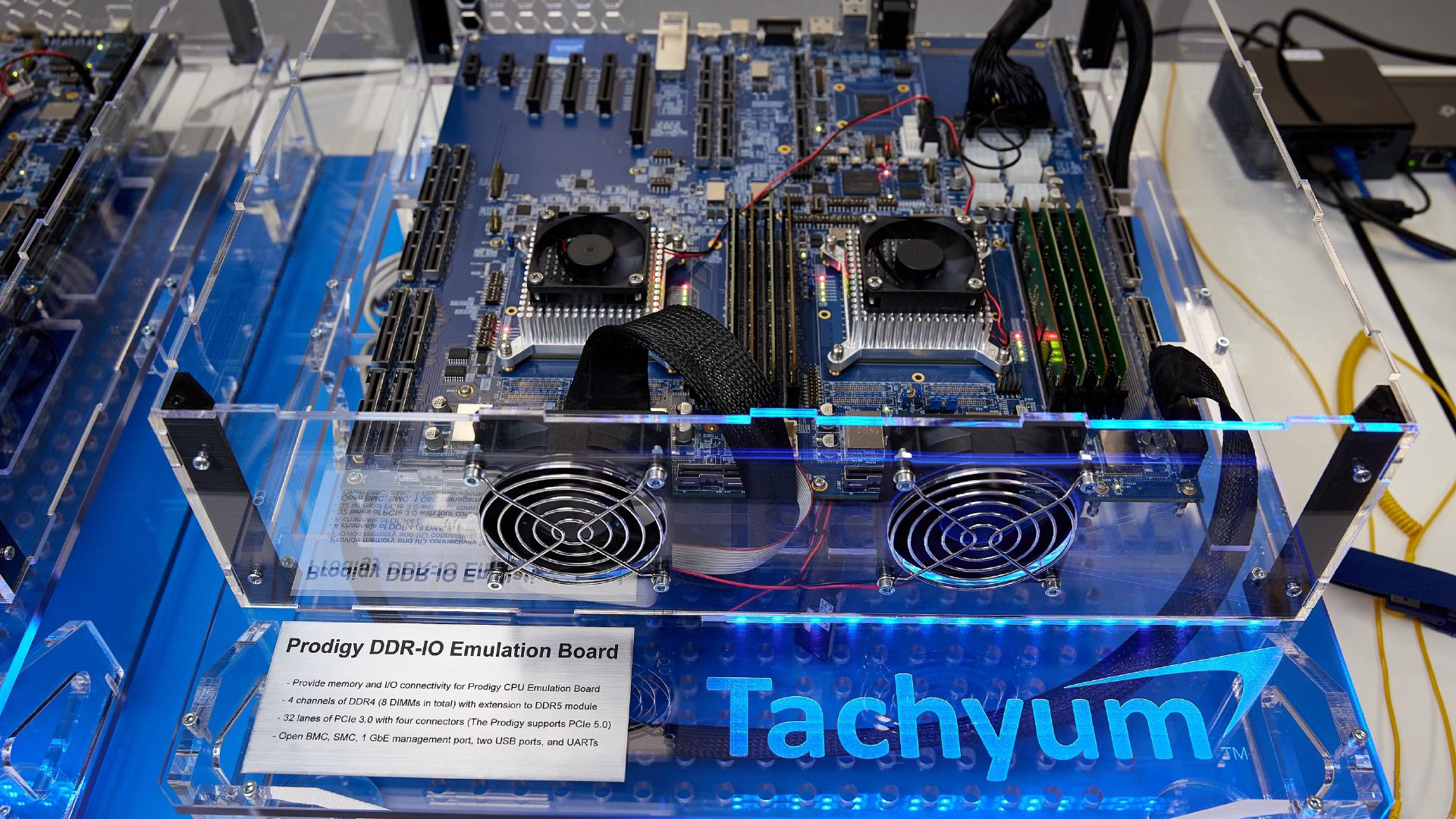
Although most of Tachyum development activities are concentrated in Slovakia, Tachyum Slovakia is a subsidiary of the U.S.-based Tachyum Inc. according to Dennik N . If the American parent company owns the Prodigy IP, while the Slovak subsidiary employs engineers, conducts development, and accumulates debts, bankruptcy could enable the group to eliminate a substantial portion of those liabilities without losing its most valuable technological assets. In short, Tachyum's Slovak subsidiary could disappear along with much of its unpaid debt, while the American parent retains Prodigy IP and attempts to commercialize it somehow in the future. If the Slovak subsidiary owns the IP, the American parent could theoretically buy it from the bankruptcy estate and attempt to commercialize it eventually. Meanwhile, there is another complication: The American parent has reportedly faced pressure from its own creditors, some of whom have requested its liquidation, according to Dennik N . In this case, the destiny of the Prodigy IP is completely unclear.
For now, the future of Prodigy may depend on who actually owns Prodigy's intellectual property — Tachyum Inc. in the U.S. or Tachyum Slovakia — and whether the American subsidiary continues to exist or gets liquidated. The answer could determine whether this bankruptcy represents the end of Prodigy or a restructuring of the Tachyum group with the aim to continue development.
Follow Tom's Hardware on Google News , or add us as a preferred source , to get our latest news, analysis, & reviews in your feeds.
Anton Shilov Social Links Navigation Contributing Writer Anton Shilov is a contributing writer at Tom’s Hardware. Over the past couple of decades, he has covered everything from CPUs and GPUs to supercomputers and from modern process technologies and latest fab tools to high-tech industry trends.
bit_user …like so many before it. This is just a really hard business to break into, even with state backing. They didn't help themselves by continually going back to the drawing board, either. They needed a degree of platform stability that would enable support for it to coalesce and mature. China has the right idea. You pour a dumptruck of money into multiple ventures and you let them actually ship product, without requiring that it needs to be competitive. After a few generations, a couple of them will probably start to catch up to the industry leaders. Reply
setx Nevertheless, the bankruptcy filing casts serious doubt on Tachyum's ability or intention to bring its long-delayed processor to market. The was no doubt and still there is none. Reply
Blastomonas The scam has finally unfolded. Reply
Key considerations
- Investor positioning can change fast
- Volatility remains possible near catalysts
- Macro rates and liquidity can dominate flows
Reference reading
- https://www.tomshardware.com/pc-components/cpus/SPONSORED_LINK_URL
- https://www.tomshardware.com/pc-components/cpus/tachyum-developer-of-heavily-delayed-universal-prodigy-processor-voluntarily-files-for-bankruptcy-future-of-prodigy-ip-unknown-as-company-begins-bankruptcy-proceedings#main
- https://www.tomshardware.com/membership
- Elon Musk says Neuralink's 'BlindSight' is ready to cure blindness
- Kazakhstan Expands Compute for Its AI Future
- Tachyum, developer of heavily-delayed universal Prodigy processor, voluntarily files for bankruptcy
- SpaceX loses bid to dismiss lawsuit over xAI data center pollution
- NVIDIA Unveils Minerva to Bring End-to-End Observability for AI Factories
Informational only. No financial advice. Do your own research.